
Episode 5 of the Six-Part Series
“The Corrupt Regime of Cherniss, Frazier, Youngblood & Blades.”
Read the Intro and Episode 1 HERE, Episode 2 HERE, Episode 3 HERE, Episode 4 HERE.
Episode 5:
The Final Grab for OCSCS and USI Fails
(or if you prefer, watch this)
The December 10, 2024 Material Revision was the outgoing majority’s clearest attempt to lock OCSCS and USI into a charter-governance structure before the new board could stop it. Presented after voters had rejected the Cherniss supporting board majority but before the newly elected trustees were seated, the document sought to alter material provisions governing OCSCS and the disposition of USI equipment and property. Its purpose was not subtle: preserve charter-linked control over district-funded assets and move that control beyond the practical reach of the incoming board majority.
The Problem with “Requisite Proof”

The key language appeared on page 6. If OCSCS provided the district with “requisite proof” that it was operating as a nonprofit public-benefit corporation, then beginning July 1, 2025, OCSCS would “assume oversight of the OSCSC [sic] and USI equipment and property.” If it failed to provide that proof, OCSCS would remain a district-affiliated charter governed by the district board, and oversight of the USI equipment and property would remain with the district. The sic designation matters because the misspelling was not a transcription error; it appeared in the Material Revision itself. That mistake was the least of the problems, but it underscored how hastily and poorly the document appears to have been assembled by district legal counsel. The deeper problem was that the provision treated control of public assets as something that could shift through undefined paperwork rather than through clear public authorization.
Nothing in the Material Revision explained what would constitute “requisite proof,” who would decide whether the proof was requisite, what documentation OCSCS needed to provide, or whether the elected board would retain any approval authority before district-funded equipment and property shifted to OCSCS oversight. The ambiguity was not a drafting nuisance. It was the mechanism. By making the transfer depend on an undefined condition, the document could make a major governance change look like an administrative formality.
Shawn Was Sure
That vague and conditional structure produced immediate confusion at the December 10 meeting. Trustees were being asked to approve a document that affected charter governance, nonprofit status, public property, USI equipment, and district oversight without a clear explanation of who would control what after July 1, 2025. At minimum, the document left one decisive question unanswered: who would have the authority to decide that OCSCS had satisfied the condition and could assume control over district-funded assets?

The legal and governance concerns were serious enough that Buck moved to postpone approval until the board had more time to examine the document—effectively placing the decision in the hands of the incoming majority. That should have failed under the outgoing majority’s usual pattern. Blades and Frazier voted to move ahead. Youngblood, however, broke from them at his final board meeting and voted to postpone the decision on the revision. The effort to place OCSCS and USI assets under the authority of a nonprofit public-benefit corporation therefore failed on a 3–2 vote.
Youngblood’s vote revealed how defective the Material Revision was. He had already exposed himself legally by supporting the supermajority contract revisions on November 19, but this document evidently went further than he was willing to go. Had he sided with Frazier and Blades, the district would have been saddled with a legally absurd contract and the fiscal consequences that followed. The document did not serve the district as a whole. It served the interests of those who stood to benefit from moving OCSCS and USI assets into a more autonomous charter-linked structure beyond the practical authority of the elected board. Once again, the role of the Huff firm warrants scrutiny.
The moment itself was extraordinary because everyone expected Youngblood to provide the third vote. Blades clearly did. When Buck made the motion to postpone, the assumption in the room was that the outgoing majority would defeat it and force the revision through before the new board took control. Youngblood instead voted yes. The audience audibly gasped. Blades, apparently believing he had misunderstood the motion, blurted, “Are you sure, Shawn?” He was. With that vote, Youngblood ended his four years on the PYLUSD Board by refusing, at the final moment, to complete the outgoing majority’s attempt to shift control of OCSCS and USI assets beyond the reach of the elected board that voters had just chosen.
The final decision on OCSCS would have to wait until January 14, 2025, when the new board would confront the charter-governance scheme directly. Before that showdown, however, the ground shifted. Youngblood’s December 10 vote was not only the end of the outgoing majority’s attempt to force through the revision; it also proved to be the final board meeting for Cherniss and Gates. At the new board majority’s first meeting on Tuesday, December 17, the district began the process of ending the Cherniss era before turning to the unresolved OCSCS matter he had left behind. This would be the last board session Cherniss would attend in the PYLUSD.
There’s A New Law Firm in Town
The Cherniss era ended with a scene that still demands explanation. On December 18, the day after the new board majority was sworn in, word spread that Cherniss and Gates had been blocked from entering their offices and that district materials in their offices had been secured. That same day, newly installed board president Marilyn Anderson called for a special session the next day, December 19. After three hours behind closed doors, all five trustees returned to open session visibly shaken. Then came the unanimous vote: Cherniss, Gates, and five other administrators were placed on administrative leave.
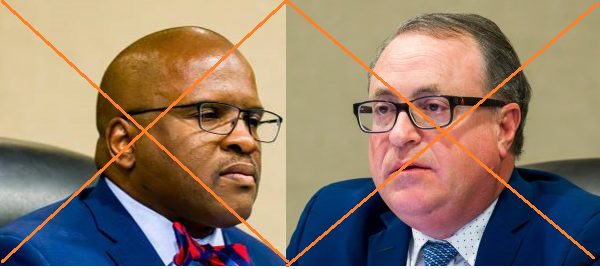
The public still does not know what evidence produced that result. But whatever was presented in closed session was serious enough to move not only the new majority, but also Frazier and Blades—the very trustees who had spent the previous two years running interference for Cherniss and Gates. That fact matters. Until the public learns why Frazier and Blades voted to place them on leave, their later claims that Cherniss and Gates were mistreated deserve no credibility. The contradiction is stark: Frazier and Blades now posture as defenders of due process, but when the evidence was in front of them, they helped remove Cherniss and Gates from their posts.
AALRR Knows Many Secrets
While the decision to place Cherniss and Gates on leave shocked the public and offered few specific clues about the evidence behind it, two other key votes at the December 19 special session may help explain what the board had learned. Both involved dramas. Both involved 3–2 votes.
The first was an enormously important vote to bring in new district legal counsel with the law firm Atkinson, Andelson, Loya, Ruud, and Romo (AALRR). AALRR specializes in California Education Law and has the largest team of attorneys dedicated to this of any law firm in the state. Perhaps as importantly, AALRR had been hired in the PVPUSD to clean up the mess that Cherniss had left behind there. Unlike the public, AALRR would have had full access to the investigation done at Palos Verdes that has not been released to the public. If nothing else, AALRR would have known the types of illegal behaviors Cherniss had done there that were so clearly illustrated in the Butler suit.
Blades’s outrage over the proposed hiring of AALRR was telling. She attacked the firm with unsupported claims that it had behaved corruptly during earlier work for the PYLUSD, objected that AALRR had been given privileged closed-session information before formal board approval, and even suggested a conflict because the firm had also represented PVPUSD after Cherniss left. None of those objections addressed the central problem: the district needed counsel independent of Orbach, Huff, and Henderson, the firm whose advice and participation had authorized nearly every major controversy of the Cherniss era.
Frazier’s opposition was no more persuasive. He framed his objection as fiscal concern over AALRR’s higher rates, but that argument ignored the far greater cost of continuing with counsel implicated in the district’s legal and political morass. The issue was not whether AALRR was inexpensive. It was whether PYLUSD could keep relying on OHH after Huff had been complicit, by all accounts, in the decisions that brought the district to crisis. Despite the objections of Blades and Frazier, AALRR again became the district’s new legal representation on a 3-2 vote.
Doug Kimberly Also Knows Stuff
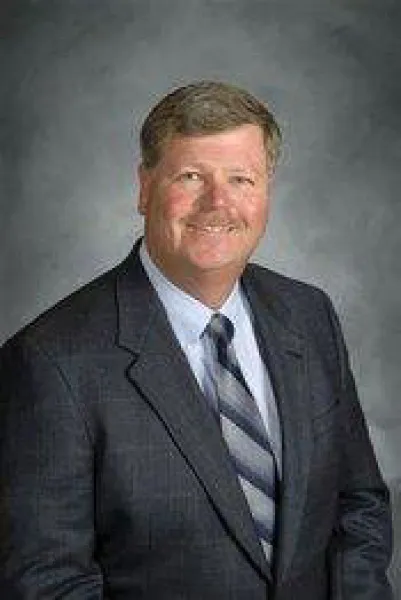
The third dramatic vote at the December 19 special session remains the most puzzling. Once the board unanimously placed Cherniss on leave, it needed an interim superintendent. Doug Kimberly, a PYL native who had recently succeeded Cherniss in scandal-ridden Palos Verdes, was present and widely expected to assume the same stabilizing role in PYLUSD. Like AALRR, Kimberly would have understood much of what the public still does not know about Cherniss’s tenure in PVPUSD. His appointment would have sent an unmistakable message: the district recognized the Palos Verdes warning signs and was bringing in someone capable of cleaning up similar damage here. Frazier and Blades surely understood those implications.
Yet Kimberly was not appointed. For reasons that remain unexplained, newly installed Trustee Tricia Quintero voted against his appointment. Instead, on a 3–2 vote that included Quintero in the majority, the board appointed Renee Gray, an administrator who had remained aligned with Cherniss throughout his tenure. That decision deserves explanation. If the purpose of the December 19 meeting was to secure the district, understand what had happened, and begin restoring public trust, then bypassing Kimberly for Gray makes little sense. Quintero’s supporters, and the district, deserve to know why the board rejected the person best positioned to recognize the Cherniss pattern and instead elevated someone associated with it.
The dramatic events of December 19 did not resolve the OCSCS problem; they made it more urgent. The Material Revision vote postponed on December 10 remained pending, and the new board now had to decide whether the outgoing majority’s proposed charter language could survive meaningful legal scrutiny. When the matter returned on January 14, 2025, the answer became clearer. Sukhi Ahluwalia, AALRR’s charter-school legal expert, became the central figure in a meeting that exposed the Material Revision’s inherent flaws: its undefined trigger for nonprofit status, its uncertain transfer of oversight over USI equipment and property, and its attempt to move public assets into a governance structure beyond ordinary elected-board control.
The Material Revision Meets its Legal Adversary

Blades and OCSCS Principal Beth Fisher tried to portray the December 10 Material Revision as harmless, insisting that it would keep OCSCS dependent on PYLUSD rather than move the school toward independence. Ahluwalia’s analysis cut through that claim. She walked the board through the conflicting documents, shifting representations, and undefined conditions that made the proposal legally unstable and practically untenable. By the end of the three-hour meeting, the issue was no longer whether OCSCS supporters preferred one interpretation of the Material Revision; it was whether the board could responsibly approve a document whose basic legal effect remained incoherent. Ahluwalia put the point simply: “You don’t really know what the board is voting on because there are so many different documents and so many different representations.” Her reasoning was clear enough to change the vote of Todd Frazier, who had supported the Material Revision less than a month earlier. The Revision failed 4–1, with only Blades voting to preserve it.
In the course of her presentation, Ahluwalia provided a number of disturbing assertions that were included in the material revision that further shed light on the dubious work of David Huff of OHH. She explained that what the board was voting on was to establish an independent charter in the form of a 501c3 corporation that would put the district at risk for various liabilities while simultaneously depriving it the authority to guide its operations. The 501c3, moreover, would have required the OCSCS to be run by a board selected by the corporation and not the elected district board. In addition, despite bearing many of the costs of the institution, the district would have no say over curriculum or staffing and its employees would no longer operate under the bargaining agreements for either certificated or classified staff. The charter, not the district, would have complete control over the Average Daily Attendance money for every student enrolled there. Each of those conclusions flatly contradicted Fisher’s assurances earlier that same evening.
Liabilities

As with the USI contract, the Material Revision placed PYLUSD at risk for liabilities arising from matters it could not control. According to Ahluwalia, the charter proposal would require the district to cover insurance for physical or personal injuries at OCSCS even though the district would have no operational authority over the school. The district’s own insurance provider would not necessarily cover those claims because OCSCS would no longer fall within the district’s policy. The result was extraordinary: claims against OCSCS could be paid from PYLUSD’s general fund while OCSCS retained control over its own operations, curriculum, staffing, and ADA revenue. That was not a workable governance model. It was another example of Fisher, Cherniss, and their legal counsel designing a structure in which authority and benefit flowed to the charter, while risk and cost flowed back to the district.
USI Assets Transferals

Ahluwalia also addressed one of the most troubling consequences of the proposed charter revision: the status of USI assets already moved to the OCSCS site. Her legal point was direct. If OCSCS became an independent charter operating outside district control, district-owned USI equipment and property could not simply remain there for OCSCS’s benefit. Those assets would have to be removed because placing district property at an independent charter school would violate Education Code restrictions on such transfers. That conclusion makes Cherniss’s conduct difficult to excuse. As a self-proclaimed charter-school expert, he could hardly have been unaware that moving the bulk of USI assets to OCSCS created serious legal problems if the charter later separated from district control. Nor is it plausible that district counsel at OHH failed to see the issue while advising on the same structure. The USI story, from Casa Loma to OCSCS, therefore looks less like a series of administrative mistakes than a sustained effort to move public assets toward charter-linked control while hiding from the public both the legal violations and the financial exposure the scheme created.
The Sweetheart Lease Scheme

The most revealing evidence of corrupt intent in the proposed Material Revision was the lease arrangement for OCSCS. The revision would have reduced OCSCS’s payment for use of district property from $10 per square foot to $2 per square foot, cutting its annual rent from roughly $1 million to about $200,000. That was not a minor adjustment; it was an $800,000 annual subsidy to a charter school operating on public property. Under Proposition 39, that bargain-basement rate would then have become by law the pricing benchmark for other charter schools seeking district facilities, including Magnolia and the California Republic Leadership Academy, both of which were already seeking access to PYLUSD sites through OCBE-backed charter mechanisms.
The effect would have been devastating: PYLUSD would lose millions in facilities revenue while also losing ADA dollars as county-imposed charters siphoned students away from district schools. Trustee Blades claimed at the January 14 meeting not to understand this Proposition 39 consequence, but that claim strains belief. Cherniss presented himself as a charter expert; Frazier and Blades had spent two years advancing charter-aligned policies; and OHH were advising on the proposal. The lease provision therefore looks less like a drafting mistake than the financial key to the scheme: use OCSCS to establish a deeply discounted facilities rate, then allow OCBE-aligned charter operators to drain district assets, revenue, and enrollment under the cover of charter law.
Frazier Flips

The 4–1 vote denying the Material Revision temporarily halted the joint calamities of OCSCS and USI as Cherniss, Frazier, Youngblood, and Blades had envisioned them. The proposal’s defects were too obvious to ignore: it would have shifted oversight of district-funded USI assets toward a charter-linked structure, reduced OCSCS rent from roughly $1 million to about $200,000 a year, and created a facilities-pricing precedent that could have benefited OCBE-aligned charter operators at the district’s expense.
That is why Frazier’s vote mattered. Even he could not bring himself to endorse a document whose legal stench was unmistakable and whose passage could have exposed the district—and perhaps the individuals who approved it—to serious litigation. The vote, however, was only a reprieve. The same OCBE- and GOP-aligned forces that produced Frazier, Youngblood, and Blades remain active in district politics. If Buck loses her seat this November, wasteful ventures like USI and OCSCS could return, and the more dangerous objective may resume: turning Esperanza High School into a platform for CRLA and the charter-school funders already invested in making that happen.
Stay tuned for our grand finale:
Episode 6: “Esperanza Waits”
Coming soon!


