Episode 2 of the Six-Part Series
“The Corrupt Regime of Cherniss, Frazier, Youngblood & Blades.”
Read the Intro and Episode 1 HERE.
EPISODE 2
Golden Hawks with Broken Hearts

A little more than a month after Cherniss was hired, tragedy struck PYLUSD when El Dorado Assistant Principal Amy Madrigal (nee Des Palmes) died suddenly from a stroke on May 22, 2023. Her death was a devastating personal loss, but it was also an institutional one. Madrigal represented the best of the district’s leadership pipeline: intellectually gifted without pretension, deeply committed to students, respectful of the daily demands of classroom teaching, and devoted to an education that joined academics, athletics, and the arts.
That is part of what made her loss so difficult to absorb. A graduate of Esperanza High School, Madrigal returned to serve the district as an outstanding teacher and assistant cross-country coach in Valencia High School’s exceptional Language Arts Department before moving into administration. At Valencia, she was shaped by a remarkable group of mentors and colleagues, including Jim Bell, Rick Lopez, Joey Davis, Nancy Watkins, Jamie Jauch, Carey Cecil, Sue Sawyer, Jane Roh, and Jeff Louie. Few administrators carried her combination of district roots, institutional knowledge, professional preparation, authenticity, and visible joy in her work.
The loss also rippled through the wider community. Amy’s husband, Rudy, eventually moved from Yorba Linda to Visalia so his parents could help raise their young children. Rudy had long served with distinction in the Placentia Police Department, including as a School Resource Officer. Like Amy, he was deeply rooted in the community and had a genuine care for students, especially those facing the greatest challenges.
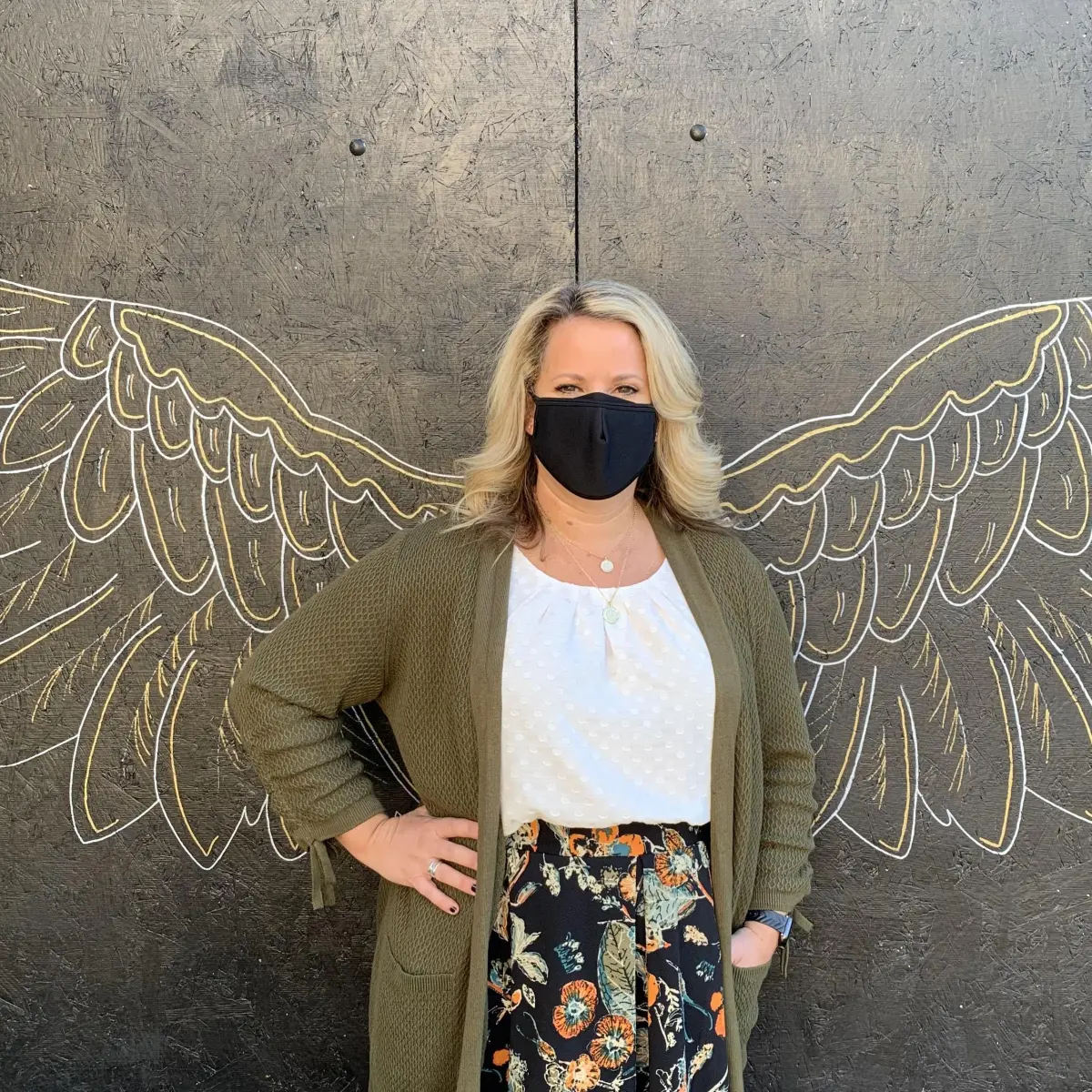
At Santa Clara de Asis Catholic Church, Yorba Linda, a standing-room-only celebration of life bore witness to the depth of love for Amy and to the deep wound left by a life ended far too soon. The mourners reflected the breadth of her life in PYLUSD: administrators, teachers, former students, current students, parents, friends, and colleagues. Trustees Frazier, Youngblood, and Blades were notably absent from a community gathering that honored one of the district’s finest educators. The ceremony was deeply moving, especially when the priest asked Amy’s three children to stand, turn around, and see the room full of people who loved their mother. That image will likely remain with those children longer than even the many beautiful tributes offered that day.

Among the many tributes, Joey Davis’s was especially moving. Joey was Amy’s mentor, colleague, and dear friend; he was also like a brother to Rudy. Those who know Joey know how openly he carries his feelings, and from the moment Amy passed, his grief was impossible to separate from his leadership. Here is the tribute he gave to the Golden Hawk community after Amy’s passing.
That grief was made heavier by the obligations of the school year’s final weeks. Joey had to support brokenhearted staff and students at El Dorado while preparing his graduation speech, managing end-of-year responsibilities, and building the course schedule and staffing plan for the following year.
Many people stepped in where they could. Richard McAlindin gave up lunch hours to help monitor students, and Tom Craik spent untold hours counseling staff and students devastated by the loss. A humane superintendent would have assigned a full-time administrator to help Joey and El Dorado through the end of the year. A humane superintendent might even have given Rick Lopez, Joey’s longtime friend and colleague, that “special assignment.” Cherniss did neither. In a moment that called for steadiness, compassion, and institutional support, the district’s leadership offered nothing of the sort. That failure of compassion was not an aberration; it was Cherniss’s method. Cruelty became a tool for breaking the people who had held the district together and posed a threat to Cherniss’ agenda.
Cherniss Eliminates Leaders, Gathers Sycophants

Superintendent Alex Cherniss began the 2023–2024 school year determined to purge the district of established leaders and replace them with people whose chief qualification was loyalty to him. Over the course of that year, assistant superintendents, principals, and district officials either left or were pushed out through harassment, threats, and other forms of pressure. The people best equipped to raise budget warnings, compliance concerns, legal risks, and operational objections were systematically removed. In their place came younger administrators who embraced the superintendent’s agenda and the board majority that protected him. By defending Cherniss, advancing his preferred initiatives, attacking critics, and dismissing the concerns of dissenting trustees, they helped create an administrative culture in which scrutiny itself was treated as disloyalty.
Cherniss’s chief accomplice in decapitating district leadership was Issaic Gates. Before arriving in PYLUSD to replace Lopez after his 28 years in the district, Gates had spent roughly one year as Executive Director of Secondary Education in the notoriously troubled Inglewood USD, which has been under state or county control since 2012. Little in his résumé suggested he was remotely prepared to serve as HR director for a highly regarded district of nearly 24,000 students. But qualifications and experience were never Cherniss’s primary concern in presenting Gates to the board. As Assistant Superintendent of Human Resources, and later as Deputy Superintendent, Gates’s central function was to help remove the people Cherniss viewed as obstacles to his self-serving agenda.
The Harassment of Richard McAlindin and Tom Craik
Cherniss and Gates first targeted Tom Craik and Richard McAlindin, two of the district’s most trusted leaders. Craik’s and McAlindin’s subsequent lawsuits document how contemptibly they were treated. Craik had served as the district’s crisis counselor for 30 years; McAlindin had served in various capacities for 24. Cherniss, working in collusion with district counsel David Huff and the board majority, used taxpayer money to undertake a targeted campaign of harassment against McAlindin (right) and Craik. The district spent taxpayer money on bogus private investigations of Craik and McAlindin—investigations that appear to have started with a desired accusation and searched backward for a crime that did not exist.

Because the matters involved sensitive legal issues, the full extent of McAlindin’s and Craik’s mistreatment remained hidden until their civil lawsuits brought the details into public view. McAlindin’s suit became public on November 4, 2024; Craik’s was not filed until July 24, 2025. Tragically, Craik died less than five months later. What those lawsuits revealed was not merely poor judgment or administrative dysfunction. It was a sustained campaign of cruelty against two longtime public servants who had devoted decades to the district. Responsibility for that treatment does not rest with Cherniss and Gates alone. It also belongs to Trustees Frazier, Youngblood, and Blades, and to the assistant superintendents who stood by silently while the district’s leadership turned on two of its most trusted employees.
The settlement record sharpened the question of Frazier’s failure of character. At least $300,000 in taxpayer funds was designated for the settlement in McAlindin’s case, and McAlindin’s complaint alleges that both the harassment campaign and his termination had received board approval. Yet the November and December 2023 board minutes contain no clear public authorization for actions of that magnitude. Closed-session confidentiality cannot excuse the public from learning how this situation arose, who approved it, and why Frazier later refused to own a position on the settlement.
That is what makes Frazier’s abstention on the settlement vote so revealing. The five trustees were uniquely positioned to evaluate McAlindin’s claims because they knew what had been discussed, approved, or concealed in closed session. Frazier did not join Blades in opposing the settlement, which suggests he understood the district faced real exposure. But he also refused to vote for it, avoiding the accountability that would come with admitting the district had wronged McAlindin. The abstention was not prudence. It was political cowardice: an effort to distance himself from the consequences of decisions he had helped enable.
McAlindin’s case has also expanded public understanding of the toxic culture that took hold in the district, and it may affect the resolution of other pending cases. That broader significance only makes Frazier’s silence harder to defend. When the evidence began exposing the culture he had supported, he chose neither accountability nor denial. He chose the safest possible political posture: saying nothing, doing nothing, and letting others bear the weight of the truth.
Their cases have already cost the district significant legal fees, and McAlindin received a substantial settlement. But the greater loss was not financial. It was the destruction of two leaders who had earned deep trust among staff, students, and families. McAlindin and Craik were not interchangeable employees; they were institutional anchors. They carried decades of practical knowledge, personal relationships, crisis experience, and moral credibility that no superintendent could replace through a job posting. Their mistreatment sent an unmistakable message to every other experienced administrator in the district: competence, loyalty to students, and long service offered no protection if one became an obstacle to Cherniss and the board majority. Once that message took hold, the departure of other key administrators was not incidental. It was the predictable consequence of a leadership culture that punished independence and drove out the very people who knew how to hold the district together.
The Broader Loss of Educational Leadership

Although the campaign of abuse against Craik and McAlindin was not yet public, the coercive culture taking shape under Cherniss and Gates was already driving key administrators out of the district. Three of the four comprehensive high schools lost their principals during the two years that Trustees Frazier, Youngblood, and Blades controlled the board majority. Esperanza’s losses were especially severe: the school lost its principal, both assistant principals, and its boys’ and girls’ athletic directors. That story will be addressed later because it fits into a broader and more suspicious pattern related to the charter-school scheme. For now, the point is simpler: experienced administrators were leaving in extraordinary numbers. Many found their way to Claremont, joining Elsasser and Lopez. Others secured positions elsewhere, often with help from Lopez’s recommendations and with the benefit of a regional understanding that leaving a Cherniss-run district was not a blemish but a sign of character.
The reasons for leaving varied. It was somewhat easy for younger managers to leave. When they saw what was happening to their mentors, they left out of disgust and perhaps out of fear that they would get caught up in the campaign of reputational destruction that had become a tactic under the Cherniss regime. Others had been attacked directly, had solid legal cases to be made against the district, but chose instead to do what they loved to do in another district. Still others became victims of a targeted campaign of defamation that appears to have emanated directly from the office of the Superintendent.
Joey Davis
Davis became the target of one of the ugliest defamation campaigns of the Cherniss era. Retired Anaheim Police Officer Andre Brian Falco-Jimenez, one of Cherniss’s principal advisers, helped drive the attack. False rumors circulated that Davis had been forced out after a unanimous 5–0 board vote to terminate him. Other accusations claimed that he lacked the emotional strength for leadership, permitted boys to enter spaces designated for girls, and had poor relations with the Placentia Police Department. Each claim was false. The smear was not merely personal; it was designed to make one of the district’s most respected principals appear unfit for the work he had devoted his life to doing.
Davis exposed one of those lies during public comment at the October 8, 2024 board meeting, the last meeting before voters overturned the board majority responsible for so much of the district’s damage. In his one-minute statement, he described how district leaders had been treated like common criminals and displayed a letter from the district falsely stating that his release or reassignment had been approved by the board. He then explained that board members had publicly denied that his position had ever been discussed in closed session. The district’s letter to him thus represented an actionable lie. Like so many others, however, Davis chose to go on with the remainder of his career rather than undertake a valid legal claim against those defaming him.
Davis’s public correction did not stop Falco-Jimenez from escalating the attack. In a post on his site, Falco-Jimenez repeatedly used degrading language against Davis for exposing the falsehood, claiming that Cherniss could not defend himself. Specifically, Falco-Jimenez repeatedly called Davis a “pussy.” That argument collapsed under its own absurdity. Cherniss had never hesitated to respond publicly when public comments suited his purposes. He could not answer Davis because Davis had told the truth. Falco-Jimenez’s tirade went beyond ordinary political attack. When members of the public objected to the grotesque name-calling, Cherniss reluctantly removed him from the superintendent’s advisory committee.
The lies did not end there. Trustee Blades has continued to repeat claims that Davis is emotionally unstable, disrespectful of girls’ privacy rights, and poorly regarded by the Placentia Police Department. There is no evidence for any of those accusations. Their persistence shows how the Cherniss-aligned political operation worked: damage the reputation of a respected administrator, repeat the accusation long after it has been discredited, and make public service feel personally dangerous for anyone who might resist.
Jeff Giles
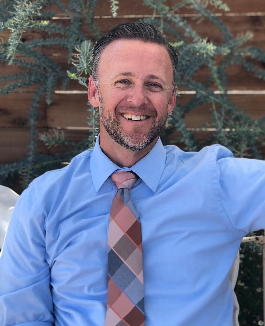
Mr. Giles was also targeted by a smear campaign that may have originated with members of the board and involved the improper public disclosure of closed-session information protected by law and intended to preserve employee confidentiality. One example appears in a Facebook post by Michelle Sokolsky, using the alias “Hector Martinez,” in which she disclosed sensitive information about Giles, ironically alleging that Giles had denied students due process rights. (The choice of the alias “Hector Martinez” was not incidental; it fit a recurring pattern in which right-wing attacks on district opponents relied on racial and ethnic tropes.) She claimed, moreover, that the board had voted unanimously not to renew his contract. There is reason to question whether such a vote occurred at all; and if it did occur in closed session, the details should not have been publicly disclosed. The same pattern is reflected in repeated public commentary by Falco-Jimenez, who claimed to possess and share “inside” information from board meetings. These incidents present significant governance concerns about whether confidential personnel information from closed session was leaked to political allies for use in public attacks on district employees.
Similar accusations of corruption were made by these people against Rick Lopez, Tom Craik, Richard McAlindin, and others. These campaigns appear to have originated from a common source.

Michelle Sokolsky, anonymous troll
Misty Janssen, Candidate for the Board
The smear campaigns did not stop with district employees. Activists aligned with Trustees Frazier, Youngblood, and Blades also turned their attacks on school-board candidates, including Misty Janssen. This was not ordinary rough-and-tumble politics. It was the same politics of vilification that had come to define the Cherniss-aligned faction: anyone who supported honest historical inquiry, defended the right of transgender students to exist, or questioned the board majority’s agenda was cast not merely as wrong, but as evil. Against Janssen, that poison became especially concentrated.

During the campaign, Nellie Hayek-Rofaeel filed a meritless Fair Political Practices Commission complaint against Sergeant Major Misty Janssen, claiming the campaign had improperly used images of school sites in its literature. The allegation echoed cease-and-desist letters sent by Superintendent Cherniss and district counsel David Huff, both of which rested on the same false premise. The FPPC summarily dismissed the complaint on August 7, 2024. That dismissal did more than clear Janssen; it exposed the Cherniss-Huff maneuver as another form of political harassment disguised as legal enforcement.
After the campaign concluded, the attacks on Sergeant Major Janssen did not stop; they escalated through anonymous complaints designed to make her desire for further public service personally costly. The first complaint was sent to the United States Marine Corps Inspector General, falsely alleging that Janssen had violated campaign or military-ethics rules by referencing her 25 years of service in the Marine Corps. The Inspector General reviewed the allegation and found it unwarranted. That baseless complaint was malicious, but it was mild compared with what came next.
The second anonymous complaint crossed a darker line. Someone reported Sergeant Major Misty Janssen to Child Protective Services, falsely claiming that her children were being abused at home. Anyone familiar with the Janssens would immediately recognize the charge as preposterous, and CPS found no basis for it. The real significance of the episode lies in the tactic itself: it weaponized a confidential protective-services system to intimidate a political opponent through government intervention.
That is why it resembles swatting. The purpose was not persuasion, debate, or accountability; it was to make political participation personally frightening. Nor does the tactic appear isolated. Tom Edwards of Sarasota, Florida reportedly faced a CPS visit after running against a Moms for Liberty candidate, and former Transportation Secretary and Democratic candidate Pete Buttigieg was more recently targeted by a similar false CPS claim.
Making a knowingly false report to Child Protective Services is not merely vicious politics; in California, it may constitute criminal conduct. If the Janssen report was knowingly false, the matter should be investigated accordingly. CPS already knows who made the report, and the likely political context is not difficult to trace. The people connected to this network should be placed under oath, the source of the report identified, and any knowingly false complaint prosecuted.

Subservience Rewarded

Those most responsible for the devastating loss of district leadership were rewarded at the February 13, 2024 board meeting. Renee Gray, Olivia Yaung, and Gary Stine each received three-year contract extensions, salary increases to $230,000, and protection from any required performance review. Gates received even more: a promotion to Deputy Superintendent and a salary increase to $250,000. The title of Deputy Superintendent had been awarded only once before in district history, to someone with three decades of service. Gates had been in PYLUSD for eight months. Each extension passed 3–2, with Anderson and Buck dissenting. When Anderson publicly announced her no vote on Gates’s promotion, Andre Falco-Jimenez shouted from the audience that she was racist. Two years later, on March 13, 2026, Gates filed a wrongful-termination lawsuit accusing the district of racial discrimination. His complaint was as meritless as the promotion that preceded it.
Four months later, at the June 18 board meeting, the same three board members committed the district to a three-year contract for superintendent Cherniss, thereby ensuring that any effort to remove him in the aftermath of the November elections would be costly to the district. The contract extension secured Cherniss’ employment through June 2028. While there was no salary increase in the contract extension, very favorable vacation terms were added. With the contracts of Cherniss and his four key lieutenants set, Trustees Frazier, Youngblood, and Blades could enter the 2024 campaign season with the confidence that whatever the outcome of those elections, it would be extremely difficult and costly to overturn the programs and personnel they had imposed upon the district.
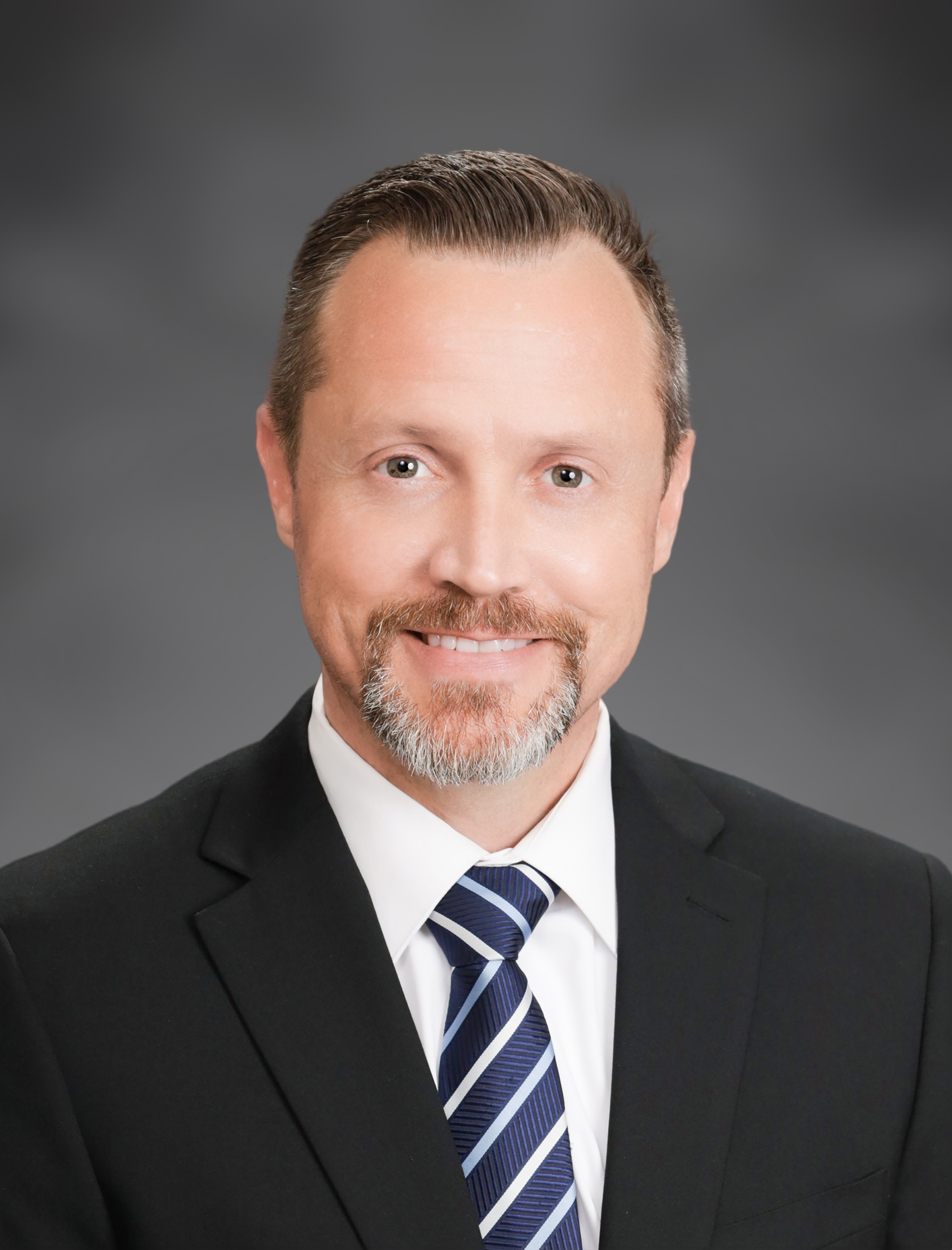
There was, however, one major flaw in this plan. Gary Stine, the assistant superintendent responsible for overseeing the district budget, did not remain in place to help defend what the board majority had built. Exactly nine months after receiving a new three-year contract—and one week after the extremists lost their board majority—Stine left PYLUSD for the Huntington Beach City School District, where he became Assistant Superintendent of Administrative Services on November 13, 2024.
The move raises obvious questions. Stine left a district of nearly 23,000 students for one with only 5,310, apparently without a meaningful decrease in compensation, while also relinquishing the contract guarantee he had received in February. His departure suggests that he may have seen trouble coming and chosen to exit before the full consequences of the Cherniss era became unavoidable. It is to that legacy of corruption that we now turn.
Stay tuned for EPISODE 3:
USI Exposes PYLUSD!


The church where Amy’s memorial was held was Santa Clara de Asis, not Saint Martin de Porres.
Yes, I fixed it, and found another picture of Amy!
Masterful, Sam! You are a pearl.