Episode 3 of the Six-Part Series
“The Corrupt Regime of Cherniss, Frazier, Youngblood & Blades.”
Read the Intro and Episode 1 HERE, Episode 2 HERE.
EPISODE 3: The Universal Sports Institute
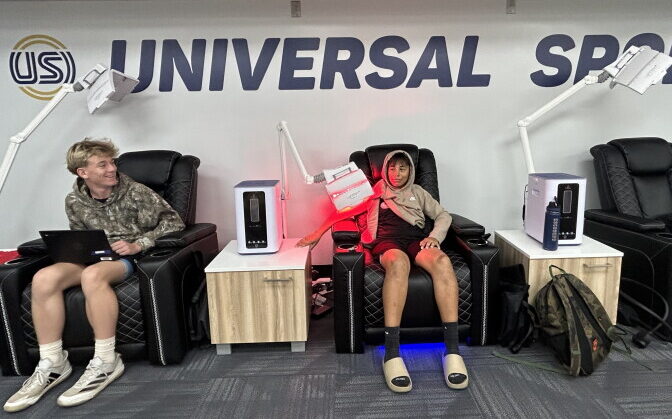
The Universal Sports Institute (USI) became the clearest example of how ambition, private relationships, public money, and weak oversight converged. The agreement with The Treigning Lab was presented as a programmatic innovation, but the record raises concerns that the procurement process functioned less as open competition than as a procedural justification for a preferred vendor.
The district reportedly sent the solicitation to companies unlikely to bid meaningfully, maintained a compressed deadline, and approved the agreement shortly after the response period closed. At the same time, Cherniss had reportedly been discussing the USI concept with Sam Calavitta of The Treigning Lab for months prior to the formal agreement. If the outcome was effectively predetermined, then the RFP process did not protect taxpayers; it merely gave the appearance of compliance with competitive bidding requirements.
A Competitive Bid in Name Only

The RFP process appears to have been structured in a way that discouraged genuine competition in bidding the contract and favored The Treigning Lab. On April 18, 2024, the district sent a perfunctory solicitation to Delta Sports Group, one of the companies selected for the RFP despite seeming unlikely to bid on or perform the project, especially on such short notice. An April 12 email from ADB Bids to Kimberly Bittle, PYLUSD’s Purchasing Office Coordinator, listed the RFP response deadline as May 1. That meant potential bidders had only days to evaluate a vaguely described project, prepare a meaningful proposal, and compete against a vendor with whom Cherniss had reportedly already been discussing USI for months. The Board approved an agreement with The Treigning Lab less than two weeks later, on May 14, 2024. This compressed timeline raises a serious question of whether the RFP was a meaningful competitive process or a procedural formality used to justify a predetermined award.

The concern is heightened by reports that Superintendent Cherniss had been discussing USI project details with Sam Calavitta of The Treigning Lab (left) for months before the May 14 agreement. Although the district later claimed that it solicited proposals “both through online posting and in a newspaper of general circulation,” the record does not identify the website, newspaper, publication dates, circulation details, response period, or number of responsive bidders. Without such information, the procurement record is inadequate to show that the district provided fair notice, invited other serious bids, or protected taxpayers from a constructive no-bid contract.
Once again, the board majority used timing as a weapon against public scrutiny. Just as Youngblood had called the Lopez special meeting on short notice at a time calculated to sideline dissenting trustees, President Blades (right) scheduled the special board session on the USI contract with only minimal notice and set it for 3 p.m. on Tuesday, May 14, 2024. For a meeting supposedly designed to allow open discussion and public exposure of a major proposed contract, that was an awful time: working parents, taxpayers, staff, and other community members were unlikely to be free, and the contract with The Treigning Lab had only just been made available to the public. The board was therefore asked to approve it before the community had any realistic chance to review the terms, attend the meeting, or raise objections. The timing was not a procedural accident; it was a deliberate effort to turn a major public contract into a fait accompli.
The Treigning Lab Gets Paid, PYLUSD Gets Exposed

One does not need to be a lawyer to see the massive loopholes in the contract and the way that the district stood to bear every risk and The Treigning Lab to receive every benefit.
It included substantial, recurring, and increasing project fees, software costs, annual licensing obligations, consultant-supervised personnel, indemnity provisions that might still leave the district exposed to defense costs, and clauses that blurred responsibility between the consultant and the district. Cherniss and his three board acolytes demanded the program be treated as urgent, even though the source of that urgency was never explained. In retrospect, the urgency appears to have served a political purpose: move quickly enough that trustees, staff, parents, and taxpayers could not fully evaluate the long-term financial, legal, and operational risks.
- Art. I §2 indicates that the total cost of Phase I would be approximately $1,231,446.68. This included a presumably recurring charge for “Performance Based Software” of $250,000, a project fee of $132,000 that was the first of three annual payments to total $400,000, and an $80,000 licensing fee that would be renewed annually at twice that amount.

- The Treigning Lab represented in the agreement that it was licensed, approved, and authorized to provide all services. (Art. I §5 a) Questions have since been raised about whether it was eligible to conduct business in California at the time, including whether tax-arrears or corporate-status issues affected its authority to operate.

- Art. I § 6 provides that “all personnel, including those assigned at DISTRICT’s request, shall be supervised by CONSULTANT.” That arrangement shifted day-to-day supervision to The Treigning Lab while the program operated on district property, served district students, and was paid for through a district-approved agreement. If an injury, misconduct, negligence, or other harm occurred, a claimant might name both the consultant and the district, but the district would remain the more obvious target because it owned the facilities, authorized the program, and had the “deep pockets” most likely to satisfy any judgment or settlement. The clause therefore warrants scrutiny to determine whether it adequately protected the district from liability, insurance exposure, and operational responsibility for consultant-supervised personnel.
- Art. II § 2 provides that the district may release payment only after receiving invoices identifying the date of service, the individual performing the service, and a description of the service provided. Evidence suggests that the district nevertheless paid The Treigning Lab for services that were not invoiced in accordance with those contractual requirements. If confirmed, those payments would raise serious concerns about contract compliance, internal controls, fiscal oversight, and whether public funds were released without the documentation required by the agreement.
- The concern is heightened by The Treigning Lab’s reported noncompliance with the California Franchise Tax Board and its resulting lack of authority to do business in California. In a June 12, 2024 email to Superintendent Cherniss, Gary Stine, then PYLUSD Assistant Superintendent of Administrative Services, wrote: “Operating with a suspended FTB status creates more risk for Treigning Lab than the district, as they have no remedy to enforce contracts entered into while in this status.” That statement reflects a serious fallacy on the part of Stine. A vendor’s inability to enforce a contract does not make payments to that vendor safe, lawful, or prudent. If the district paid a suspended or unauthorized entity without contractually required invoices, the district—not merely the vendor—could face audit findings, taxpayer challenges, restitution claims, questioned costs, liability for inadequate oversight, and public criticism for releasing funds without adequate documentation.
- Stine’s reasoning treated the vendor’s litigation disadvantage as though it eliminated the district’s risk, when in fact it underscored the opposite: the district was sending public money into an arrangement that may have been legally impaired, poorly documented, and difficult to unwind. Because the district ultimately disbursed at least $3.5 million to the USI project, with The Treigning Lab as the principal beneficiary, the district’s exposure was substantial despite Stine’s assurances.
- Art. VIII § 1(b)–(c) appears to require The Treigning Lab to indemnify the district for general or professional liability settlements arising from the consultant’s violations, negligence, recklessness, or willful misconduct. The provision raises serious risk-management concerns because it may not prevent the district from being named as a defendant or incurring substantial defense costs before any right of reimbursement is established. Even if the district ultimately argued that the consultant caused the underlying harm, a plaintiff would likely name the district because the program operated on district property, served district students, and was authorized and funded by the district. The clause therefore warrants review to determine whether it adequately protected the district from defense costs, settlement exposure, insurance risk, and disputes with the consultant over responsibility for covered claims.
- Art. VIII § 1(c) appears to provide that The Treigning Lab reimburse the district only after attorney’s fees and court costs have accrued to the district. This structure creates a potential conflict between the district and the consultant because the district may first have to defend, settle, or litigate a claim before seeking reimbursement from the consultant. If the consultant later disputes whether the claim arose from its conduct or falls within the indemnification language, the district could face additional litigation or unreimbursed costs. The provision therefore warrants scrutiny because it may leave the district exposed to defense costs, delay reimbursement, and create an adversarial relationship with the very party that is supposed to indemnify it.
- Art. IX § 1 states that consultant personnel are not “officers, employees, or agents of the District.” That language appears difficult to reconcile with other provisions, including Art. I § 6, where personnel assigned at the district’s request are nevertheless supervised by the consultant, and with circumstances clearly indicating that some individuals involved in USI also would hold district employment or district-related roles. This tension creates uncertainty about who controlled personnel, who bore responsibility for supervision, and who would be accountable for misconduct, negligence, injury, or other harm arising from the program. The provision therefore warrants scrutiny because it may have shifted operational control away from the district while leaving taxpayers exposed to liability, insurance costs, and disputes over responsibility.
- Art. IX § 10 states that “time is of the essence with respect to all provisions of this Agreement.” The agreement offers no clear justification for treating its provisions as urgent. In context, the clause appears to have supported an accelerated approval and implementation schedule after Superintendent Cherniss and the board majority had already committed substantial district resources to USI and needed to demonstrate progress on a poorly conceived and insufficiently vetted program. That manufactured sense of urgency is significant because the agreement involved substantial public expenditures, consultant-supervised personnel working with students on district property, unresolved liability and indemnification questions, and unclear long-term licensing and operating costs. By presenting the matter as time-sensitive, district leadership may have limited the opportunity for trustees, staff, parents, and the public to review the full agreement, evaluate alternatives, question fiscal assumptions, assess student-safety and insurance risks, or determine whether the contract adequately protected the district before approval.
Taken together, these provisions expose a contract built to favor speed, consultant control, and financial commitment while leaving the district with the risk. The Treigning Lab stood to receive escalating fees, licensing revenue, and operational authority over personnel, while PYLUSD remained responsible for students, facilities, public funds, and the political consequences of failure. The agreement blurred lines of supervision, weakened accountability, relied on inadequate documentation, and treated indemnity as though it could erase the district’s practical exposure. It could not. If anything went wrong, the district would still be the public institution named, blamed, audited, and forced to answer. The urgency surrounding the contract therefore looks less like responsible administration than a deliberate effort to push a costly and poorly vetted program past the public before its weaknesses could be fully understood.
Those weaknesses became harder to dismiss once attention turned from the contract language to the physical work at Casa Loma, where the same pattern of haste, evasion, and shifting explanations raised even more serious questions about construction, oversight, and compliance with state facilities requirements.
USI, DSA, and the Meaning of Evasion

The pattern for these legal and procedural abuses first became evident in spring 2024 at the initially planned USI site located at 4999 Casa Loma Avenue in Yorba Linda. In an April 14, 2024 email to Ron LaPlante, Principal Structural Engineer and Regional Manager of the Division of the State Architect‘s (DSA’s) San Diego Regional Office, Cherniss made two false representations. Terry Tao of Tao Rossini, PYLUSD’s legal counsel on architectural matters, and Marise Pereira at the Department of General Services were also included on the correspondence. First, Cherniss claimed that the project costs did not exceed the applicable DSA threshold for state approval. Second, he asserted that the project involved no structural alterations. He then concluded that the Casa Loma work was therefore exempt from DSA review under IR A-22, an “Interpretation of Regulations” document that districts use to determine whether a school construction project is limited enough to forego formal DSA approval.
Subsequent communications appear to show that the cost threshold and structural-alteration representations made by Cherniss were wrong. In his April 15 response to Cherniss, DSA’s LaPlante explained that the $128,000 threshold for construction included “the cost of all construction, overhead, profit, equipment, etc.” Cherniss had thus misrepresented the requirements of IR A-22 in his communication to LaPlante the previous day.

In a follow-up email to LaPlante on April 15, 2024, Tao falsely claimed that there was “almost no alteration,” describing the work as “[m]ostly putting down exercise mats and bringing in some exercise equipment,” and stating, “We know there are no structural alterations or structural items.” That characterization appears to have materially misstated the scope of work projected for the Casa Loma site and raises serious concerns about whether the district and its counsel misrepresented the project in order to avoid DSA review, thereby potentially placing student and staff safety at risk and exposing the district to potential litigation.
In a May 19 email to Trustee Anderson, copied to other board members and select community members politically aligned with the superintendent, Cherniss accused Anderson, without evidence, of “going behind the board” to “slow down this project.” That accusation was itself a lie. Anderson had not contacted the DSA, and even if she had, she had every right as an elected trustee to ask whether construction on a district site complied with state safety and approval requirements. More importantly, Cherniss then stated that DSA “is now getting involved in a project that they typically would never get involved in as there are absolutely zero alterations to the building.”
That statement was not merely wrong; it was contradicted by the very DSA communications already in the record. LaPlante had explained that equipment and related project costs counted toward the DSA threshold, and later communications showed that DSA understood structural changes had occurred that required review. Cherniss’s email therefore served two corrupt purposes at once: falsely blaming Anderson for raising legitimate compliance concerns while falsely assuring politically aligned recipients that DSA involvement was unnecessary.
At the May 4 board meeting, Cherniss appears to have materially misrepresented the content of LaPlante’s April 15 email to the public. Cherniss asserted that the Casa Loma work had written approval from DSA and that IR A-22 did not require the cost of equipment brought onto the site to be included in the project-cost threshold. LaPlante’s email, however, had clearly stated the opposite: that the threshold included “the cost of all construction, overhead, profit, equipment, etc.” Cherniss had clearly lied to the board and the public regarding DSA authorization and the applicability of IR A-22.
When Trustees Anderson and Buck asked to see the LaPlante email, Cherniss claimed that he had already shared it with the board. That claim raises questions because, if the full email had been provided to all trustees, the discrepancy between LaPlante’s explanation of IR A-22 and Cherniss’s public characterization of DSA authorization would have been apparent.
Both Trustees Blades and Frazier claimed to have received the LaPlante email and to have verified Cherniss’s characterization of it. That claim creates two serious concerns. If Blades and Frazier had received the email while other trustees did not, the selective sharing of material information could raise Brown Act and governance concerns. If they did not actually receive or review the email, but nevertheless publicly endorsed Cherniss’s characterization of it, then they intentionally deceived the board and the public.
In the aforementioned May 17 email from LaPlante to Tao, Cherniss, Ralph Figueroa, Director of Maintenance and Facilities, and Marise Pereira, LaPlante made clear that he understood structural changes had already been made at the Casa Loma site and that those changes required DSA review and approval. The email therefore shows that Cherniss and district officials were on notice that the work was not exempt from DSA oversight. In other words, construction already completed at the Casa Loma site had been carried out illegally.
Also at the May 4 board meeting, Cherniss appears to have misrepresented DSA requirements when, in response to a question from Trustee Anderson, he claimed that turf projects did not require DSA approval because they were not part of building construction. LaPlante’s May 17 email made explicit that turf projects do require DSA approval: “All turf projects require DSA approval per DSA IR A-22 Appendix Item 19.”

At the September 10, 2024 board meeting, Blades falsely claimed that the only construction issue at the Casa Loma site involved a misunderstanding over whether sprinklers had been installed in 2013. Cherniss then confirmed and reinforced that false narrative at the same meeting, despite prior communications from the DSA indicating that the Casa Loma work involved structural changes requiring DSA review and approval.
A further issue related to construction at the Casa Loma site involved a concern by staff of the Buena Vista Virtual Academy (BVVA). They were concerned that the construction taking place in the vicinity of their campus in the spring of 2024 may have exposed them to asbestos. After repeated assurances that the site did not have an asbestos problem based on a recent study, the district refused to release the study to Jamie Jauch, the principal of BVVA.
The Casa Loma record therefore matters for more than the technical question of DSA approval. It shows how Cherniss and his allies treated legal safeguards as obstacles to be managed, public oversight as a nuisance to be deflected, and trustee questions as political sabotage. Cost thresholds were misstated, structural work was minimized, DSA communications were mischaracterized, and legitimate safety concerns were recast as obstruction. Once Casa Loma became harder to defend, the problem did not disappear; it moved. The next question is what happened to the USI equipment, materials, and assets that had been assembled for the program—and why that public investment began shifting to the OCSCS by July 2024.
By July 2024, Cherniss’s priorities had become unmistakable. While questions over Casa Loma and DSA compliance remained unresolved, he began quietly moving USI assets away from Casa Loma and toward the campus of the Orange County School of Computer Science. That shift linked the two projects that had received a disproportionate share of district attention, money, and political protection: USI, the expensive athletic institute built around The Treigning Lab, and OCSCS, the new charter school created under the district’s authority.
The movement of assets therefore did more than relocate equipment. It connected a troubled vendor-driven program to a charter project whose governance and autonomy were becoming increasingly controversial. If district-funded USI equipment was being positioned for use by or through OCSCS, then the issue was no longer merely wasteful spending. It was the possible diversion of public property toward charter-linked interests without a clear public accounting of ownership, control, or accountability.
Hang on, there’s much more:
Episode 4, CAMPAIGN LIES
Coming soon!


