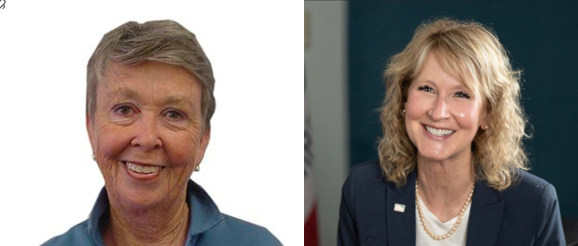
On February 24, 2026, Judge H. Shaina Colover heard retired federal bankruptcy judge Lynne Riddle’s complaint that Orange County Board of Education (OCBOE) member Mari Barke failed to disclose over $13 million of personal income, as required by the Political Reform Act of 1974 (PRA). The PRA requires candidates to disclose income sources, allowing voters to evaluate possible conflicts of interest.
Three remedies exist for addressing this violation. The first is as a criminal or civil appeal with the District Attorney’s office. Before acting on behalf of the public’s interest in a civil suit against the violations represented in Barke’s disclosures, Riddle had to first submit her evidence to the District Attorney, who then had 120 days to pursue the case on behalf of the public. The DA chose not to pursue this case. Had the DA chosen to do so and prevailed, all financial awards issued against Barke would have gone to the public.
A second remedy was through the Fair Political Practices Commission (FPPC). On February 8, 2023, the same day as she submitted her evidence to the DA, Riddle submitted her evidence to the FPPC, an administrative agency responsible for enforcing the PRA. After over five years of not disclosing mandated sources of income, in August of 2024 Trustee Barke updated her forms (known as FPPC Form 700) to reflect more than $13 million in income that she had failed to report in previous filings. This judgment of the FPPC represented an explicit acknowledgement that the forms were not properly completed over the five-year period in question. The FPPC recognized this infraction and fined Barke a mere $3,200. Naturally, voters did not have access to this crucial information in either her 2018 or 2022 campaigns, and some could suggest that this undermines the legitimacy of her election.
The perfunctory nature of the FPPC fine opened the opportunity for Riddle to pursue the third remedy. To encourage vigorous enforcement of the law, the PRA of 1974 made specific provisions that allow individual citizens to operate as Private Attorneys General. (See also: Governor Gray Davis Com. v. American Taxpayers Alliance, [2002].) Considering the failure of the DA to act or the FPPC to issue a fine commensurate with the offense, Riddle has assumed the role of a Private Attorney General on behalf of the public interest. Any judgment that Judge Colover issues against Barke will result in half of the award going to California’s General Fund and the other half going to Riddle acting as the Private Attorney General on behalf of the public.
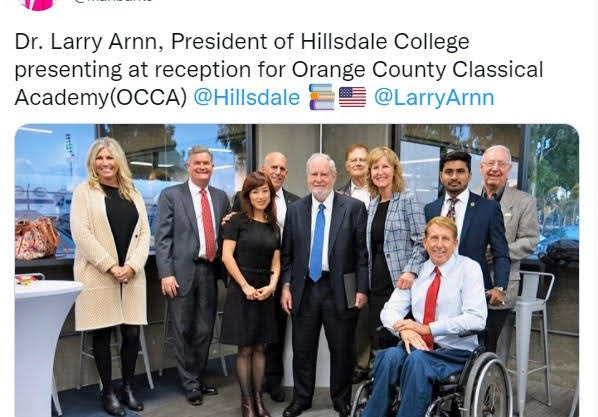
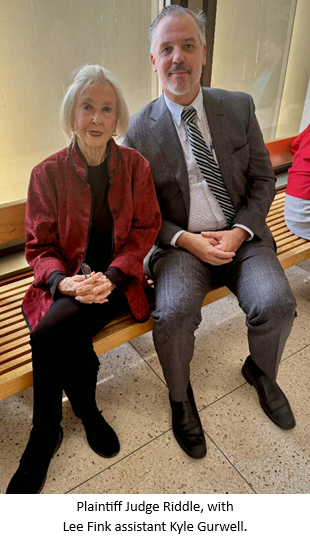
Anyone who thinks that Riddle is doing this for the money, however, neither understands the character of the woman nor the dogged determination she has devoted to this case. This case has unfolded over many years. Plaintiff Riddle submitted her complaint in 2023 through the Brower Law Group, with Lee Fink serving as lead counsel and Kyle Gurwell assisting. Mr. Fink’s summary of the initial complaint can be found here. There are many articles about Mari Barke and her former husband Dr. Jeffrey Barke. Here is a good introduction to them, with a link also to the ties between the Orange County Classical Academy and Hillsdale College.
Why This Case Matters
One could argue that Mari Barke is the most pernicious figure in Orange County MAGA politics. Her influence extends far beyond the county and the classroom. Here is a partial list of the damage she has done.
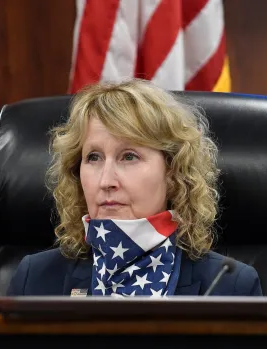
- No one has done more to undermine California’s public schools while aggressively advancing self-serving, profiteering charter schemes and blatant ego-driven political branding.
- In her role as director of the California Local Elected Officials (CLEO), a program of the California Policy Center (CPC), she has used its colossal resources to recruit MAGA candidates to run for municipal, state, and federal government offices throughout California.
- She colluded with her then-husband, Dr. Jeffrey Barke, to undermine science-based protocols during the pandemic. There are few people more responsible for the approximately 500,000 avoidable COVID deaths than Dr. Barke. The patterns of COVID deaths had a class and racial bias, reflective of the prejudices represented by the Barkes. The Barkes colluded with their Los Alamitos neighbor, Alex Cherniss, to waste taxpayer money in lawsuits against the state of California when the state properly followed science-based COVID protocols.
- She has promoted book bans that deprive the rights of Blacks to tell their own stories and to allow Blacks to frame those stories in patterns of analysis that do not fit the biases of the history Barke wants to impose on everyone.
- She has promoted book bans of age-appropriate books that address themes of sexual orientation, gender identity, and children being raised by same-sex parents.
- She weaponizes “parental rights” to elevate the demands of ideologically aligned parents over everyone else—silencing dissenting families and stripping young people of their own agency.
- She has taken actions that have negatively affected the capacity of counseling professionals at public schools to establish relationships of trust and confidence with students whose gender identities and sexual orientations may create challenges in those students’ interactions with their parents.
- She has attacked the right of teachers to form associations in support of their professional standing, while working with groups who have accused teachers of being “groomers and pedophiles.”
- She has promoted fear by lies and distortions about teachers, counselors, immigrants, scholars, social and educational programs, scientists, and artists.
- Most damagingly, Barke has helped install MAGA extremists on local school boards. In their wake, unqualified school board trustees have displaced proven education leaders—replacing competence with grift—while siphoning taxpayer dollars from classrooms into sham “programs,” frivolous litigation, and charter schemes that strip voters of control over one of democracy’s most basic institutions: the local school board. As a result, districts have lost talented educators in large numbers—losses that will take decades to repair.
Barke and the CPC

Understanding Barke’s destructive impact on public education in Orange County requires examining the CPC, the agency responsible for overseeing these changes. The CPC is responsible for incorporating its ideological perspective into municipal agencies, which are normally overseen by technical specialists and professionals. In typical Trumpian fashion, the CPC has worked to stack environmental and water boards with climate-change deniers, public-health boards with medical quackery, and transportation boards with fossil-fuel partisans. The well-funded CPC has effectively persuaded the public to elect its candidates to nonpartisan municipal offices. However, nowhere has the success of placing unqualified ideologues into office been more effective than on the OCBOE.
The CPC is focused on the OCBOE largely because California’s charter-school framework gives county boards of education the power to authorize charters that can operate within local districts—even over the objection of locally elected boards. Apart from this charter-authorizing authority, the OCBOE’s role is primarily supervisory and supportive: it governs the Orange County Department of Education’s (OCDE) policies and programs, provides general oversight and accountability, and oversees countywide services such as alternative education—particularly programs serving students with significant behavioral or disciplinary needs. By design, the OCBOE’s purview is otherwise limited to the professionals and programs housed within the OCDOE. Without the charter-authorizing lever, the OCBOE would not be an attractive target for CPC-style political capture.
The MAGA takeover has turned the OCBOE from an agency with a limited area of oversight in our schools into one whose meetings are tedious political platforms for promoting ignorance, grift, bigotry, and the political aspirations of CPC sponsored trustees. At the monthly OCBOE meetings, hours are spent attacking teachers unions, medical professionals, transgender youth, and anyone else who might oppose the MAGA worldview all five members embrace.
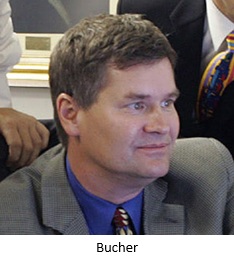
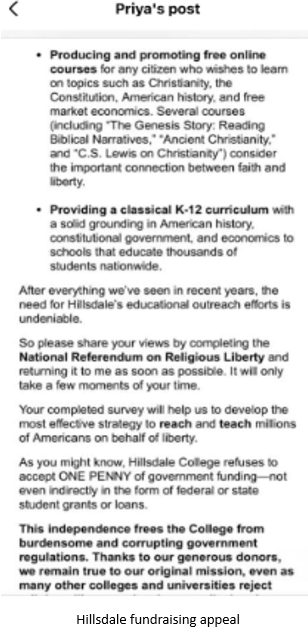
Mark Bucher is the central figure in the CPC and in the drive to undermine public education. Bucher is an attorney who cofounded the CPC in 2010 along with Edward Ring. In 2020, Bucher co-founded the Orange County Classical Academy (OCCA), whose curriculum originates at Hillsdale College and can be linked to the Nazi influences that have shaped the ideological foundation of the Claremont Institute. The current board members of the OCCA are Bucher, Dr. Barke, Bishop Gale Oliver—who serves as Senior Pastor at Greater Light Family Church and CEO of Dream Big & Make it Happen—Steven King, Kendra Mehr, and Dr. Matthew Smith. Former Board members of the OCCA include Dr. Stefan Bean, who was unanimously appointed by the OCBOE to succeed Dr. Al Mijares following his passing in January 2025. Gary Davis, a founding member of the OCCA, currently serves as the Executive Director of the California Republic Leadership Academy (CRLA).
The CRLA appears to be little other than a rebranding of the OCCA. The conflicts of interest between the OCCA and current OCBOE members are readily identifiable. In contrast, those involving the CRLA are less apparent. Additionally, the connections to Hillsdale College and its curriculum are more limited within the CRLA than within the OCCA. In the final analysis, however, the curriculum of the two institutions encompasses the same white nationalist agenda and pseudo-science of the MAGA worldview.
The CPC’s main achievement has been gaining control of the OCBOE and using the charter school loophole to undermine local school boards’ authority and the wishes of local voters. The goal of the CPC has been to divert taxpayer money into institutions that are not accountable to the taxpayers who fund them. In Orange County, the CPC has succeeded in this antidemocratic quest. The purchase price of the OCBOE, however, has been exorbitant.
Follow the Money!

The CPC generates money flows that are distributed in four different directions. The first is from major individual and institutional donors to the campaign coffers of the Trustees on the OCBOE. The OCBOE then uses its authority to impose charters on school districts that do not want them. The OCBOE also diverts large quantities of taxpayer money into law firms and lobbyists that promote charter schools and engage costly litigation that further diverts taxpayer money from our classrooms. Fourth, the OCBOE supports candidates on local school boards who endeavor to undermine public education.
Buying the OC Board of Education
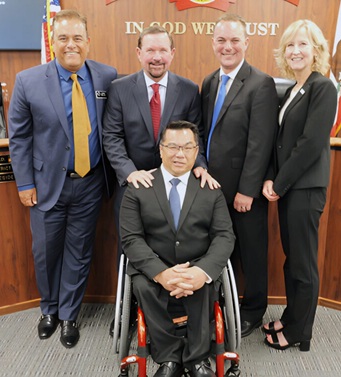
Project 2025’s long-term, dark-money-funded effort to dismantle public education has made school-board races extraordinarily expensive—pricing out candidates who are simply motivated and trained to support kids. This is especially and somewhat uniquely the case in Orange County, the ATM for MAGAdom. Over $1.3 million was spent in the 2022 and 2024 election cycles to place charter school advocates in every OCBOE seat. In the six races that occurred in those two cycles, two PACs associated with the California Charter Schools Association Advocates donated over a half million dollars. Their donations averaged over $84,000 per candidate.
Money is not the only advantage the GOP retains in OCBOE elections. The OCGOP has successfully worked to ensure that the OCBOE elections do not occur in November, when election turnout is higher. Although the Republican Party’s electoral performance in Orange County has declined over recent decades, the party continues to benefit from a favorable proportion of Republican voters participating in primary elections. Efforts by public school advocates to move the OCBOE elections to November ballots have not succeeded. One contributing factor is the general public’s lack of awareness regarding the actions of the OCBOE. The absence of November elections for the OCBOE can be attributed to limited media coverage and insufficient prioritization by public school advocates, including the Democratic Party of Orange County and the California Teachers Association.
Here is a candidate-by-candidate breakdown of the political contributions made to all five members of the OCBOE:
Mari Barke
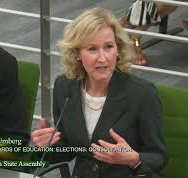
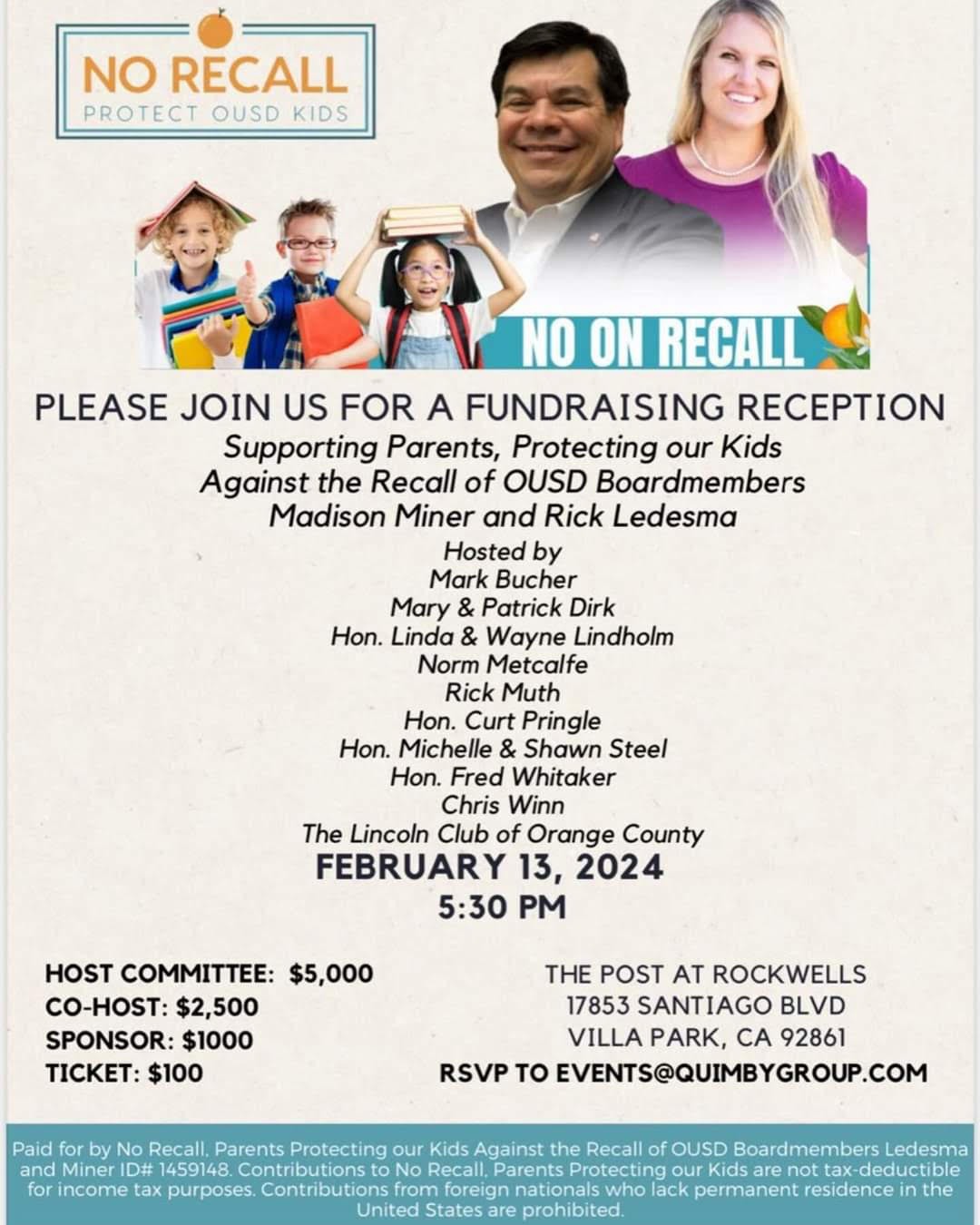
Barke received $243,091 in donations during the June 7, 2022 election cycle. $85,000 of that came from the two charter school PACs, representing 35% of total donations. The Lincoln Club donated $33,300. Barke’s employer at the CPC, Mark Bucher, donated $24,600 through M.Bucher+CalAct. It should also be remembered that Bucher is the founder of the OCCA, an institution on whose board sat Barke’s then husband, Dr. Jeffrey Barke. A portion of Bucher’s contribution consisted of a direct loan totaling $24,000, along with $4,600 that was forgiven from the original $25,000 loan; Barke repaid the remaining balance in full. The Family Action PAC, a Newport based Republican group, donated $14,500. The savings-and-loan heir and Christian Nationalist Howard Fieldstead Ahmanson Jr. donated $10,000, as did David Horowitz, a conservative activist whose anti-Muslim rhetoric has been widely criticized.
Tim Shaw

Tim Shaw ran in consecutive elections over two years after resigning from the Orange County Board of Education (OCBOE) on November 11, 2021. His resignation followed a complaint by Karen Wright alleging he held “incompatible offices” by serving simultaneously on the La Habra City Council. The same allegation—raised by Mike Tardif—resulted in Beckie Gomez, a public-school advocate, being removed from the OCBOE six months later. Both Gomez and Shaw denied that the two positions were incompatible, but neither chose to litigate, citing the high costs involved.
In 2022, Shaw received $289,713 in donations for his position on the OCBOE. Many of these contributions paralleled those made to Mari Barke and Lisa Sparks during the same election cycle. The two charter school PACs accounted for $86,000, or 30% of the total funding. The Lincoln Club contributed $33,300, while the California Real Estate PAC provided $30,000. M. Bucher+CalAct donated a total of $25,200, which included a $20,000 direct donation and $5,200 resulting from loan forgiveness on another $25,000 Bucher loan to the campaign. The Family Action PAC contributed an additional $14,500. Michael F. Harrah provided $12,500, reflecting further support from the Orange County real estate sector, and Fieldstead added $11,000.
Lisa Sparks
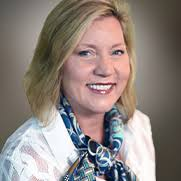
Lisa Sparks’ 2022 campaign received a total of $267,250 in donations. Of this amount, $85,000—representing 32%—was contributed by the two charter schools PACs. The Lincoln Club provided its usual donation of $33,300. Bucher gave substantially more than usual, making a direct contribution of $20,000 while forgiving $21,000 from his standard $25,000 loan to the candidates who would be advocating for his OCCA. David & Andrew Horowitz donated $20,000, while Family Action PAC maintained its typical gift of $14,500. Fieldstead contributed an additional $10,000, completing the list of the most substantive donors.
Tim Shaw ROUND 2!

After resigning from the OCBOE in 2021, he ran again in 2024 for the seat he had vacated and then won in the 2022 special election. His 2024 campaign was the least expensive of the OCBOE elections funded by charter school interests, receiving “only” $164,327 in donations. The two charter schools PACS donated $75, 918 in 2024, down more than $10,000 from the 2022 campaign. In other words, these two charter school PACS contributed $454,040 to his two campaigns over a period of 21 months. The Lincoln Club contributed another $25,000, bringing its total across the two campaigns to $58,300 from that organization. The Family Action PAC increased its contribution to Shaw in 2024 by $500, raising their two-campaign total to $29,500. This partially offset the California Real Estate PAC’s reduced contribution in 2024: $5,000, down from $30,000 in 2022. Fieldstead provided his standard $10,000 and the CA RealEst PAC pitched in another $5,000.
It should be noted that Shaw has declared his candidacy for the Orange County Board of Supervisors, District 4 in 2026. The Orange County GOP has endorsed him for that seat; the Lincoln Club has instead endorsed Fred Jung. Shaw is a lifelong Republican, while Jung is not. For Shaw, the race also appears to be a bid to step up from the OCBOE to a higher-profile office. By contrast, Ken L. Williams’ decades-long tenure on the OCBOE illustrates how difficult it can be for long-serving OCBOE trustees to translate this platform into higher political office.
Jorge Valdes
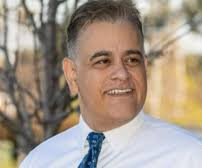
By some measures, Jorge Valdes was the biggest beneficiary of charter school patronage. On August 17, 2022, three of the four charter school funded members of the OCBOE appointed Valdes to fill Beckie Gomez’s seat after she was compelled to resign. Ken Williams’ abstention on this vote may have been a strategic effort to avoid openly aligning himself—ahead of his reelection campaign—with another candidate’s baggage. The two charter school PACs contributed 53% ($85,448) of total donations to reestablish Valdez’ seat. Bucher donated an additional $12,000 as well as loaned the Valdes campaign $25,000 from his business account at Service First. Bucher ultimately forgave $15,000 of that loan. The Lincoln Club provided $25,000, and the Family Action PAC added an additional $15,000. Feldstead rendered another $10,000 to Valdez’s coffers.
Ken Williams

The most expensive campaign of the OCBOE 2024 election cycle was conducted by Ken Williams. Charter school interests invested substantial resources in support of Williams, a thirty-year incumbent, competing against a highly qualified challenger, Nancy Watkins. (Full disclosure. Nancy is a friend and one of the leaders in the field of education I most admire.)
Reading Ken L. Williams’ biography, one cannot help but conclude that he has been sitting on the OCBOE for thirty years waiting for the opportunity to advance to a more substantial political post. As he now approaches his 70th year, however, he is likely having to come to grips with the fact that the OCBOE may be his political legacy.
Watkins, by contrast, has spent her career in education. In the first phase of her career, she taught civics, history, economics, and epistemology to a generation of students. She subsequently transitioned into school administration, where she developed and implemented innovative educational programs designed to meet the diverse needs of all students. Currently, as Assistant Professor of Educational Leadership and Director of the Doctoral Program in the College of Education at CSU Fullerton, she is responsible for training administrators and supporting their professional growth. Few candidates anywhere could match her depth of classroom, administrative, and higher-education leadership experience for service on an education board.

The voters in Area 3 of the OCBOE thought otherwise. Nancy devoted more than a year of her life attempting to unseat the three-decade incumbent Williams. Working with Nancy on the campaign, it was difficult to watch a friend struggle to convince donors to contribute to this campaign when there were so many other important campaigns of concern. It was especially hard to witness people who didn’t know her accuse her of supporting initiatives they claimed “violated the innocence of children” and other disturbing notions. Such charges, of course, all came from people who voted for a president whose sexual abuse of children is becoming more obvious by the day. Ultimately, individuals who regard Dr. Jeffrey Barke as a more authoritative physician than Anthony Fauci are also those who preferred Ken Williams over Nancy Watkins.
Mr. Williams demonstrated his self-promotion by highlighting the supposed educational innovations of the OCCA at an OCBOE meeting before his 2024 reelection. Nancy and I were present that evening when he made the absurd statement that, unlike the OCCA, public schools do not employ the Socratic teaching method. We could barely keep from laughing out loud because one of my earliest memories of Nancy was her leading a district wide seminar on how to adopt Socratic methods nearly twenty years prior. Since Mr. Williams lacks basic knowledge about the teaching profession, he didn’t realize that Socratic pedagogy is taught in every credible credentialing program—it’s pretty basic knowledge. Asking a certificated teacher whether they know about the Socratic method is like asking a chemistry teacher if they know about the periodic table. Williams ignorant pontification represented the type of sham “innovation” that charter schools frequently promote as their alternatives to an allegedly “failed” public education system.

This is what Nancy was up against. Williams and others like him want voters to believe that public schools are failing because they have abandoned a commitment to core skills in favor of what he labels “woke” ideology. In this narrative, teachers and their associations are portrayed as systematically “grooming” students by promoting promiscuity and encouraging them to question their gender identity. School counselors are cast as looking for ways to circumvent parental authority and to push students to distance themselves from their families. Social studies instruction is accused of disparaging the nation’s founding figures and institutions as inherently racist and sexist. From there, the conclusion follows: public schools are “destroying America,” and the only solution is to redirect taxpayer dollars to institutions aligned with providential accounts of the country, embodied locally in schools like the OCCA and CRLA.
If a candidate as qualified as Watkins cannot prevail in a contest for a seat on the OCBOE against an incumbent like Williams, it raises some fundamental questions. One reason it is so difficult to recruit excellent candidates to run for the board is the sheer amount of money required to compete. Nancy spent most of her time on the phone fundraising—calling people who often had to weigh whether her campaign was the best use of the limited funds they had set aside for political contributions. Then there are the personal attacks, both direct and implied, that she had to endure.
The OCBOE’s day-to-day role in public education is narrow: it primarily oversees county-level programs and the Orange County Department of Education, while local school districts retain authority over most school-site operations. OCBOE trustees receive a modest $562.61 stipend for attending the monthly meetings. There are also annual medical and life insurance benefits that can range from $10,000 to $57,000 depending on the plan selected and number of dependents. This compensation reflects the limited purview of this office.

The grand infrastructure of the OCGOP rallied around Williams. The OC Register gave an inane endorsement. All the local Republicans also endorsed him, including Sheriff Don Barnes. Barnes’s endorsement is especially troubling given reports of a road-rage incident involving Williams the prior year, in which he is charged in a civil complaint for having assaulted 19-year-old Caden O’Malley on Crystal Canyon Road in Silverado on March 11, 2023.
The allegations in the plaintiff’s complaint against Williams are deeply disturbing. Keep in mind as you read this that Williams identifies himself as both a “sworn law enforcement officer” and a reserve sheriff in Barnes’s department. He also presents himself as an active supporter of anti-bullying initiatives. According to O’Malley, Williams repeatedly used his Escalade to block his path and force O’Malley’s Volkswagen Golf TDI off the road. To avoid the danger created by Williams’s driving, O’Malley pulled over. Williams pulled over as well and approached O’Malley while he was still in his vehicle. O’Malley exited his car to photograph the Escalade’s license plate. O’Malley claims that Williams then slapped the phone out of his hand, threw him to the pavement, choked him, and drove away while O’Malley remained seriously injured along the roadside. O’Malley says he was able to crawl out of traffic and call for emergency medical assistance. Medical personnel may ultimately be called to testify in the case. For now, the matter appears to be on hold pending a criminal investigation.
The big question, of course, is this: how was it possible for a ‘sworn law enforcement officer’ to walk away from that scene?

Sheriff Barnes certainly knew about this incident when he declared his support to Williams for the OCBOE. It is also difficult to believe the OC Register and other local media, along with numerous Republican candidates and donors, were not informed about it as well. Like the Epstein files, this outrage seems to have been deliberately suppressed by powerful interests—for now. The public only learned of this event near the end of the March 2024 campaign, which was too late to have much influence the outcome. The next status conference in O’Malley v. Williams is set for April 6th at 9:00 a.m. in Department C11 of the Central Justice Center in Santa Ana. This hearing will coincide with the final phases of the Riddle case.
Nancy ran an admirable race, but she could not overcome the public’s limited awareness of the OCBOE, the low turnout that results when these contests are deliberately scheduled for primaries rather than general elections, and the flood of money that Mark Bucher and charter-school operators and advocates poured into the campaign. In the 2024 election cycle, charter-school interests spent $32,471 more to reelect Williams than they did to reelect Shaw, and $35,177 more to reelect Williams than they did to reelect Jorge Valdes.
Charter-school interests succeeded in capturing all three OCBOE seats that were on the ballot in 2024, and the results suggested that the charter school interests were right to spend so much more to hold Williams’s seat. Shaw received 60% of the 87,524 votes cast in District 4 (24% voter participation). Valdes received 57% of the 58,336 votes cast in the 1st District (19% voter participation). Williams received 53% of the 129,265 votes cast in District 3 (33% voter participation). Turnout in District 3 was substantially higher than in Districts 1 and 4, reflecting the increased awareness generated by Nancy’s exhausting, more than a year-long campaign. While her effort was both quixotic and informative, it ultimately fell short in the face of a narrative—relentlessly promoted throughout the race—that portrays public schools as harmful and wasteful.
The nearly $200,000 spent to reelect Williams consisted of the following. The two charter school PACs spent $87,219, representing the largest sum given to any of the six races they lavishly funded over the last two election cycles. The Lincoln Club donated $25,000 and the Family Action PAC an additional $15,000. Bucher donated $15,000 through his business, ServiceFirst, which also forgave an additional $15,000 of a $25,000 loan to the Williams campaign. Fieldstead provided his standard $10,000 donation. Total donations to purchase this seat on behalf of charter school interests amounted to $196,798. Williams needed every penny.
The Self-Dealing of Mark Bucher
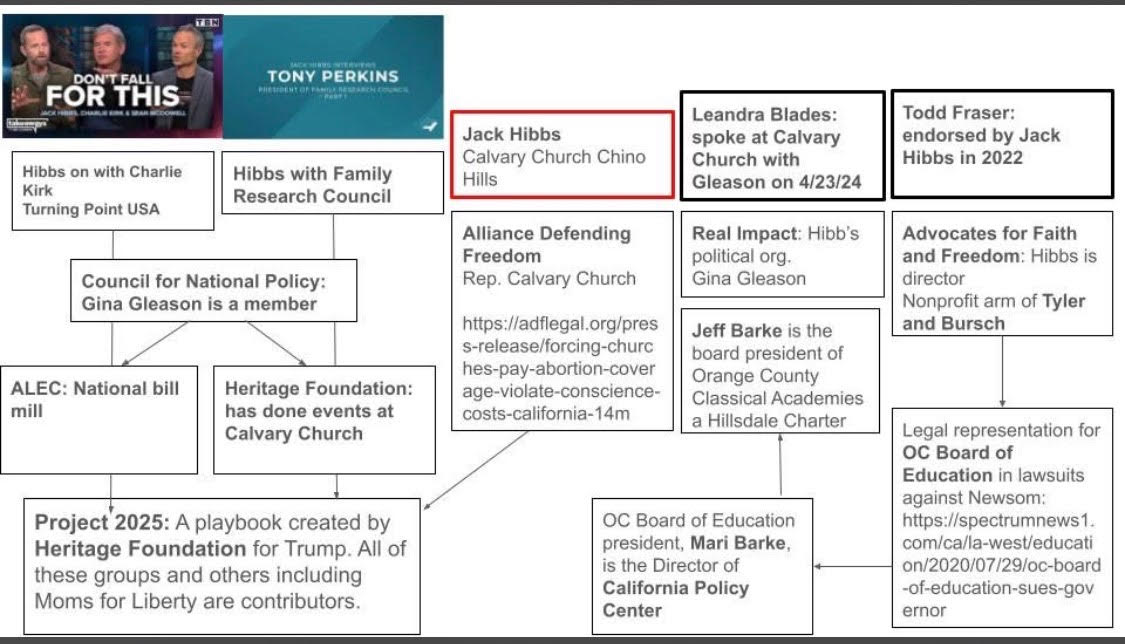
Mark Bucher’s donations to both OCCA and CPS represent the main conflict of interest scam in this story. Bucher’s involvement in self-dealing may have been a significant factor in the rebranding of OCCA as CRLA, an organization where the vested interests of Bucher and Dr. Barke are less readily identifiable. The combined contributions (direct donations and loan forgiveness) of Bucher to the six campaigns in the 2022 and 2024 election cycles totaled $147,800. This is in addition to the $504,585 contributed by the two charter PACs. Bucher and the two PACs thus contributed $652,385 of the $1,326,428 used to purchase all five seats on the OCBOE over a period of two years.
Barke’s Politial Contributions
While Mari Barke was receiving lavish donations from charter interests and reporting virtually no income on her Form 700, she was also extraordinarily generous in her campaign contributions to prominent local, state, and national Republican candidates. In her contributor capacity, she variously identified herself as a consultant for the CPC, an executive for the CPC, a homemaker, an entrepreneur, a self-employed consultant, and retired. It should be noted that one of the most shocking omissions in her Form 700 submissions was the failure to report any income or revenue in her various roles with the CPC.
Over five years in question, she donated $21,878.98, including about 30 smallish contributions to the Trump campaign ($1,402.03), $5,000 to the California Republican Party, $2,750 in self-dealing donations to the Lincoln Club PAC, $3,000 to Michelle Steel (2019-2020), nearly $1,500 to WINRED across 44 donations, and $2,000 to Young Kim’s 2018 and 2020 campaigns. Although none of these donations violate legal requirements, their disclosure underscores the significance of Form 700 in identifying and monitoring potential conflicts of interest among elected officials. While 501(c)(3) organizations like the CPC are not allowed to endorse candidates, they can employ individuals to sweetheart jobs who can. This creates a self-sustaining flow of political money—fed by the deep pockets of the OCGOP. Such circumventions of the spirit of the law is exactly why Form 700 and the FPPC are so important.
The “Pro Quo.”
Charter-school interests have earned a substantial return on their Orange County investment. Since the board’s takeover by charter school beneficiaries in 2018, the OCBOE has as a rule approved charter petitions—even when the affected local district
has opposed them and even when OCDOE staff have recommended against approval. Of the 33 charters the OCBOE has approved over the past decade, 18 were approved over the objection of local school boards. Many of the remaining 15 were authorized as countywide charters, a structure that can bypass meaningful consultation with the governing board of local school districts.
Lawyers, Litigation, and Lobbyists
There are two strategies in the MAGA quest to destroy public education. The first is to defund neighborhood schools by diverting taxpayer dollars into privately operated charters—such as OCCA and CRLA—that operate outside the accountability of our locally elected school boards. The second is to drain public schools of resources through litigation, forcing taxpayers to bankroll both plaintiffs and defendants in senseless lawsuits.
Lawyers
Nowhere is the waste, fraud, and abuse hampering our schools more evident than in the obscene amounts of money devoted to lawyers, litigation, and lobbyists. In the five years prior to the complete MAGA takeover of the OCBOE, annual legal fees for both the OCBOE and Superintendent’s office averaged $10,325. In the five year period after the MAGA ascension, these annual fees jumped to $1,743,622. That represents a 16,800% increase in legal fees. (Presenting this increase in percentage terms should give Trustee Valdes practice in this math skill. He evidently needs it. See below.)
Remember these facts next time you read an endorsement like this in the OC Register:
“In our interviews, incumbents Valdes, Williams and Shaw impressed us with their fiscal prudence and backing of more charter schools. We don’t dispute the qualifications of the challengers, but we fear what an Orange County Board of Education with outsized teachers union influence would look like.”
Oh Yeah? What about the outsized influence of the charter schools?
The notable rise in legal fees happened at the same time the charter-unanimous OCBOE board chose to stop sharing in house legal counsel with the OCDOE and the superintendent. The board did so after suing then superintendent Al Mijares for his opposition to allowing the OCBOE to hire separate counsel. This suit alone cost taxpayers $3.2 million. The main legal issue remained unresolved, most likely because Superintendent Mijares sought to avoid additional expenditures associated with further appeals. When Dr. Mijares died on January 23, 2025 after a bout with cancer, the OCBOE replaced him with former OCCA Board Member Stefan Bean.
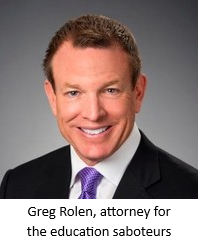
When the OCBOE stopped using the in-house general counsel of the OCDOE, it opened the way for Greg Rolen of Haight, Brown & Bonesteel to earn enormous fees from Orange County taxpayers. In 2022, Attorney Rolen charged $360,000 in services to the taxpayers of OC for what was very much a part time job. One of the reasons he runs up such high bills is that he is not a resident of OC. He bills OC taxpayers for his mileage, parking, airfare, hotel, and travel time to sit in meetings that he only occasionally gets called upon. Are there no local attorneys who might reduce these exorbitant costs?
One might think that Trustee Valdes, a workers comp attorney who lauds his own ability to scrutinize fee invoices would have some ideas on how to divert some of this money to students. On the contrary. When confronted in a March 2023 meeting with a table of fees produced by Judge Riddle, Valdes responded as follows (see page 54 of the linked transcript from the March 1, 2023 session of the OCBOE):
“I wanted to respond to at least some of the public comments tonight. One was about the legal bills that we approve every month. I personally review every one of the legal bills. I can tell the public based on my expertise in the law, that Greg Rolen who is our board attorney, is a fantastic attorney in the educational community. He absolutely knows what he is doing. For the $360,000 in the public comments, I would like to point out that this Department’s annual budget is $406 million. In essence, this Board has approved 0.0088% [sic] of the Department’s budget for legal expenses with Mr. Rolen’s office, which I don’t think is a significant amount to protect the parents and students of Orange County.”
So, according to Valdes, Rolen is a uniquely qualified attorney whose cost to OC taxpayers is justified in the context of an OCDOE budget that employs roughly 1,300 people and funds numerous outstanding programs. Besides, Valdes assures us, it is “only” 0.0088% of the overall budget. (Except it isn’t. It’s 0.088%—a tenfold difference.)
It should surprise no one that Mr. Rolen also represents the OCCA. Like Barke, he recused himself when the OCBOE took up the petition for this Hillsdale-curriculum charter school—an extraordinary conflict-of-interest optic for a board that claims to
champion “transparency.” The board then hired separate counsel, a further unnecessary expense to the taxpayers. But the procedural shuffle did nothing to dispel the central problem: the four trustees left to vote had each benefited from heavy charter-school PAC support. Under those conditions, the outcome was preordained.
Litigation
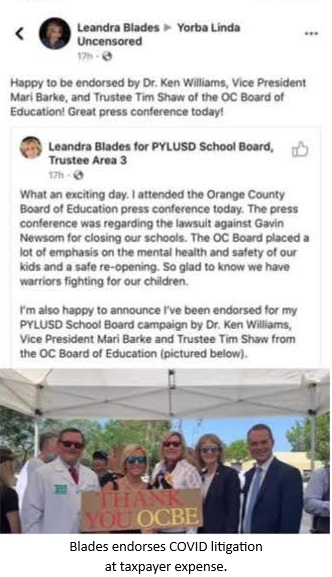
The wave of litigation filed against school districts by MAGA-aligned board members on both the OCBOE and local school boards warrants forensic audit scrutiny. This kind of taxpayer waste has become a recurring feature of districts governed by MAGA-aligned board majorities, as well as on the OCBOE itself. Total OCBOE legal fees over the five years prior to the 2018 charter advocate takeover were $51,626; in the subsequent five years, they totaled $8,718,110.
Lobbying
The influence of charter-school PACs is also a matter of state and national importance. The charter-school lobby in Sacramento and D.C. spends millions each year to influence politicians of all stripes. The problem of lobbyists is not exclusively a Republican matter. As I wrote in the Orange Juice Blog last April:
Even though charter schools almost invariably subvert the ability of local communities to operate their schools within the framework of state law and the federal constitution, it remains difficult to sway Democratic politicians to oppose charters. Legislation attempting to restrict charter school enrollment in 2016 failed in the California State Legislature after the California Charter Schools Association (CCSA) poured around $18 million into the pockets of legislators and lobbyists that year. Major contributors to the CCSA at that time included Democratic Party donors Doris Fisher of Gap clothing company ($4.2 million) and Reed Hastings of Netflix ($2 million). Three very Republican members of the Walmart family found it in their interests to add $2 million to California charter schools from their privileged perches outside the state. Add to that money flow the many millions that come from the megachurch affiliated Homeschool Legal Defense Association, an organization that opposes any regulation on homeschooling and has provided cover for many instances of child abuse. These have combined to tilt the bipartisan money scales heavily in favor of charters.
Neighborhood schools are the foundation of a community’s identity, wealth, and safety. When big money undermines local control of schools, communities pay the price. And the poorer the community, the greater the harm. Community control of neighborhood schools is the heart of Riddle v. Barke.
**********************
THE TRIAL.
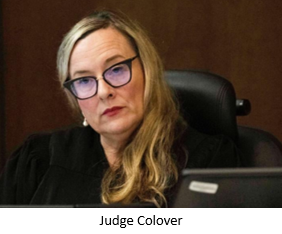
There is a reason bench trials are rarely featured in episodes of Law & Order. A trial before a judge is largely a conversation among legal specialists, with relatively little that is immediately apparent to spectators in the gallery. The roughly ten hours of proceedings in Department C34 in Santa Ana before Superior Court Judge Colover consisted largely of evidentiary and procedural questions—often technical even for the experienced attorneys observing in the courtroom. Plaintiff and defense counsel pored over hundreds of pages of deposition testimony with the judge, parsing what would (and would not) be admitted into the record for purposes of the court’s decision. And through that painstaking process, one fact became unmistakable: Lynne Riddle had invested an enormous amount of time and preparation in this case.
It also became clear that this case is unprecedented. As far as the parties in the courtroom could tell, no prior Private Attorney General actions have sought judicial penalties after the FPPC had already imposed an administrative fine for Form 700 disclosure failures. For that reason, the implications of this case may reach well beyond the individuals involved. The attorneys and the court are effectively testing how much force California’s disclosure regime can carry in practice—and whether civil enforcement can give real teeth to campaign-finance transparency laws by ensuring that voters see candidates’ potential conflicts of interest before an election.
The public phase of this case has concluded. Written closing arguments from the plaintiff are scheduled for submission by March 30. The defendant’s closing arguments are due on April 17, followed by the plaintiff’s final response on April 24. Judge Colover is expected to issue a ruling in May.
The Plaintiff’s Case
In Lee Fink’s February 8, 2023 Orange Juice Blog article on the civil suit, Judge Riddle concisely summarized the core allegations in this case:
“If my concerns are validated, Mari Barke’s failure to report her income is an abuse of our system of open governance and must be rectified. Given Mrs. Barke’s purported financial expertise, and her 24/7 access to the Orange County Board of Education’s legal staff, Mrs. Barke’s false disclosures cannot be seen as anything other than grossly negligent or willful.”
For five years, Mrs. Barke’s sworn Form 700 filings failed to disclose more than $13 million in reportable income, despite the Political Reform Act’s core purpose: letting the public see potential conflicts of interest before casting a vote. Instead, her disclosures reported just $99 for appetizers at a convention. Mrs. Barke revised her Form 700 in 2023 to more closely comply with the law, but only after she had won (and then been reelected to) her OCBOE seat.
In the initial pleadings, the plaintiffs emphasized both the failure to disclose more than $13 million in reportable income and the implausibility of the defendant’s claimed ignorance of those disclosure requirements. Blaming her former husband for her own lack of diligence is an unusual strategy, and it is revealing. Barke is not a political novice stumbling through a confusing disclosure form: she holds a full-time position with an organization that trains elected officials on governance issues, including transparency; she has served as Vice Chair of the California Republican Party; and her professional background includes roles in insurance and business leadership. Yet she has repeatedly claimed “ignorance” of basic Form 700 obligations, portraying herself as unfamiliar with her former husband’s assets while never taking the most elementary steps that competent public officials take as a matter of routine—consulting counsel or accountants, calling the FPPC help line, or even reading the instructions.
Beckie Gomez
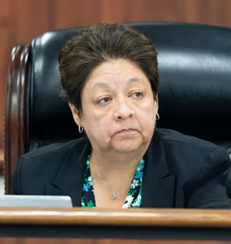
Dr. Gomez was the first witness called to the stand by the plaintiff. She had served on the board from 2016-2022, when the conflict-of-interest claims mentioned above compelled her to resign. A part of her testimony highlighted the significant shift following the charter school candidates’ takeover of the OCBOE in 2018, specifically mentioning how charter applications began to be approved with much greater ease after that year. She further provided testimony regarding the mandated ethics training required by AB 1234 (passed in 2005) and detailed how this instruction clarified the specific requirements associated with financial reporting. Dr. Gomez explained how she had discussed her completion of Form 700 with the general counsel of the OCDOE as well as the FPPC and noted the availability of the FPPC helpline.
Dr. Gomez also testified about OCCA’s appearance before the board in early 2022. The defense objected to that line of questioning on relevance, but Judge Colover overruled the objection. Gomez then described Dr. Jeffrey Barke’s role on OCCA’s executive board and the Rolen firm’s relationship with the charter school. Taken together, that testimony reinforced a central issue for the court: whether Trustee Barke’s Form 700 disclosures adequately captured conflicts created by her then-husband’s governance role in an organization seeking board action.
On cross-examination, the defense focused less on the substance of Gomez’s testimony than on the plaintiffs’ purported political motives for calling her. Attorney Rosen repeatedly framed the case as politically driven, but Judge Colover appeared to view that argument as largely irrelevant—at least in the portions of the proceedings open to the public.
It is important to point out that numerous public figures attended the trial representing both parties. Supporters of the defendant included Lisa Sparks, Ken L. Williams and his wife, Bishop Gale Oliver, several members of Don Wagner’s staff, a few others, and two Asian women—one of whom approached Judge Riddle and, in heavily accented English, accused her of destroying the country. On the plaintiff’s side sat Kris Erickson, Lee McNabb, Gus Castellanos, Karen Lawson, and a few retirees like myself who are concerned about the MAGA influence on public schools. Nearly all notable figures present for the plaintiff were long-standing friends of Judge Riddle.
Rosen then pressed Gomez on whether she had failed to report income while serving on the Tustin City Council. Gomez appeared momentarily unsettled by the accusation. On redirect, Attorney Fink clarified the key point: during the period at issue, Tustin City Council members did not receive a stipend. The exchange undercut the defense’s attempt to impeach Gomez and reinforced the court’s focus on the actual disclosure obligations at issue in this case.
Barke Takes the Stand
The plaintiffs then called Mari Barke to the stand to challenge her assertion that her failure to disclose was an honest misunderstanding rooted in her reliance on her thenhusband for guidance about Form 700 requirements. Because much of the case is built from documentary evidence—particularly selected excerpts from deposition transcripts that are to be assessed in chambers by the judge—what gallery observers obtained was sketchy at best. Still, some curious details did come up in the oral testimony on February 27.
Attorney Fink highlighted two major sources of income that, according to the plaintiffs, Mrs. Barke should have disclosed on her Form 700: compensation from Cal Action and from the California Policy Center (CPC). At Cal Action, she worked as an uncertificated English as a Second Language instructor; at the CPC, she directed the California Local Elected Officials (CLEO) program. The potential conflict tied to Cal Action is direct. The CPC relationship is less straightforward, but it is precisely the kind of entanglement the Political Reform Act of 1974 was designed to surface for voters. Trustee Barke did not include this information in her mandatory disclosures for the years 2018 through 2023, which spanned both her 2018 and 2022 elections.

Mrs. Barke claimed ignorance about much of her ex-husband’s financial dealings. She testified that he operated a website—Rx for Liberty—that sold what she described as “a lot of crap,” and she said she did not know whether it was a for-profit business or a nonprofit enterprise. She also asserted that Dr. Barke’s book, Covid-19: A Physician’s Take on the Exaggerated Fear of the Coronavirus, generated only $2,400 in profit despite being released in five editions. Her central defense, however, was that she relied heavily on Dr. Barke’s guidance about Form 700—specifically, his alleged claim that his prior experience filing the form while serving on the Los Alamitos USD board (2006–2018) showed that its requirements did not obligate her to report anything derived from their joint or separate incomes. She took him at his word. She also testified that she consulted Dr. Ken Chang, a clinical colleague of Dr. Barke and who also has no apparent background in campaign-finance or public-disclosure compliance.
Plaintiff’s counsel, Lee Fink, then identified several people in Mrs. Barke’s professional circle who do have relevant experience with campaign finance and public-disclosure compliance. These included Mrs. Barke’s brother, Michael DeCovener, a money manager and financial consultant. Fink also referenced Exhibit 48, an email from Hugh Hewitt to Ken L. Williams, which mentions multiple campaign-finance professionals whom Mrs. Barke could have consulted and with whom she reportedly had regular contact. The plaintiffs argued that her failure to seek guidance from readily available, knowledgeable sources undercuts her claim that the Form 700 errors were merely an innocent misunderstanding.

Counselor Fink also verified with Mrs. Barke that during the FPPC investigation of her failure to correctly file her Form 700, she never had to testify under oath and there were no formal hearings. The FPPC investigation was perfunctory and mediated completely by her attorney, Mr. Rosen. This line of questioning reinforced the importance of Private Attorneys General like Judge Riddle in upholding the terms of the PRA of 1974. Judge Colover appeared to agree that the FPPC ruling does not preclude a trial in civil court. Otherwise, the case would not have gotten past demurrer.
It seems clear that the Barke’s divorce was contentious, and that Mrs. Barke realized Dr. Barke should be responsible for half of any financial penalties arising from legal judgments against her, a provision that was evidently included in the divorce settlement. The divorce settlement suggests Mrs. Barke was aware her actions were improper, that Dr. Barke was partly to blame, and that the forthcoming penalty would be more than the $3,200 she had already paid.
Mrs. Barke’s testimony about the CPC included a touch of unintentional humor. She described the CPC as a “nonpartisan” think tank, which brings to mind a scene from The Blues Brothers: just as Bob’s Country Bunker offered both kinds of music—country and western—the CPC offers both types of politics—Libertarian and Republican. As a 501(c)(3), the CPC must operate as nonpartisan and not engage itself directly in campaigns. For those who feel irony deficient, the following is taken from the purpose statement of the CLEO program of the CPC.
CLEO members are local leaders and elected officials who stand for financial sustainability, government transparency and personal liberty. In California, elected officials who holdthese values often operate in isolation without trusted independent policy assessments that properly constrain government. CLEO is meant to help our members riseabove powerful and insatiable special interests while honestly serving their constituents.
This is the department in the CPC headed by Trustee Barke. Let the phrase “insatiablespecial interests” sink in!
The Defense

The defense continued in its core claim that the FPPC ruling is sufficient remedy for the innocent mistake made by Trustee Barke. The defense maintains that, since the FPPC administrative decision resolved the issue, the civil court lacks jurisdiction over the case. Attorney Rosen continued to make this argument even though it was dismissed during the demurrer stage. It does not seem likely to prevail in this court.
Judge Riddle was the sole witness presented by the defense, which did not seem an especially effective tactic. Rosen initially raised a lengthy objection to Riddle’s standing, arguing that she had not established residency in Orange County. Fink responded by producing an email exchange from early in the case deliberations in which Rosen had stated that he did not intend to contest Riddle’s residency. Despite that email, Rosen pressed the point until Judge Colover took the attorneys into chambers. About ten minutes later, they returned to the courtroom; Riddle was called to the stand; and, in a single question, Fink asked whether she lived in Orange County. She replied, “Yes.” That appeared to resolve the matter. To non-attorneys in the gallery, the episode felt like the kind of legal stunt that gives lawyers such a bad reputation. Those who have known Judge Riddle for decades appeared bemused.
The defense then pivoted to its argument that Judge Riddle was motivated by partisan politics. Rosen pointed to Riddle’s own campaign-finance filings, noting roughly $28,000 in contributions to the opponents of Barke and Sparks in OCBOE races. The argument is strained on its face: despite those contributions over multiple cycles, Riddle did not sue Sparks. That omission cuts against the defense’s premise that this litigation is simply political retaliation, and it instead suggests a more straightforward explanation—Riddle sued the trustee whose Form 700 disclosures were deficient. Sparks, evidently, had followed the law.
Conclusions on Riddle v. Barke
This case is notable as it represents the first instance in which the role of Private Attorneys General in enforcing the PRA and compliance with FPPC Form 700 will be addressed. A substantive ruling in favor of Judge Riddle may encourage others to engage similarly, thereby promoting thorough submission of required forms and enhancing public awareness of potential candidate conflicts of interest.
The plaintiffs are asking the judge for a deterrent—not a punitive—judgment. While the award could, in theory, be based on the full $13 million that Barke failed to report, the plaintiffs are seeking roughly a quarter of that amount, plus their attorney’s fees. The size of any award will signal how seriously the court views the underlying violations. It is difficult to imagine that the case ends with no penalty at all; the more realistic question is whether the court imposes a mild or meaningful deterrent for future candidates.
Either way, an appeal seems likely. A substantial penalty would give the defense strong incentive to appeal; a defense victory would almost certainly prompt the plaintiffs to do the same. That is often the posture of a case like this, where the court is operating in an area with limited civil precedent and the ruling may carry broader implications.
Of course, Mrs. Barke has the almost infinite sources of wealth behind the OCGOP to fund whatever legal undertakings she chooses to pursue. Who knows, she might even want to test the connections between her case and Citizens’ United before the Roberts Court. That court has proven itself over and again to be willing to provide cover for dark money flows.
Thoughts on the Big Picture
The problems created by the charter school takeover of the OCBOE are, in important ways, specific to Orange County—and so are the solutions. California has no simple mechanism to intervene without a broader statewide effort, including revisiting Proposition 39 and closing the loophole the OCBOE has used so aggressively.
Meanwhile, it is not realistic to expect candidates opposing the charter PAC agenda in Orange County to compete against the torrent of money and the established infrastructure of sympathetic media, messaging, and allied institutions—especially in elections deliberately scheduled for low-turnout primaries. Outside a small circle of insiders, most voters do not know who sits on the OCBOE, nor what the OCBOE does. As long as that remains true, charter-school PACs will continue to dominate these races, recruit and fund local school-board candidates committed to weakening neighborhood-school governance, use school boards as venues for culture-war politics, and squander taxpayer money in the litigation that ensues.
The simple solution to this abuse by the OCBOE would be for the OC Board of Supervisors to appoint its members. Because Orange County is a charter county, the Board of Supervisors could unilaterally revise its charter to authorize their appointing the Board of Education. Granted, there is only one county in California that has the Board of Supervisors appoint the Board of Education, but the county is Los Angeles. That county represents one in four Californians!
Such a solution would undoubtedly provoke intense opposition from the very institutions that have profited from— and helped drive—this dismantling of local public-school governance. It would also be a difficult case to make to voters. But the stakes could not be higher. Meanwhile, the state of California could play a role by ensuring that the OCBOE is operating within the scope of its statutory responsibilities. Judge Riddle’s suit provides ample evidence to warrant a state audit of OCBOE policies, expenditures, and governance practices.
In the final analysis, however, it will be up to Orange County voters—and the local political leaders who shape these elections to address a problem that has become distinctively local. Several candidates throughout the county have been willing to challenge the charter-school agenda. Unfortunately, it is hard to find such candidates who want to run for the OCBOE. So far, no one has stepped forward to run against Mrs. Barke. In OCBOE Area 5 (South County), readers can support Jason Sams, who is running to replace incumbent Lisa Sparks. Countywide, voters will also see a contest for Orange County Superintendent of Schools, where educator and former Anaheim Elementary School District trustee Jeff Cole is challenging incumbent Stefan Bean. Bean has recently tried to distance himself from some of his more extreme positions—and from those of the board majority that appointed him—but voters should evaluate him on his record, not on late-stage repositioning. With the election approaching, now is a good time to learn more about Cole’s platform and consider supporting his campaign.
Nothing is more important than the education of our youth. We can no longer afford governance captured by officials who reject basic evidence in climate science and public health, who politicize the lived realities of LGBTQ students, or who lack the historical and economic literacy needed to govern complex public institutions. A functioning democracy depends on school boards that can reason from facts and respect the civic value of ethnic and cultural pluralism. It also depends on courageous and dedicated individuals like Lynne Riddle who hold public officials accountable to the law.


Great article. Judge Riddle is has such a sharp, incisive mind one can only back anything she speaks on. He ne comment on your tracking of funding of candidates in re Mark Bucher. Amongst the list of donors it’s important to go deeper because even though The Lincoln Club is listed, Mark Bucher (and his family members), Service First and the CPC are often also contributors to the Lincoln Club. His dirty hands are on a lot more of the money flows to these candidates campaigns.
What’s wrong with these people claiming Riddle doesn’t live in OC, and hanging their defense on this lame mistake? I remember her on the Coast Community College Board a decade ago, reporting on OCBoE Covid nonsense five years ago, fighting Andrea McElroy AS A NEWPORT RESIDENT last year and sending me all her research for this great story of mine https://www.orangejuiceblog.com/2025/05/twelve-count-em-twelve-lawsuits-against-newport-businesswoman-andrea-mcelroy/
And somehow they never heard of her and thought they could just dismiss this case by claiming she didn’t live in Orange County? And this is after like
six monthsTWO YEARS to prepare for the hearing? I guess these people really do live in their own tiny little circle. “Well, WE never heard of this so-called Judge Riddle, she must not be from round these parts.”*****************
Mark Bucher has been making reactionary trouble for a long time. I started a series on him way back … in 2011 when he was running for Supervisor! The BUCHER LOWDOWN!
https://www.orangejuiceblog.com/2011/11/the-lowdown-on-mark-w-bucher-3rd-supe-candidate/
https://www.orangejuiceblog.com/2011/12/the-mark-bucher-lowdown-part-2-his-long-war-on-planned-parenthood/
Didn’t finish the series because he dropped out to make way for Todd Spitzer. Still, lots of wild stuff in those two pieces! He was so anti-abortion that he created LILA ROSE, the James O’Keefe of Planned Parenthood slander and dirty tricks.
***********************
One thing in this piece that made my mind curious was, what sort of “bunch of crap” (in Mari’s words) does her website sell? I guess she was being self-deprecatory, but I wonder if anybody buys this “bunch of crap.” Gonna look into that, but I gotta run back out and get some more signatures for rent control.
BTW I helped Mari Barke set up a bunch of tables and snacks once, at some CATO institute thing. She was very pleasant because we didn’t talk about politics or education. She did roll her eyes when I brough up her husband’s gun/Covid prank: “I wish he hadn’t done that.”
Oh! It’s the ex-HUBBY’s website, Rx for Liberty, that “sells a lot of crap” according to Mari. I thought she was describing her own website that way LOL.
Upon reviewing Vern’s account of Andrea McElroy and Lynne Riddle’s subsequent remarks, a question emerge related to the use of websites by political figures to market items (Flair Play Active, Rx for Liberty) that may hold limited intrinsic value, potentially serving as a method to raise funds outside traditional campaign finance oversight. This practice is evident in both the McElroy case and the lawsuit involving Mari Barke, where Dr. Jeffrey Barke reportedly sold items of questionable value. It remains unclear whether Dr. Barke’s business records related to these transactions have undergone thorough scrutiny or accurate reporting. There is interest in identifying purchasers from these websites and determining if such activity could represent an indirect approach to making donations. Observers in PYL have raised similar concerns that certain “garage sales” operated by members of the Yorba Linda Taxpayers Association sell goods at markedly inflated prices, possibly facilitating indirect campaign contributions.
The question of Judge Riddle’s residency seems to be little more than a legal maneuver with slim chances of success, yet it typifies delay tactics that drain both plaintiffs and public resources. Attorney Rolen appears unconcerned about the increased trial costs; he will receive his fee regardless of the outcome for his client. The source of Rolen’s fee payment remains uncertain.
A notable aspect of the Private Attorney General provisions in the PRA of 1974 is that the plaintiff’s legal fees are covered by the public if the plaintiff does not prevail. This provision encourages individuals to pursue cases addressing potential reporting violations by candidates, especially given the challenges private citizens face when litigating against those with institutional support and deep pockets. The PRA attorney fee rule acknowledges these difficulties. In this case, if Judge Riddle wins, the Barkes pay the Brower Law Group; if Barke wins, the public pays the firm’s fees.
Judge Riddle inspires. Her work with FPPC Form 700, PRA requests, campaign disclosures can help guide those of us infuriated by those who are undermining public education as part of a broader transfer of taxpayer money into private coffers. Of course, it helps to be a retired Federal Bankruptcy Judge. There are mentors, and many of them work for the Public Schools Defenders Hub. You can support their work here: https://www.cpihub.org/
An Orange County Superior Court judge has determined that Dr. Jeffrey Cole’s expired administrative credential disqualified him to challenge Dr. Stefan Bean in this November’s election for Superintendent of the Orange County Department of Education. Bean wins by default.
This outcome represents another success for the OCGOP, Mark Bucher, and the California Policy Center—and for the broader charter school racket in Orange County—at the direct expense of the proper functioning of the OCDOE. The Superintendent of the OCDOE is an extremely important, well-compensated position. It is hard to understand how the CTA and other organizations devoted to education could allow Bean to go unchallenged. There is lots of blame to go around on this one.
I was about to say, not much difference between Jeff Cole and Bean… then I realized
I had Jeff Cole mixed up with Dennis Cole, he of Jaguars for Jesus fame at Willard School. https://www.orangejuiceblog.com/2010/12/the-wrath-of-cole-willards-jaguars-for-jesus-principal-bans-all-student-clubs/ Shit, I think I’ve had them confused for a few years.
A formal state audit will now examine waste, fraud, and abuse at the OCBE. I intend to discuss what this audit could mean for local school districts that have county-approved charter schools, even when their elected school boards were against them. Below is an op-ed written by State Senator Tom Umberg, the main sponsor of the audit.
Tom Umberg: Follow the money, not the distraction
The Orange County Board of Education’s attempt to reframe a state audit as a political attack centered on charter schools is misleading. It is a textbook example of a distraction.
The op-ed titled “The Process is the Punishment: Sacramento’s War on Orange County (https://www.ocregister.com/2026/04/12/the-process-is-the-punishment-sacramentos-war-on-orange-county/)” by Will Swaim would have readers believe this audit is about ideology. It is not. It is about accountability, specifically governance, litigation practices and the use of taxpayer dollars.
And the more the Board tries to narrow the conversation to charter schools, the clearer it becomes: they would prefer not to talk about their irresponsible and wasteful use of taxpayer money.
If the Board is confident that the audit will reveal nothing improper, then why the aggressive effort to discredit it before it even begins?
For years, the Board has engaged in a pattern of costly, often unsuccessful litigation at taxpayer expense.
In 2018, the Board sued its own County Superintendent over control of legal counsel, a dispute that dragged on for years and ultimately resulted in approximately $3 million in taxpayer-funded legal costs (Voice of OC (https://voiceofoc.org/2021/03/oc-board-of-education-superintendent-spend-3-million-in-legal-battle-to-pick-their-own-lawyers/)).
In 2019, it went back to court, filing a writ of mandate against the County Superintendent and State Superintendent over authority to alter and approve the county education budget before submission to the state, a case it would ultimately lose in 2022 (OC Register (https://www.ocregister.com/2022/05/13/orange-county-board-of-education-loses-lawsuit-against-superintendents-mijares-thurmond/)).
In 2022, the pattern escalated further. The Board sued the Orange County Committee on School District Organization and the Orange County Registrar of Voters over who had authority to draw election maps, a case that was ultimately dismissed after prolonged litigation (Voice of OC (https://voiceofoc.org/2022/02/battle-breaks-out-over-voting-maps-to-elect-orange-countys-next-board-of-education/)). That same year, it was also sued over its decision to reappoint one of its own members after a resignation (Voice of OC (https://voiceofoc.org/2022/02/county-board-of-education-sued-for-reappointing-one-of-its-members-after-resignation/)).
In 2024, the Board filed yet another lawsuit against the Orange County Department of Education, seeking to compel records related to legal spending, according to Orange County Superior Court filings.
These are not isolated incidents. They are a documented pattern of decisions that expose taxpayers to unnecessary legal costs and raise serious questions about judgment and governance.
The real distraction is not the audit, but the extraordinary lengths the Board will go to avoid accountability, raising a broader question about whether public resources are being used responsibly and in the best interest of Orange County students and families.
Taxpayers deserve transparency, and an independent audit is a basic function of good government.
If there is nothing to hide, there should be nothing to fear, and the Board should welcome the audit rather than attempt to distract from it.
Tom Umberg represents California’s 34th Senate District.
So you’re gonna write a piece about this audit? Good, folks have been asking us to cover that on this blog. Thank you Sam!