[“Consultants and Lobbyists” chapter from the out-of-print 2000 book “Agents’ Orange” by Tom C. Rogers]
Editors’ Note: It’s been a couple years since I published a chapter from this book; this is the last of the opening chapters that are a little “encyclopedic.” Starting next chapter there will be the great STORIES we need to hear, from our recent past. Hang in there!
Background

Up till the early 60’s, running a campaign most often was the job of one person, usually a close friend of a candidate whose duties consisted or directing volunteers and mapping our election strategy in close conjunction with the candidate. An informal arrangement at best, with one of the two, or both, also raising campaign funds. In those days no one ever dreamed of asking for or receiving any pay for services gladly rendered.
The only professional services requiring payment were usually provided by local specialists in the design, layout, and printing of ads. If outdoor signs were in the budget, the sign company provided the artwork. The same was true of other vendors for materials such as bumper stickers, match books, etc; all the campaign had to do was select a color scheme.
It wasn’t unusual for a candidate to have another person write the copy for campaign literature, although a lack of writing skills indicated that the prospective candidate should not be running for office in the first place.
In those halcyon days, most campaign strategy meetings were held in a home, giving rise to the term “kitchen cabinet.”
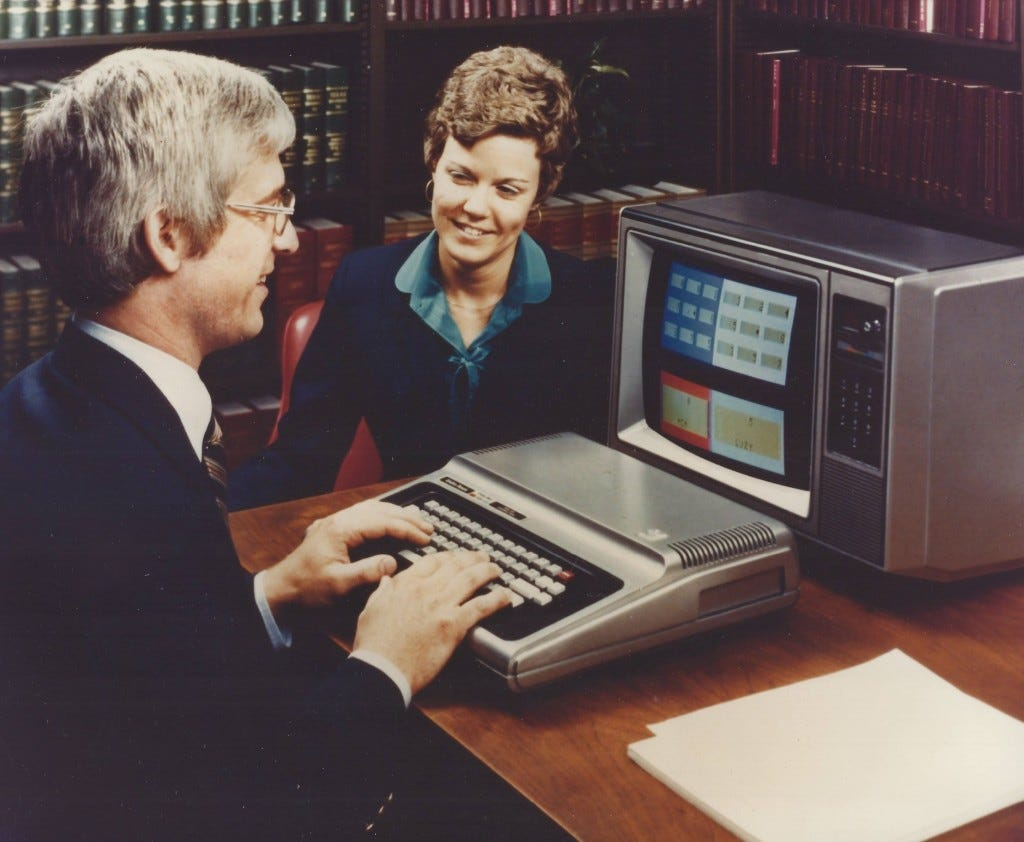
With the burgeoning use of computer technology that began in the mid-60’s, the role of campaign consultant took on another dimension for those astute enough to see the potential. Updated techniques instituted by the Registrar of Voters enabled the electronic retrieval of personal information appearing on each voter’s registration document. Armed with certain pertinent data, it was possible to design a mail program tailored to recipients’ informational profile.
Another dimension of such a program was the development of polling techniques, which also became more accurate and efficient with the addition of computer compilations and projections.
All of these new applications in the field of politics came with a price tag. Unfortunately for Orange County, the new technology was being refined to an exact science at the same time that the “Heavy Hitters” realized their need to control the granting of entitlements for major projects being planned.
Consultants and lobbyists became a necessary part of corporate operations, and soon appeared on the list of payees in many account payable departments.
In the era preceding computers, consultants, and polls, mailing letters on specific topics were difficult to create. They could also be counterproductive. If a controversial message were delivered to a sufficient number of voters, the candidate could lose!
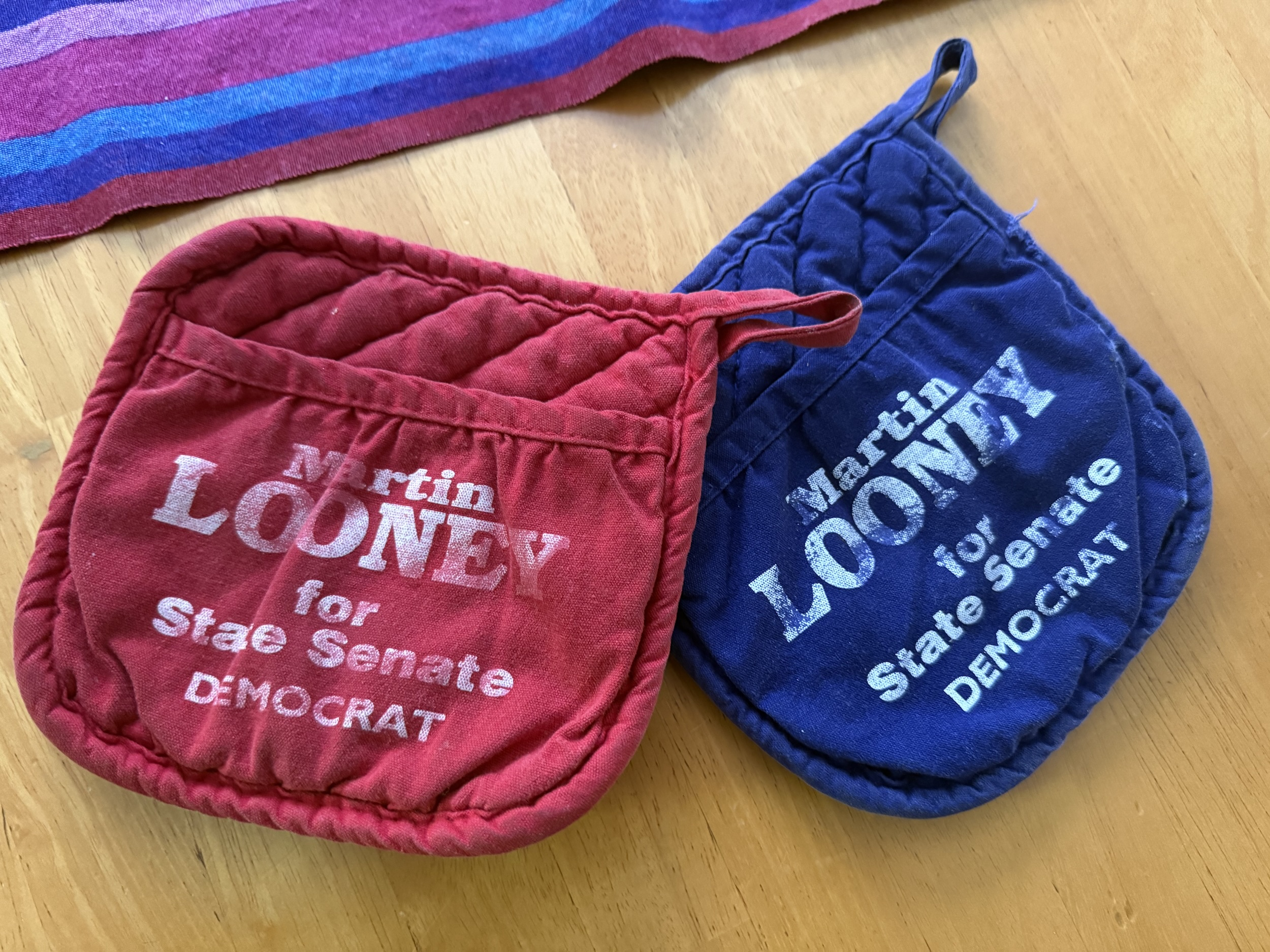
The early mailings often contained generic messages, and a premium might be enclosed (such as a potholder imprinted with the candidate’s name and logo) with the hope that the voter might think favorably of such a generous candidate. These were effective for a while, but the novelty wore off with overuse and costs for enclosures became disproportionate to the cost of computer target mail.
Electronic political campaigning also involved accessing voter history files, and synthesizing them with poll results and census data information. Armed with these components, a skilled consulting firm could design a campaign guaranteed to elect most anybody with sufficient financial backing!
It was a very short trip from gathering polling data to deceptive portrayal of a candidate’s real position on a given issue. Another step or two down, and we had “dirty tricks” thrown into the mix. Lie about your candidate, and lie about their opponent!

Many of the voter listings also included telephone numbers, leading to the development of professional telephone banks, which used electronic data to make brief and effective voter contact by phone. The efficiency of political techniques was further enhanced by the ability to gather voter histories on magnetic tape, making it easier to determine those citizens who were most likely to vote in any given election. These were called “high propensity voters,” and were aggressively targeted by experience consultants.
The use of of computerized mailings does not diminish the value of radio or TV political ads as campaign devices, but only the most affluent campaigns could afford such a luxury for a local race.
In Orange County, the rates for radio and TV are predicated on an audience count that includes listeners in adjacent counties, including Los Angeles. Under normal circumstances such media would not be used, but in those instances where the stakes were high and the campaign awash in cash, they were.

Local OC campaigns necessarily use mail since it’s the most efficient method of contacting voters. Professional campaign management firms became far more important to candidates than volunteers did, and the good ones were to become wealthy by milking OC candidates and their backers. A retainer fee for a state assembly race could start at $35,000, and in addition the consulting firm received a 15% commission on most campaign material, both print and electronic.
One of the first successful target mailings occurred in an OC assembly race in 1964. A letter advancing the candidacy of a Republican who favored Proposition 14 was sent to voters who were born in the states that had constituted the Confederacy. The task of gathering the place of birth was relatively simple – requiring just one electronic sort of cards keypunched with personal information on every voter.

Southern-born voters were correctly assumed to be in favor of Prop 14, an initiative to repeal a fair housing measure known as the Rumford Act that had been passed by the legislature at a midnight closing session. The Republican candidate won handily gaining many votes from Southern-born Democrats.
From that elemental beginning, the concept expanded rapidly and the success of this mailer in electing a pro-Prop 14 candidate was a harbinger of things to come, some to bring disgrace to the profession of political consultant.
OC Democrats were light years ahead of the Republicans in utilizing the emerging technology, partly due to the fact that Butcher-Forde, pioneers in the field, were at that time known as purveyor to Democrat candidates exclusively.
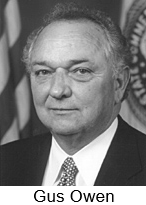
Gus Owen, then executive director of the Republican Central Committee, saw the potential of electronic campaign techniques. Gus was able to wheedle a few hours computer time out of several Republican business executives. Gus had the knowledge and motivation to work at various firms’ computer facilities at odd hours when the computers were idle. The computer program Gus Owen used allowed him to run off voters’ addresses on Avery labels. Not overly sophisticated, but a start!
This space-age technology ended when Gus arrived back at GOP headquarters: the thousands of self-adhesive address labels were then affixed by hand to the mail pieces by scores of volunteers. It took a few years for Republicans to catch up to their Democrat counterparts; they were helped when Butcher-Forde saw the profit potential in selling their service to any candidate who could afford it.
In the new marketplace politics, whether a given candidate was actually qualified for the post being contested was of little concern to consultants or the people who put up the money.
This was a double-edged sword. The community was poorly represented when it came to issues involving major donors and many unqualified supervisors and council members were elected to office, and they would eventually guide Orange County down a path of financial irresponsibility and bankruptcy.
The roles of lobbyist and consultant often overlapped, but true lobbyists usually confine their activities to assisting petitioners with any matter that needs board approval. This is a legitimate service when done on a professional basis, but as has happened in so many cases of doing business with county government, greed and corruption often partner with political ambition, to the detriment of the public good.
Butcher-Forde
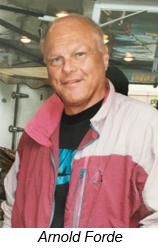
In Orange County, the pioneer of a more scientific approach to political campaigning is unquestionably the firm of Butcher-Forde. Formed by Bill Butcher and Arnold Forde in the late 60’s, the company developed computer-assisted campaign techniques into a science. Butcher and Forde, friends since youth, along with Phil Anthony, often engaged in one-on-one basketball games.
Bill Butcher was an administrative assistant to Richard Hanna, a popular Democrat who had served in the State Assembly and was eventually elected to Congress. Butcher was reportedly the youngest Congressional staff person at that time, with the exception of Lynda Johnson.
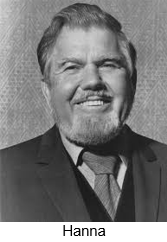
Butcher [can’t find a pic], brother-in-law of Ken Cory, received his campaign training working for Hanna, who was consistently targeted by county Republicans for defeat. He learned quickly, and soon teamed up with Arnold Forde to form a professional consulting firm. Arnold Forde had been closely associated with Ron Caspers and his campaign for supervisor from the 5th district.
The two had the talent to determine issues of interest to voters in a given district and then tailor mail pieces designed to convince the voter that their client had the exact virtues to warrant support. Since this voter-preference approach was based on information taken from polls and census data, there was often a wide divergence of issues important to constituents, not the least of which was party registration. This led to emphasizing different issues to different voting blocs, and on many occasions it would come very near to mailing contradictory candidate information to the electorate. As these tactics seemed to succeed, it was a small step toward exaggeration of a client’s qualifications, which led to the next plateau of outright deception.
The Butcher-Forde influence has been significant in Orange County, and there are a number of elected officials who would not have otherwise been elected to office were it not for this consulting firm. But with the convergence of their skills and the perceived necessity for OC developers to exert influence on the entitlement process, the state was set for a marriage, if not made in heaven, at least one prompted by one unifying factor: the mutual desire to make big bucks. The history of this and other mating is a checkered one indeed, and proves how vulnerable representative government can be, when huge sums are at stake.
Probably the first time Butcher-Forde came to the attention of the local Republican Party was in the Ken Cory v. Bruce Nestande contest in the 69th Assembly District. Using computer mail techniques, B-F trotted out a mail piece that was sent to registered voters living in different geographical grids, which were based on precinct boundaries.

The campaign would recruit someone living in the subject area to sponsor a coffee at his or her home, featuring the candidate. Computer invitations were sent out, with the necessary copy changes, i.e. time, place and host’s name programmed by the computer. They looked like individual letters, and carried a message prescreened by poll results to appeal to recipients.
This technique must have been successful, since for quite a period of time it was used in all of the campaigns managed by B-F. Premiums were less expensive in those days so items like potholders with a candidate’s name affixed were often included in the mailings.
But the opinion poll / computer letter approach to political campaigning techniques that began so innocently carried a deadly virus. The momentary dilemma was as follows: What if a candidate had strong opinions on a particular issue directly at odds with voters’ views on that same subject? What if a candidate acting as an elected official had voted in direct opposition to poll summaries? What if a candidate was not of the same party as recipients of campaign literature? What if an opponent was shown to be leading in the private polls, but did not reflect the majority of voters’ views in the district? Not to worry. After all, what are CONSULTANTS for?

What began as a successful transition from old-time door-to-door campaigning developed into the destructive electronic age in politics. Truth was what the polls dictated a candidate should say, past performance and qualifications were disguised with platitudes, and if all else failed, nuke ’em with dirty tricks and last-minute hit pieces. That was the legacy of Butcher-Forde, forged by a new breed of politician, one whose qualifications were primarily the ability to say yes to developers. The log-rolling consisted of promises of unlimited campaign funds in return for unlimited densities.
Butcher-Forde managed many campaigns for cooperative supervisors, and they were paid well for their expertise. As in all profitable ventures, there came a desire to expand, and Orange County only had so many candidates for the Board and an occasional ballot proposition. In the spirit of true free enterprise, Butcher-Forde went nationwide!
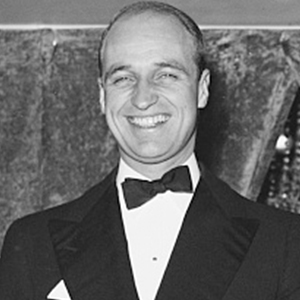
One of the clients the firm represented on a national scale was Jimmy Roosevelt (right), son of FDR and a former congressman from LA County. Using Roosevelt (who had moved to OC) as an umbrella, Butcher-Forde mounted a campaign to “Save Social Security” and appealed to retirement-aged citizens to contribute to this cause. Whether or not there was ever any real threat to Social Security, and if so, what the Roosevelt operation might have done to save it, is for readers to decide. One this is certain – it was an extremely profitable venture, if contributions are any measure of success.
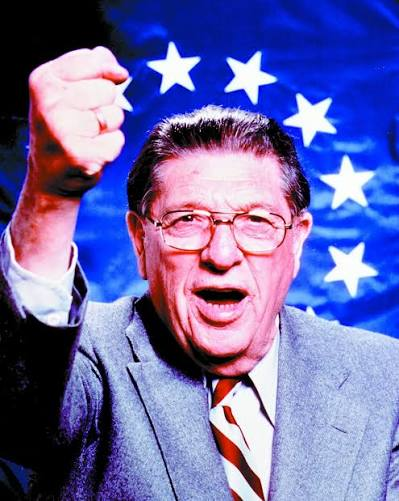
Butcher-Forde’s activities were not conducted without scandal and accusations of money laundering. In addition to the profitable venture it ran under the Roosevelt name, it had also become involved with the Howard Jarvis group called the Howard Jarvis Taxpayers Voting Rights Reduction Committee, aka California Tax Reduction Movement, aka American Tax Reduction Movement. The LA Times article “The Darth Vader of Direct Mail” reported that from receipts of two solicitations mailed out requesting funds for the Jarvis group, and through a series of transfers to and from controlled committees, Butcher-Forde received almost $700,000 of the $1,024,573 gross receipts. This occurred in 1987; Jarvis had passed away in 1986.
This same article reported that Paul McCauley, a former Jarvis supporter who happened to be an accountant, filed suit against the Jarvis California Tax Reduction Movement, requesting full disclosure of their financial transactions.

In the course of the lawsuit it was revealed that although the mail solicitations were predicated on the fact that the Jarvis group was deep in debt, their bank accounts “were actually fat.” The money was being funneled to Butcher-Forde and they became correspondents in the lawsuit. The article went on to report that an FBI agent engaged in investigation of an unrelated matter dealing with political corruption filed an internal memo stating that
“The Jarvis organization, through the acts of Butcher-Forde Consultants, defrauded thousands of people who mailed in contributions under the false pretense that the money was going to be used to pay the expenses of the proposition campaigns.”
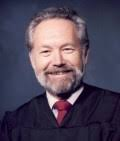
Judge Donald E. Smallwood (left) who heard the case declared Butcher-Forde’s actions to be “reprehensible.” Smallwood also declared that the group failed to report the $1,263,326 raised during the debt reduction campaign, awarded McCauley $300,000, and ordered the Jarvis group to pay the state another #300,000. McCauley was also awarded attorney’s fees incurred over a six-year period.
Despite its questionable reputation, Butcher-Forde set the standard by which most other consultants are measure in the OC. There has never been a shortage of candidates or special interest groups willing to pay for their services.
Butcher moved to England for a while and another partner was added, Stu Mollrich. Mollrich had formerly operated as an individual, and was involved in many of the campaigns supported by the Irvine Company. The firm now goes under the name Forde-Mollrich. Some local observers feel that its success could only have been possible in a political environment where clients shared their business ethics.
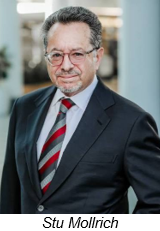
ED. Update notes: That 1996 Times article is well worth reading, rife with malfeasance from both Forde and Butcher (whose pic I can’t find anywhere.) I love the detail that Butcher changed his name to Lord-Butcher, moved to England, and got into shellfish, while Forde “stocked his ocean-view Laguna Beach home with a collection of contemporary art that museum curators covet.”
We 21st century folks know Forde & Mollrich more as the folks who ripped off Irvine for so many millions while supposedly helping build a Great Park. Larry Agran must have known all about them when he insisted on hiring them.
Arnold Forde died in 2018; here’s the obituaries from the Register & the Voice of OC.
Dennis Carpenter
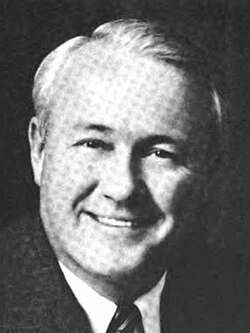
Dennis Carpenter has been active in OC politics since the late 60’s. As a former FBI agent and later a practicing attorney, he rose from the volunteer ranks to become county chairman and later chairman of the Republican State Committee.
Carpenter ran for state senate successfully and served several terms. Many of his friends and supporters urged him to run for governor to succeed Ronald Reagan, but on the advice of Stu Spencer, Carpenter decided against such a campaign.
He opened an office in Sacramento as a legislative advocate and later became the lobbyist for Orange County, a position, which has been renewed by the Board of Supervisors, up to and including the post-bankruptcy period. Carpenter is an affable fellow whose approach to politics is non-confrontational.
The Broadway Group, Dennis De Snoo
Dennis De Snoo has been a consultant to Democratic candidates in the main, but in recent years he’s had a few Republicans on his client list, including Assemblyman Jim Morrissey. He was engaged in the Robert Citron campaign (see the chapter on the OC Bankruptcy, with Lyle Overby below) just prior to the County filing bankruptcy.)
[Ed: De Snoo died in July of last year (2025), and the Register obituary says he advocated in the 60’s for civil rights and an end to the Vietnam War.]
The Diamond Group
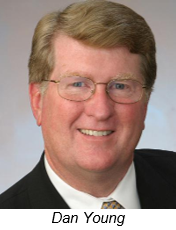
One of the most successful consulting firms in recent years, measured by the ability to garner county contracts, has been the Diamond Group. The two principals of the firm are Dan Young, Democratic former mayor of Santa Ana, and Gary Hausdorfer, Republican mayor of San Juan Capistrano.
Both these men served on the OCTA board and the Tollway Agencies. They both exhibited a fondness for any Building Industry Association (BIA) proposal, and were considered pro-developer – Young even describing himself as a developer on his political resumes.
As elected officials they both served on the corridor agencies, and were ardent proponents for this road system. Hausdorfer’s tenure on the Corridor Agency to say the least. San Juan Capistrano was adversely impacted by the construction of the Tollway but, unlike other cities with the same problems, SJC did not file a lawsuit against the agency to recover the cost of mitigating the deleterious effects of this major project on the council.
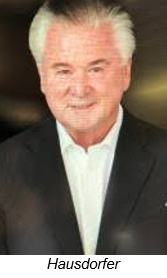
Hausdorfer, prior to entering formally into the field of lobbyists, was an SJC councilman. He was first elected in 1978, and was mayor four times.
His activities as a council member were often marked by controversy. He was a staunch supporter of developers; in 1988 he joined with the entire OC builder/developer axis, and wrote the ballot measure opposing Measure X, the city version of the Sensible Growth Initiative, which was placed on the SJC ballot by fiat of the citizens. He was later subjected to a recall movement by a group of local residents who were irate at his pro-developer activities.
Hausdorfer voted with other councilmembers 15 times from Dec. 1988 to April 1990 to approve numerous contracts, totalling $93k, with the Keith Engineering firm. His wife, Deborah, was employed by the firm as public relations director at the time. (Only once, in April 1990, did he abstain from a vote involving Keith.)
In November 1990 he was appointed to the OCTA board, replacing John Erskine, HB councilman and executive director of the BIA’s OC chapter. In January 1991, District Attorney Capizzi, and the FPPC, investigated Hausdorfer for his approving $105k in contracts to Keith Engineering Company, but no indictments or convictions resulted from either investigation.
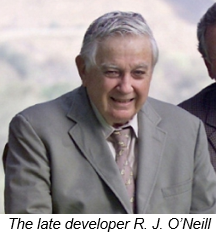
In January of 1994, Hausdorfer voted to grant RJ O’Neill exclusive rights to negotiate with the city of San Juan Capistrano to purchase city-owned property in the downtown area. There was another potential bidder at the time but under Hausdorfer’s leadership the council gave O’Neill, a major developer, the exclusive rights to purchase the property at a favorable price. O’Neill and his partner Steve Nordeck, a cafe owner, convinced the Council that increased revenue over the years would make up for any price concession.
In 1993 the county awarded an $80 million contract to Harris Corporation for a new communications system for the Sheriff’s Department, to replace one that had been in use for 20 years. The award was controversial, in that Sheriff Brad Gates was accused of interceding on behalf of Harris. Gates, a longtime friend of Hausdorfer, denied the allegations, and other county employees corroborated his assertion that his only interest was in seeing that the bid proposals were reviewed fairly, and that Harris would be given equal consideration as the other bidder, Motorola.
It was brought out in the controversy that Hausdorfer had been hired by Harris as a financial consultant for the county contract. Protests by county staff who had reviewed the bid proposals resulted in a reappraisal of the Harris proposal, and the contract was finally awarded to Motorola.
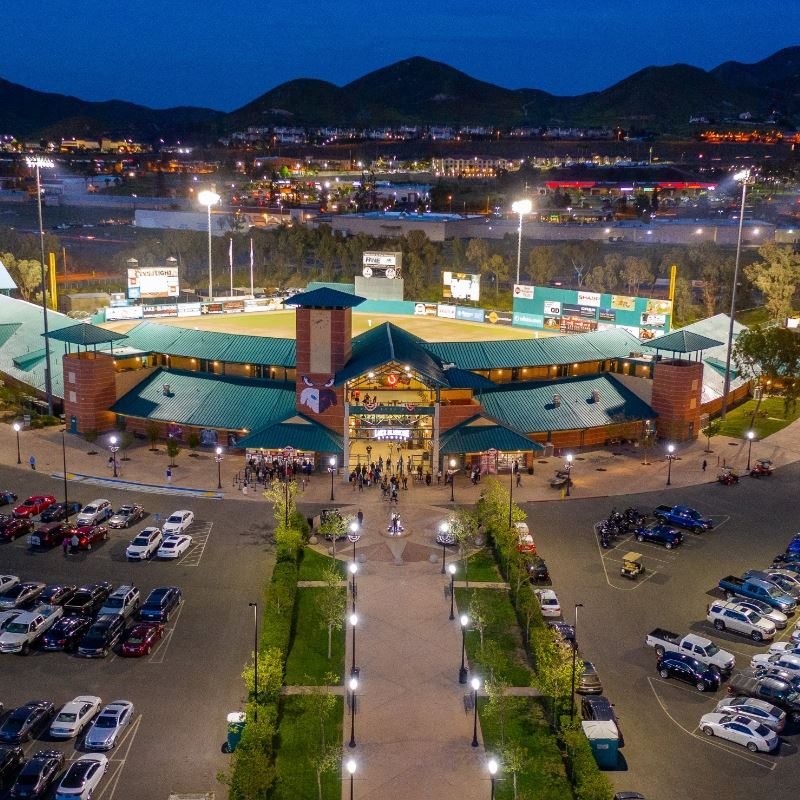
The name “Diamond Group” is derived from one of its first ventures, which was to push through a minor league baseball enterprise in the Lake Elsinore area that included the construction of a professional baseball stadium (right.)
The proposed venture was not unanimously popular in the Elsinore community, and there was considerable controversy concerning the financial feasibility of professional baseball in such a small market. Opponents of the franchise called for an investigation of the Diamond Group by law enforcement, but no action was taken.
It really paid off for Young and Hausdorfer to be such “insiders,” with so many friends in county establishment, particularly during Orange County’s bankruptcy. At the time, the Diamond Group was on retainer to the Industrial League of OC, which was soon merged into the OCBC (OC Business Council.)
At the same time, the Diamond Group was awarded an open-ended, no-bid contract by County CEO Jan Mittermeier, to do certain studies on the “restructuring of county government.” The contract was for $80,000, the maximum amount the CEO could sign on on without Board of Supervisors’ approval, but Board chairman Roger Stanton put the matter to a vote anyway, and it passed 4-1 with only Supervisor Marian Bergeson dissenting.

While the terms of the bid (i.e. the work to be performed by Diamond Group) did not come up for disclosure or discussion, the work product appeared to be a blueprint for reorganizing county government and included a recommendation that the OCBC (now with the Industrial League a major component) be officially confirmed as a partner of county government. The presumption must be that the OCBC now has equal status with the elected Board of Supervisors.
In presenting the Diamond Group’s proposal at a rare Wednesday meeting of the Board, the new CEO unveiled its 29-page treatise on county government, which states in part that the OCBC “will be a valuable aid to my staff and ideally all county departments.”
After completing the original study, which recommended that the OCBC become an integral part of the county decision-making process, the Diamond Group was later awarded another no-bid contract, approved by the Board, for $84k. And in June of 1998 the Board approved $250,000 per year for three years to the OCBC. Deborah Hausdorfer, Gary’s wife, was the OCBC’s economic development manager at the time. This proposal didn’t go out to bid either, since apparently there’s no such requirement in the county’s dealing with their new “partner.”

Three more things before we leave the Diamond Group:
Soon after the Industrial League got folded into the OCBC, the Diamond Group was put on retainer by The Irvine Company, proving just how profitable it can be later to those who go into the private sector after a “developer-friendly” stint in local government. Irvine Company representatives refused to divulge how much the Diamond Group was being paid for their services.

While the Diamond Group is considered as lobbyists rather than involved in political campaigns, it’s notable that both Young and Hausdorfer helped lead the “Republicans for Tom Daly” in Daly’s successful bid to become mayor of Anaheim. As a Democrat and former executive with the Building Industry Association, Tom Daly has always been a close ally to developers as well as the Disney Corporation. The connection of Dan Young, a former Democrat himself, to Anaheim, will be detailed later in “The Spectrum Group.”
Finally, in December of 1999 Hausdorfer became involved in a transaction involving the sale of a privately owned toll way on the 91, to a nonprofit corporation called New Track. Hausdorfer was described as the CEO of the newly formed enterprise. The deal fell apart when elected officials from Riverside and Orange counties protested the terms and financing of the sale.
Adler Droz
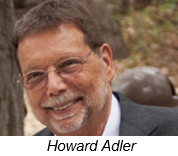
Democrat Howard Adler, an affluent developer and former chairman of the County Democratic Central Committee, teamed up with Fred Droz, who had worked in the Carter administration as a political consultant for Democratic candidates and causes. Adler is more of a silent partner, and the firms is very well established in state and local political circles.
Dave Ellis, Ellis-Hart

Dave Ellis first same to Orange County as a young member of the staff of State Senator Ollie Speraw. Speraw, who’d been a successful realtor from Long Beach, was placed in the awkward position of being gerrymandered into Orange County, and finding himself a potential opponent of Marian Bergeson.
Ellis was the advance man in the effort to drum up support for Speraw’s campaign against Bergeson, a daunting task in view of Bergeson’s popularity. The prospects were not at all promising for the senator from Long Beach, and he decided not to run.
But Ellis had made a good impression on county Republicans, particularly the conservative faction of the GOP. Ellis decided to strike out on his own, and was successful in obtaining his first political contract in 1984, through the Car Dealers Association, to manage the No on Proposition A campaign. [Prop A was a proposed sale tax increase.] At that time he took a partner, Mark Howell.
With limited resources, Ellis and his partner found it difficult to counter the unlimited budget of the tax proponents. Despite this imbalance, the use of volunteers and the requirements for media to provide equal time allowed the No forces to put on a very respectable campaign against the sales tax increase. Despite polls showing Prop. A winning up to the last few days of the vote, it was crushed with 328,883 No votes against 139.617 Yes.

Ellis had made a quantum leap into the major league of politics. He acquired a new partner, Scott Hart, and the firm has since been known as Ellis-Hart. Hart formerly served in the Pete Wilson administration and was well connected in establishment circles. The special interests were able to offer the firm a substantial cash incentive to work for the same people Ellis had helped defeat earlier! Among Ellis-Hart’s major clients is George Argyros, who gave them the assignment to promote the international airport at El Toro, and to act as consultants for the two ballot measures that dealt with this proposal.
The Ellis-Hart firm has a reputation for confrontational campaigns marked by a controversial use of the mail to attack opponents. Ellis-Hart is a hybrid in the business, since it also represents clients as lobbyists. One such client was Merrill Lynch, a real challenge for Ellis-Hart in view of the adverse publicity surrounding Merrill Lynch’s culpability in the county’s Bankruptcy.
[ED: In 2011, when Ellis was named to the OC Fair Board, and was involved in trying to get this prime public property sold to a group of conspirators including himself, we wrote the masterpiece on him, “Who is Dave Ellis?” In the end, the people defeated “The Great Fairgrounds Swindle,” a lot of the struggle documented on this blog for posterity.]
Harvey Englander
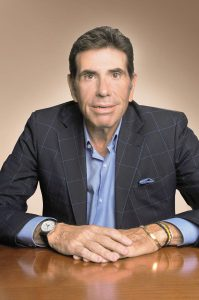
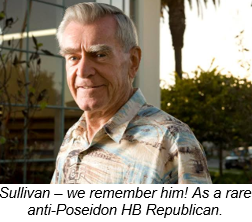
Englander is a longtime political consultant whose professional activities in OC date back to 1978. He began his professional career with Butcher-Forde, working for the Jarvis project after the passage of Prop 13. After striking out on his own, he represented Democratic candidates solely. But in recent years he has been engaged by Republican candidates who could be considered more moderate, such as Marilyn Brewer. In 1998 he was engaged to manage Dave Sullivan‘s supervisorial race against incumbent Jim Silva. The race was nonpartisan, but both Silva and Sullivan are registered Republicans. At the same time Englander was advising the Sullivan campaign, he was a consultant to Tom Daly in his Anaheim mayor race.
Harvey’s activities are not confined to OC, and in spring of 1998 he was consultant for Richard Katz who ran against Richard Alarcon in the Democratic primary for 20th state senate district. Katz lost by a razor-thin margin, and after a recount, conceded defeat.
Englander is known for aggressive hard-hitting campaign tactics, and in the Katz-Alarcon primary there were accusations from both sides claiming questionable campaign practices, and some of those allegations ended up in court. Englander later merged with Victor Kamber and Associates, a prestigious PR firm with offices in LA and DC.
Norman Grossman
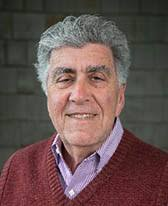
Norm Grossman began his involvement in OC politics as a pro-environmental activist, when he moved to Laguna Beach in 1978. He was a prime mover in the Sensible Growth initiative and served on the executive committee of that campaign.
He was also one of the first to express opposition to the proposed El Toro Airport and served as executive director of Taxpayers for Responsible Planning. In addition to his engagements at the county level he has also been active in various city council races in Laguna Beach, where he was a planning commissioner.
Grossman is recognized for his expertise in the formation and direction of volunteer groups, particularly in the pro-active field of signature gathering and in directing motivated individuals in the campaign process.
Fred Harber
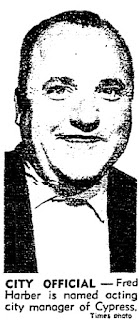
One of the persons most closely associated with Butcher-Forde was Fred Harber, a local businessman who owned a retail lamp store in Santa Ana. Harber’s forte was not really lamps, but the field of politics. He was the Democrats’ equivalent to Frank Michelena (who actually played both sides of the fence) and both of them engaged in what is now called LOBBYING. Seen in and around the County Hall of Administration, they both plied their trade of influencing elected officials to look kindly upon their clients’ project of the day.
Harber was a confidant of 5th-district Supervisor Ron Caspers who happened to be a nominal Republican. He was later to form a partnership with former staffer Carl D’Agostino, and their firm, Harber and D’Agostino, went into the political consulting business.
Fred Harber’s controversial career was cut short by what appeared to be a maritime accident off the coast of Baja California. His yacht Shooting Star never returned to port after a trip to Mexico. He and nine passengers, including Supervisor Caspers, were declared dead, missing at sea. The last message received from the converted Air Force rescue craft was a mayday distress call from a location close to the San Benito Islands. Some wreckage was recovered but no human remains were ever found.
Harber had been considered a prime mover in OC politics, and his connections on the Board of Supervisors included Ralph Clark and Robert Battin. He worked closely with Butcher-Forde.
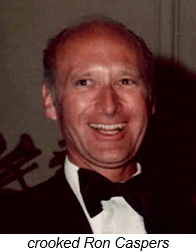
Prior to his disappearance, he was alleged to have been involved in a shakedown of a developer on behalf of Supervisor Caspers. The builder Richard V. Jordan, in a sworn statement, declared that Harber had contacted him after his project in Caspers’ 5th district had been turned down, and had told him what it would take to solve the problem. “$10,000 and then 2,000 a month,” Harber is alleged to have demanded from Jordan. When asked how long the monthly payments must continue, Harber is said to have replied, “How long do you plan to develop in Orange County?”
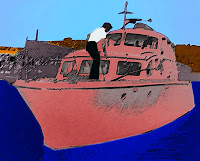
Jordan claimed in his deposition that the meeting with Harber led to a meeting with Caspers in a rubber raft off Cabo San Lucas. Jordan was represented by attorney R. S. “Sam” Barnes and his client contacted D.A. Cecil Hicks and arranged for a payoff with marked bills. Before the plan could be put into motion, Caspers boarded the Shooting Star with Harber and disappeared into the Pacific. By a stroke of luck, Jordan had declined an invitation onto that ill-fated cruise!
In the end, the county paid off $700k to Jordan’s company Shelter Industries, as a result of losses caused by the extortion scheme. Carl D’Agostino, who was never involved in any of this monkey business, eventually went into business in West Hollywood with the Berman Brothers as partners in the consulting business Berman and D’Agostino (BAD.)
[Ed. the above three illustrations are from the late lamented Roy Bauer’s DISSENT THE BLOG, specifically his article “Harber and Caspers Attempt to Extort a Developer, but then they Die Instead.” And yeah, Fred Harber was city manager of Cypress at the time, making him a distinguished progenitor of Peter Grant. Irvine Valley College philosophy professor Roy Bauer, from whom I first heard of this book Agents’ Orange, died in 2023 of aggressive brain lymphoma, but lives on in DISSENT THE BLOG.]
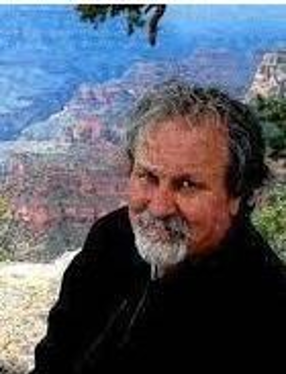
Professor Bauer!
Dave Kidd
Kidd has been active in OC political affairs for a number of years both as a volunteer and professionally. Dave is known to be most active for environmental issues and candidates who share a concern for the environment. He served on the Irvine City Planning Commission for a time, as appointee of Larry Agran.
Nason Lundberg
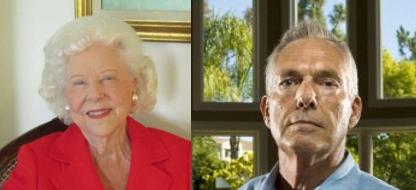
Lundberg, Nason
After serving as a volunteer in politics for a number of years, including stints as precinct worker, precinct captain, and several terms as chairwoman of the Republican County Central Committee, Lois Lundberg entered into the campaign consulting business with a longtime friend and associate, Michael Nason. The new firm was called Nason Lundberg, and in addition to political work it also provides PR services to corporations and to the Reverend Robert Schuller.
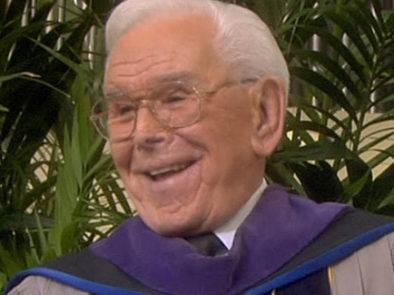
Nason Lundberg is best known for its capabilities in the techniques of telephone surveys, candidate advocacy, and get-out-the-vote programs. It is a Republican firm, and in the political arena restricts its client list to Republican candidates and issues.
Lois played a key role in both the Murphy for Senate campaign and the Nixon campaigns in Orange County. There is possibly no one person in the county or state who has the knowledge and experience of the political scene at the grassroots level equal to that of Ms. Lundberg.
Lois has acquired a national reputation for honesty and competence, and is admired in the highest of Republican echelons and respected by Democrats. Nason is also well regarded as a political consultant, but is most recognized as an expert in the field of Public Relations.
Frank Michelena
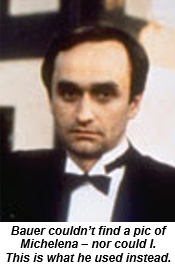
Michelena is a longtime power broker whose business is mostly confined to matters concerning the OC Board of Supervisors. He was considered a close associate and adviser to Ron Caspers, and many blame the two for the descent of Orange County into a world of political intrigue, campaign finance abuses, and influence peddling.
Frank began his career in OC as an assistant to Supervisor Bill Phillips. Phillips was defeated by Ralph Diedrich in 1972, and it took Frank a while to work his way back into the good graces of the new county power structure. After striking out on his own, he seemed always in the shadows of county political controversies; his name is not that prominent on any list of major donors, with the exception of Diedrich, nor has he ever been indicted.

While nominally a Republican, Frank Michelena is an equal-opportunity promoter, having clients and benefactors of all political persuasions. Insofar as partisan politics is concerned, Michelena tends to be a moderate and was an outspoken critic of John Schmitz and his extremist supporters.
Frank does not presume to be a competent campaign consultant, but in the early days he did play a role in the campaigns of Ralph Clark, Ron Caspers, and in one DA contest. He had clout with some judges in the county judicial system, and on occasion received blatant preferential treatment.
Michelena’s activities have been so pervasive over the years that no brief history could possibly list their scope and impact on Orange County and the establishment political structure. [Well, geez, I hope there’s gonna be a chapter on just him, then? – ED]
The Monaco Group

The Monaco Group was founded in 1993 by Vince Monaco. The group specializes in direct mail programs and associated products. They work exclusively for Republican candidates, and Vince describes their political role as that of “hired guns.” Last-minute mailings is the Monaco Group’s forte – they often produce and distribute literature and flyers in time for the last mail drop before an election. One of Monaco’s successes with this technique was the congressional race in which Christopher Cox defeated Dave Baker.
Nelson-Padberg, Robert Nelson
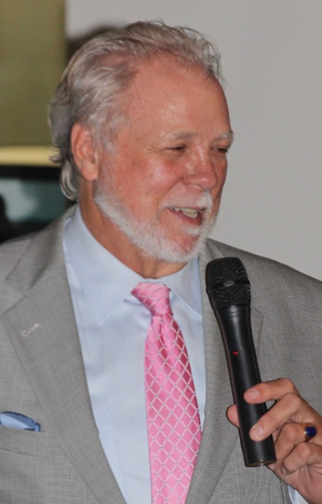
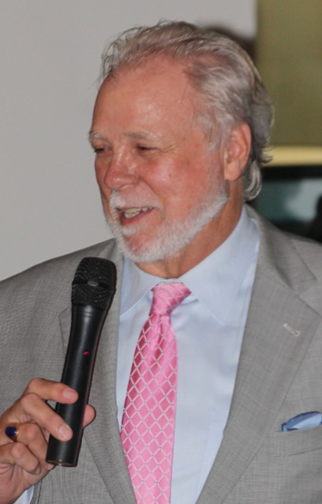
Robert Nelson (left) served on the OC Medical Center staff until he was brought on to Ron Caspers’ team by Tom Fuentes. After Caspers’ disappearance on the Shooting Star, Nelson remained on as chief advisor to Supervisor Tom Riley. Later, he used his contacts to go out on his own as a campaign consultant, specializing in Republican candidates at first, but later did become neutral or bipartisan.
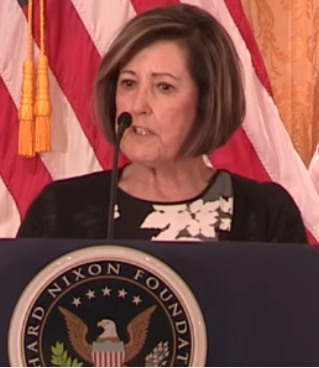
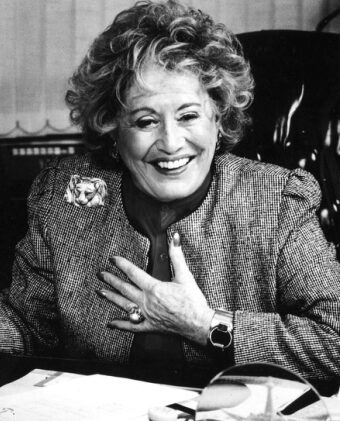
Nelson took on a partner, Eileen Padberg (below right), who’d occasionally been a volunteer at the Republican County Central Committee. Padberg was associated with Daryl Wold who’d been on the Republican State committee staff, and they’d managed one assembly campaign for Bill Dannemeyer. [I remember that guy – ed – he was my Congressman when I was a 20-year old punk rocker in 1980 Orange and I went to complain to him about our involvement in El Salvador and everyone looked at me like I was a freak.. never mind.] Dannemeyer was defeated by Ken Cory, after which Wold returned to law school and Padberg joined Nelson to form Nelson-Padberg.
.The venture had modest success, becoming favorites with the county establishment. They were selected as consultants to the Proposition A (sales tax increase) campaign, and although they were soundly trounced, they did not fall from favor, despite the huge expenditure proponents doled out for that ill-fated proposal.
Robert Nelson and/or Nelson-Padberg provided consulting services to many special-interest candidates. Tom Riley (running for Supervisor) and Brad Gates (running for sheriff) were two regular clients of the Nelson firm and, like most of the firm’s customers, were ardent advocates of higher county taxes.
In 1987 Padberg left Nelson to form another firm, Padberg and Di Santis.
Robert Nelson was the campaign consultant for John Seymour‘s primary campaign for the US Senate against county conservative favorite Dannemeyer. Seymour won the primary but then lost to Dianne Feinstein. [Now THERE’S a blast of stale air.]

In 1992 Nelson was named national director and co-chair of Republicans for Clinton, a post that involved recruiting Republicans to the campaign of Clinton and Gore (against Bush I’s re-election.) He found a ready-made group of opportunists in OC, among them Harriett Wieder, Kathryn Thompson, and his former partner Eileen Padberg.
After Bill Clinton’s win, Padberg, flushed with victory, issued a declaration of war against conservative Republicans: “From now on we are going to go on a search and destroy mission, to identify Religious-Right candidates and defeat them!”
Nelson was among the Democratic elite who celebrated election night at the governor’s mansion in Little Rock. Harriett Wieder (Supervisor and former Huntington Beach mayor, right) was said to have been contacted by the Clinton administration for advice on certain matters. In a junket presumably facilitated by Nelson, the OC defectors Thompson and Wieder were treated to a briefing by Secretary of Commerce Ron Brown, and lunch with Senators Feinstein and Boxer. Wieder would later attend Clinton’s inaugural ball in ’93.
At the 1994 Republican State Convention, a resolution was drafted to keep any official GOP business away from Robert Nelson, but the motion never got out of committee. Nelson had incurred the wrath of Party regulars by contracting with a group that opposed school vouchers (Prop 174); that measure was defeated despite strong GOP support.

In August of 1994, Nelson was placed in charge of a retirement celebration for Supervisors Tom Riley and Harriett Wieder, who were not seeking re-election. A veritable Who’s Who of county upper-crusters showed up at this joint celebration. But while the glitterati soaked up the champagne and fawned over the two superannuated retirees who had done their bidding over the years, clouds were gathering on the horizon. That day of reckoning would come in December when the citizens of OC discovered how poorly they’d been represented over the years.
One of the few insiders who managed to emerge unscathed from the bankruptcy was Nelson, who’d been instrumental in electing so many incompetents to office. The Nelson firm would receive contracts from the county to do PR work during the bankruptcy. According to Donna Lucas, a member of the firm, Nelson Communications was paid $25,000 after being awarded a no-bid contract by county CEO Mittermeier. Lucas at one time represented former State Treasurer Thomas Hayes who was also awarded a lucrative contract as legal affairs coordinator for the county during BK.
In 1995 Robert Nelson Communications merged with Tom Wilck and Associates, another consulting firm with close ties to The Irvine Company and the county inner circle. Nelson is said to have retired from the business. On August 12, 1997, Nelson and Associates also received favorable treatment from the Supervisors when the firm was awarded a $326k contract (originally $552k) for PR work on behalf of the proposed El Toro Airport.
[Ed. note: It looks like Nelson ended up in San Diego, where he is remembered as a “former Port Commissioner!” He died just a few years ago, in 2022, at the age of 70. You’re not gonna ask how he died? I’ll tell you then. He FELL OFF THE ROOF.]
Bruce Nestande
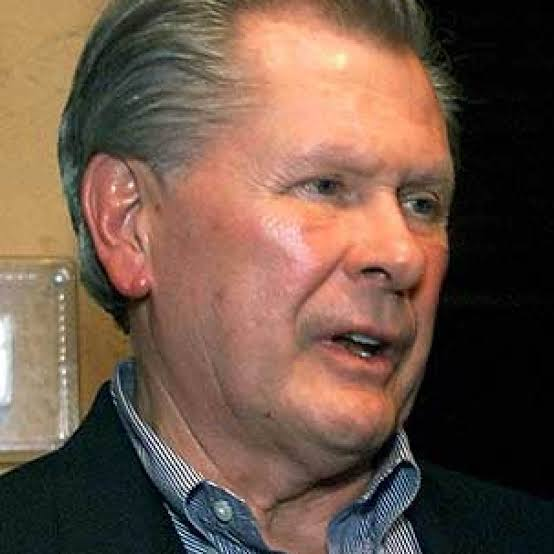
Nestande first came onto the political scene of Orange County as a Republican candidate for the 69th district in 1966. He was defeated in the primary by Stewart Case who in turn was narrowly beaten by Ken Cory after a controversial campaign. In 1968 Nestande won the GOP nomination, but was again defeated by Cory. He tried again unsuccessfully two years later.
During his first run for office, he impressed Republican leaders with his political skills and his willingness to take on the most undesirable volunteer tasks. He served in every capacity possible, from precinct worker to captain to eventually precinct chairman of the Central Committee.
For a time he was hired by Walter Knott to manage the newly constructed Independence Hall, a part of Knott’s Berry Farm, and later was appointed to the staff of Governor Ronald Reagan.
After his service with Reagan he once again ran for assembly, and this fourth time was a lucky one for him – he won as a decided long-shot against Jim Beam and Floyd Wakefield. Later he ran for supervisor and defeated a Jerry Brown appointee, Edison Miller. He resigned from the Board to become a consultant on political matters, with an emphasis on transportation.
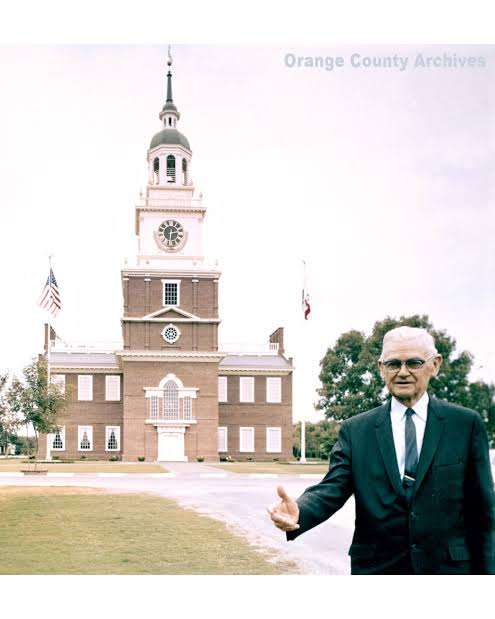

Nestande was hired as a consultant on transportation and political matters by many of the county’s leading developers. He later devoted most of his time under contract to George Argyros (right) and Arnel Development Company. It is to Argyros’ advantage to maintain good contacts with major GOP candidates, and Nestande had been hired by some high-profile campaigns as coordinator. One highly visible candidate was Michael Huffington whom Nestande helped in both his congressional campaign and his later run for US Senate.
His main assignment for Argyros was the promotion of the case for the proposed El Toro International Airport. In this connection he serves as the head of Citizens for Jobs and the Economy, a nonprofit front for the airport. Nestande’s considerable experience in the field of transportation includes service on the California State Transportation Commission; he has also served as a transportation consultant for various projects and as an advisor to the State of New Jersey.
Lyle Overby
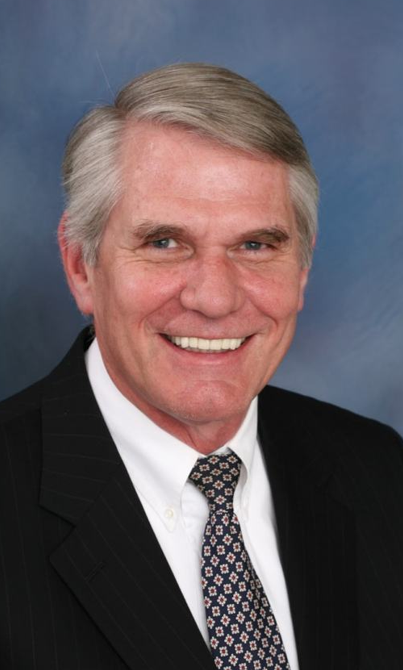
Overby is one of the best known and most active contract lobbyists in Orange County. He’s a former aide to Supervisors Ralph Diedrich and Robert Battin. You’ll see his name on the campaign donor lists of most incumbent supervisors, and his footprints can be seen in several of the most controversial periods of OC political history.
One of his successful early ventures was to lobby the county to purchase and install the Coleman machine voting system. The changeover from counting votes by hand to electronic vote tallying was opposed by various citizens’ groups, the most prominent being the Voters Information Bureau.
Overby was close to Supervisor Don Roth, and was involved in his criminal investigation, although not as a defendant. Overby had arranged for a hotel room in Las Vegas for Roth, who apparently was visiting the city as a member of the High Speed Train Commission. Overby paid for the room on a charge card, a gratuity that Roth failed to report. Roth also put in for the $167.70 tab as a personal expense and was reimbursed for $74 of that total by the commission. Later under questioning by the DA, Overby unequivocally denied paying for the room. But when he was shown the MasterCard receipt his memory returned, and he claimed the transaction was a simple mistake.
After Roth resigned and entered a guilty plea for seven misdemeanor charges, Overby, Frank Michelena, and Buck Johns assisted him in a fundraiser, which was held at Anaheim Stadium. The event, at $100 a plate, was sparsely attended, but perhaps some of that money went to pay the $50,000 fine imposed by the judge!
Overby then embarked on a curious venture when in 1989 he ran for Santa Ana City Council. During the campaign, he was criticized by opponents for what seemed like a potential conflict of interest because of his vocation as a contract lobbyist. But he was defeated, and the dual role was never put to the test.
Later he worked as a campaign adviser to Jim Silva who was running for supervisor with the blessing and support of Roger Stanton.

Overby’s name comes up again during the pre-bankruptcy period when Robert Citron (left) was running for re-election as county treasurer. Citron’s opponent, John Moorlach, began to raise questions about the County Investment Pool, and Citron sought the advice of Democratic consultant Dennis De Snoo and Lyle Overby. The two consultants tried to assure Citron that he would be able to mount a winning campaign with the help of Merrill Lynch’s lobbyists, Ellis and Hart.
Citron’s campaign literature did contain a facsimile of a glowing letter of endorsement signed by Board Chairman Tom Riley. The letter was reported to have been ghostwritten by a Merrill Lynch salesperson along with Scott Hart, lobbyist for the Wall Street giant.
(With so many people involved in the impending disaster at this stage, it is difficult to believe that nobody within the inner circle recognized that the county was on its way to financial ruin.)
Padberg Di Santis
We met Eileen Padberg earlier, when she was a partner with Nelson Padberg Consulting. She has been active in campaigns on her own; one of her higher-profile races was that of film star Clint Eastwood’s successful race for Mayor of Carmel.
Eileen began as an unpaid volunteer, performing various tasks at the Republican Central Committee. As the computer came of political age, she saw its potential for consultants, and graduated quite rapidly into the field with Nelson as a partner. Her connections with the county special interests have always been quite strong, and her defection to the Clinton camp in 1992 did not seem to affect those ties.
[ED: Tom says nothing about the elusive Di Santis, nor can I find him online.]

Ed Rollins
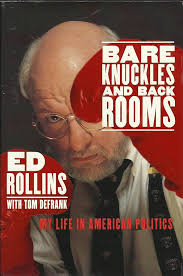
Rollins is a former Republican staffer who served his apprenticeship in Sacramento with the Assembly Caucus and who later became quite successful on the national scene. His one foray into Orange County on behalf of the Capistrano Unified School District’s Measure B (school tax measure) ended in defeat when the measure did not achieve the required 2/3 majority.
Rollins was well regarded by the Reagan campaign group, and for most of his career he represented Republican candidates.
Rollins gained a measure of notoriety when he agreed to work for Ross Perot as a political advisor in Perot’s first run for president on the Independent Party ticket in 1992. Ed had a falling out with the eccentric Texan billionaire and they parted company. After Rollins’ resignation it became obvious that Perot was mismanaging his own campaign.
Randall Smith
Randall “Randy” Smith entered politics at an early age as a volunteer for Republican candidates and causes. He served on the staff of State Senator and later US Congressman John Schmitz, until Schmitz was defeated by Andrew Hinshaw in 1972. After leaving Schmitz, Randy was hired by a major utility company to provide PR and legislative representation.
In 1990 Randy Smith formed his own firm, Smith Public Affairs, headquartered in Irvine. Smith does not engage in campaign management, but specializes in providing expertise to corporate clients in the field of legislative advocacy and public relations.
Smith is a member of the Lincoln Club, and was appointed by Governor Pete Wilson to serve on the OC Fair Board. He is highly regarded by insiders, involved activists and casual observers on both sides of the political scene.
[ED. Randy died unexpectedly in 2003 at the age of 55; everyone was sad at the Fair and wore Hawaiian shirts in his memory. He loved his Hawaiian shirts, had different categories of ’em for different occasions.. Can’t find his picture though!]