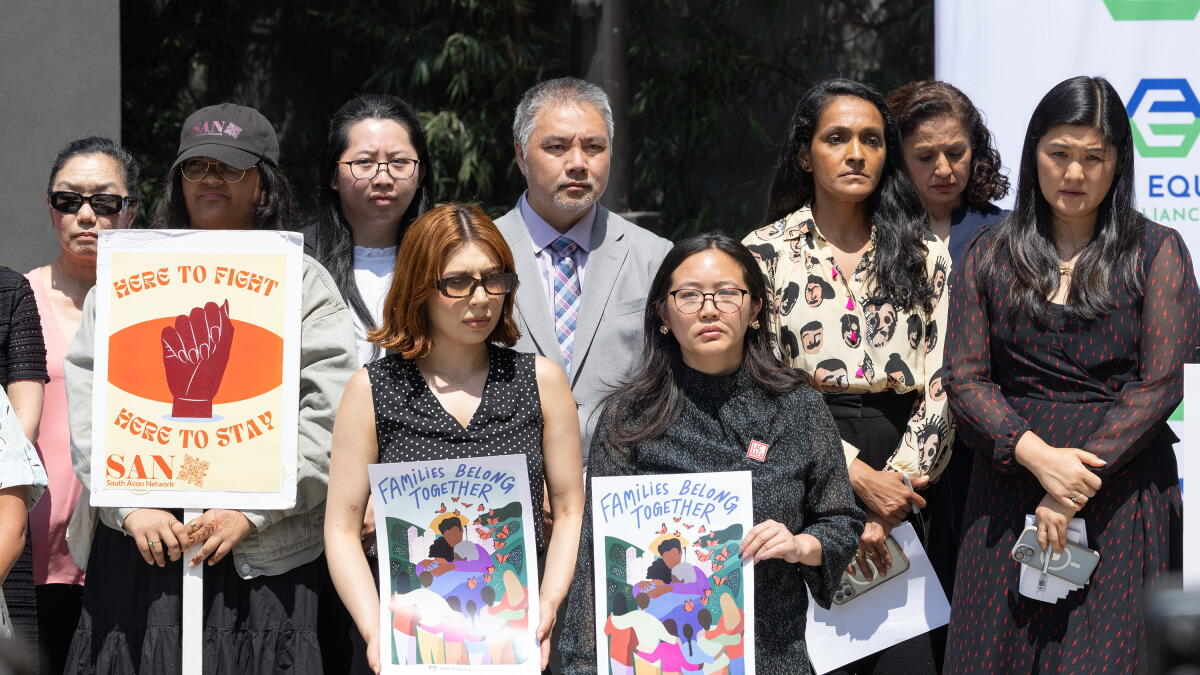
Nov. 18, 2026, by Brian Hews, cross-posted from Los Cerritos News.

UCLA study documents nearly 1,900 arrests across five Southern California counties, while national figures show more than 21,000 Asian and Pacific Islander arrests. Most arrested in Southern California had no criminal convictions.
LOS ANGELES — Federal immigration arrests of Asian and Pacific Islander immigrants have increased nearly sevenfold across Southern California under President Donald Trump’s second administration, while deportations involving Asian immigrants nationwide have surged 1,103%, according to newly released federal data analyzed by UCLA researchers and the national organization Stop AAPI Hate.
The findings document a dramatic expansion of immigration enforcement affecting Chinese, Vietnamese, Indian, Laotian, and other Asian immigrant communities, including those in Los Angeles and Orange counties.
November 2026 UCLA research brief titled AAPI ICE Arrests, Detentions and Removals in Southern Californiafound that Immigration and Customs Enforcement arrested nearly 1,900 Asian and Pacific Islander immigrants across Los Angeles, Orange, Riverside, San Bernardino, and Ventura counties between February 2025 and July 2026.
That represents nearly seven times the number arrested during the final 18 months of the Biden administration.
The researchers also found that deportations involving Asian and Pacific Islander immigrants arrested in the five-county region increased from fewer than 100 during the previous administration’s comparison period to more than 800 under Trump.
Perhaps most significantly, the UCLA study found that approximately two-thirds of those arrested under Trump did not have criminal convictions, a sharp departure from the enforcement patterns documented during the Biden administration.
The findings raise questions about the administration’s repeated assertions that its immigration crackdown is primarily targeting dangerous criminals.
For communities such as Cerritos, Artesia, Hawaiian Gardens, Norwalk, La Mirada, and surrounding cities, where Asian American families, businesses, and cultural institutions are an established part of the region, the research documents a major shift in federal enforcement.
The UCLA report does not provide arrest totals for individual cities or Los Angeles County alone.
Nationwide Asian Deportations Increase 1,103%
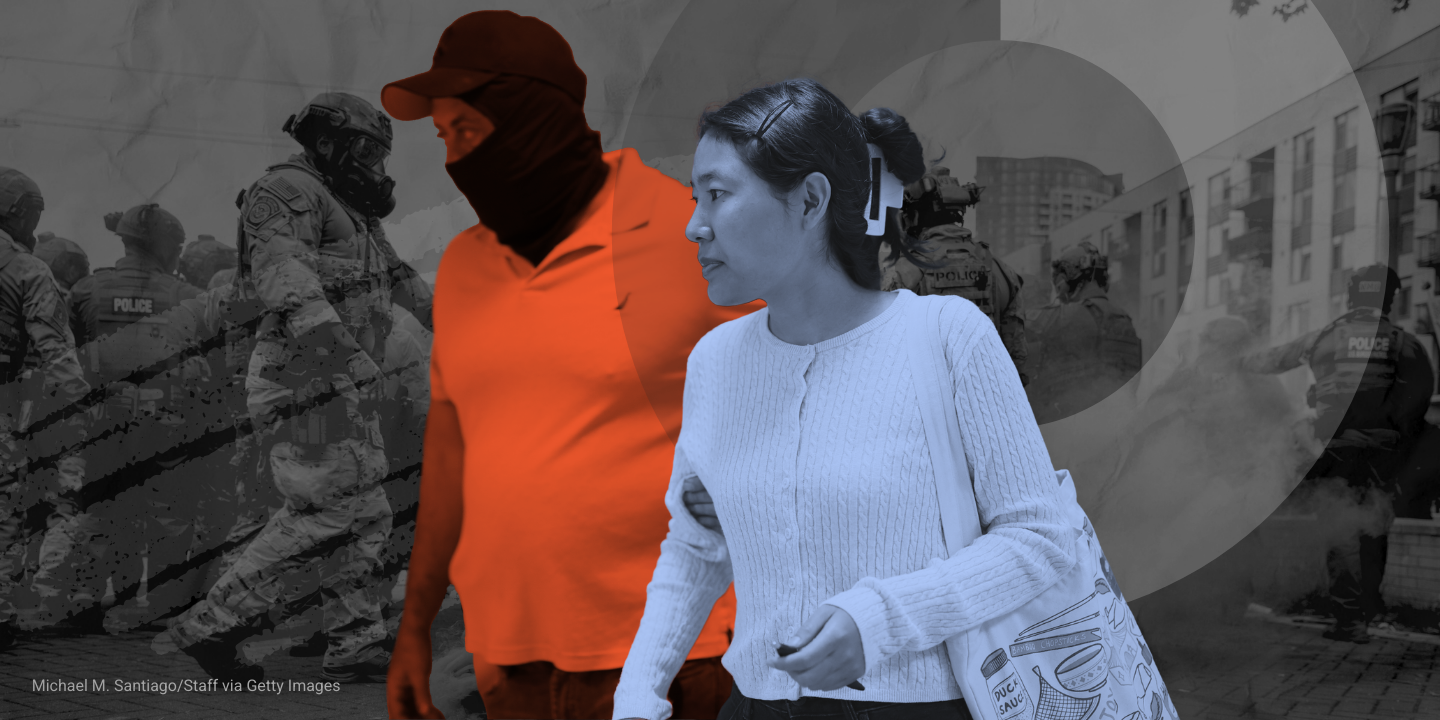
Separate findings published by Stop AAPI Hate through its Asian and Pacific Islander ICE Tracker show that the increase extends far beyond Southern California.
Between January 20, 2025, and August 6, 2026, ICE recorded 21,480 arrests, 19,148 detentions, and 9,913 deportations involving Asian and Pacific Islander immigrants nationwide.
According to Stop AAPI Hate’s analysis of the federal data, arrests involving Asian immigrants increased 436%, detentions increased 512%, and deportations increased 1,103% compared with an equivalent period under the previous administration.
The percentage increases are specifically for Asian immigrants. The combined totals also include Pacific Islanders, whose arrest, detention, and deportation increases were considerably smaller.
The national figures show 21,078 Asian arrests, 18,769 detentions, and 9,590 deportations. An additional 402 arrests, 379 detentions, and 323 deportations involved Pacific Islanders.
The data were obtained through federal Freedom of Information Act requests and analyzed using records compiled by the Deportation Data Project.
The statistics reveal a major expansion of immigration enforcement among populations that have received comparatively little attention in the national debate over deportations.
California Accounts for One-Quarter of Asian Immigrant Arrests

California accounted for approximately 25% of Asian immigrant arrests nationwide, the largest share of any state.
Based on the national figures, that represents more than 5,000 arrests involving Asian immigrants in California.
Texas accounted for approximately 13% of arrests, followed by New York at 9%.
Nationally, immigrants from India and China accounted for the largest shares of Asian arrests, representing approximately 29% and 25%, respectively.
Together, those two groups accounted for more than half of Asian immigrant arrests.
However, the data also reveal disproportionate enforcement involving smaller Asian immigrant populations.
Laotian immigrants accounted for nearly 5% of Asian arrests despite representing approximately 0.6% of the Asian noncitizen population.
Stop AAPI Hate also identified disproportionately high enforcement involving immigrants from Uzbekistan and Vietnam.
The organization uses ICE’s country-of-citizenship records to identify Asian and Pacific Islander populations because federal immigration data do not consistently identify race or ethnicity.
Southern California Arrests Increase Nearly Sevenfold

The UCLA study examined federal ICE records covering two comparable 18-month periods: August 2023 through January 2025 under Biden, and February 2025 through July 2026 under Trump.
Researchers Jonathan Ong, Paul Ong, and Melany De La Cruz-Viesca analyzed arrest, detention, and deportation records obtained through the Deportation Data Project.
The study focused specifically on immigrants associated with Asian or Pacific Island countries who were arrested within ICE’s five-county Los Angeles enforcement region.
In February 2024, ICE arrested eight Asian and Pacific Islander immigrants in the region.
In February 2025, shortly after Trump returned to office, the number rose to 48.
Arrests accelerated during the summer of 2025, when federal authorities launched highly visible immigration operations across Los Angeles and surrounding communities.
Additional enforcement waves followed later that year and during the summer of 2026.
By the end of the Trump comparison period, ICE had arrested nearly 1,900 Asian and Pacific Islander immigrants in the region.
Deportations increased to more than 800.
The number of Asian and Pacific Islander immigrants held in ICE detention facilities also climbed, exceeding 500 in December 2025.
These figures reflect arrests throughout the five-county region, not just the City or County of Los Angeles.
Chinese, Vietnamese, and Indian Nationals Account for More Than 80% of Arrests

The UCLA researchers found that Asian and Pacific Islander immigrants arrested by ICE came from more than two dozen countries.
However, three countries accounted for the overwhelming majority.
China, Vietnam, and India represented more than four-fifths of those arrested during both presidential administrations examined in the study.
Arrests involving Chinese nationals experienced the largest numerical increase, rising by more than 700 between the two comparison periods.
Indian nationals experienced the largest proportional increase, with arrests growing more than twentyfold.
The researchers also documented increases involving immigrants from Indonesia, Laos, South Korea, Cambodia, and Thailand.
A separate September 24, 2026, Deportation Data Project analysis by UCLA political science professor Graeme Blair reinforces the finding that Chinese immigrants have become a substantially larger focus of federal enforcement.
Blair examined ICE arrests involving all nationalities across a broader seven-county Los Angeles enforcement region.
His analysis found that China was tied with Colombia as the fifth most common country of citizenship among people arrested during 2025 and 2026.
China had not ranked among the 10 most common countries of citizenship for arrests in 2024.
Although Blair’s study is not limited to Asian immigrants, its citizenship findings provide additional evidence of the sharp increase in enforcement involving Chinese nationals.
Most Asian Immigrants Arrested Had No Criminal Convictions

One of the most consequential findings concerns the criminal histories of those arrested.
During the Biden administration’s comparison period, approximately four out of five Asian and Pacific Islander immigrants arrested in Southern California had criminal convictions.
Under Trump, that proportion fell to approximately one in three.
In other words, roughly two-thirds of those arrested during the Trump period did not have criminal convictions recorded in the federal data.
The researchers also found that immigrants with neither criminal convictions nor pending criminal charges accounted for a growing share of arrests.
That group increased from approximately one-sixth of those arrested under Biden to nearly half under Trump.
The study examined ICE’s own classifications of whether individuals represented public safety threats.
Under Biden, approximately four out of five Asian and Pacific Islander immigrants arrested were classified as threats.
Under Trump, the proportion fell to approximately one-third.
Meanwhile, arrests of individuals classified as not presenting a public safety threat increased more than twentyfold.
These findings do not establish that every individual arrested was legally entitled to remain in the United States. Immigration violations can provide grounds for civil enforcement even when a person has no criminal conviction.
do, however, demonstrate a significant change in the population being arrested.
Rather than concentrating predominantly on immigrants with criminal convictions, ICE increasingly arrested individuals without such convictions.
Arrests of Asian Women and Seniors Increase Sharply

The expansion of enforcement has not been limited to younger men.
Although working-age adults and men continued to account for most Asian and Pacific Islander immigrants arrested, UCLA researchers documented particularly large increases among women and older immigrants.
Arrests involving women increased nearly twentyfold.
Arrests involving seniors increased approximately tenfold.
The research does not establish why those increases occurred or identify the circumstances of each arrest.
However, the findings indicate that expanded immigration enforcement has reached demographic groups that previously represented a much smaller portion of ICE arrests.
Vietnamese Immigrants Among Those Deported to Third Countries
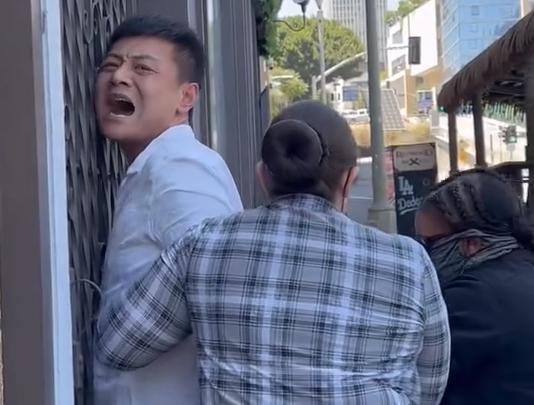
Another significant development involves deportations to countries other than an immigrant’s country of citizenship.
Stop AAPI Hate reported that nearly 200 Asian immigrants nationwide had been deported to third countries, representing a 942% increase over the previous administration’s comparison period.
The separate Deportation Data Project analysis by Blair identified nearly 300 third-country deportations involving immigrants of all nationalities arrested in the broader seven-county Los Angeles enforcement region.
Among the examples documented were Vietnamese citizens deported to Eswatini, a country in southern Africa.
The federal dataset does not establish whether the individuals voluntarily designated those destinations or were sent there at the government’s direction.
That distinction is important because the records establish the destinations but do not independently establish the circumstances surrounding each deportation.
The findings nevertheless demonstrate that some immigrants arrested in Southern California have been removed to countries other than those in which they hold citizenship.
Immigration Enforcement Creates Fear Beyond Those Arrested

Stop AAPI Hate’s research also examined the broader consequences of immigration enforcement for Asian communities.
The organization surveyed Asian immigrants and other Asian Americans about their experiences and perceptions of the immigration crackdown.
Approximately 30% of Asian respondents reported either experiencing or fearing arrest or deportation.
More than half of respondents, including U.S. citizens, reported feeling the effects of the broader anti-immigrant climate.
The organization also documented accounts of Asian Americans being confronted about their immigration status or threatened with reports to ICE.
These findings suggest that immigration enforcement concerns extend beyond people actually subject to deportation.
U.S. citizens cannot lawfully be deported merely because of their ethnicity or ancestry, but some Asian Americans nevertheless report fearing that they may be questioned or targeted because of their appearance or perceived immigration status.
The survey findings measure respondents’ reported experiences and fears, not the actual probability that an individual will be arrested.
What the Findings Mean for Cerritos and Surrounding Communities

The UCLA findings have particular relevance for southeast Los Angeles County and neighboring Orange County communities, where Asian American residents and businesses are an important part of the region’s social and economic fabric.
Cerritos and Artesia have longstanding Chinese, Filipino, Indian, Korean, and other Asian communities.
Nearby cities, including Norwalk, La Mirada, Hawaiian Gardens, and Lakewood, are also part of a broader region shaped by generations of Asian immigration.
The research does not establish that arrests increased by the same percentage in each of these communities.
Nor does it identify how many Asian immigrants were arrested in Cerritos, Artesia, or any other individual city.
That remains a significant gap in the publicly available information.
The UCLA study combines five counties into one enforcement region, while the separate Deportation Data Project analysis provides city-level arrest information covering all nationalities.
Neither published analysis supplies a verified city-by-city breakdown limited to Asian and Pacific Islander immigrants.
Consequently, the nearly 1,900 arrests documented by UCLA should not be described as Los Angeles County arrests or attributed to individual communities without additional records.
Nevertheless, the findings establish that Asian and Pacific Islander immigrants have experienced a substantial increase in arrests, detentions, and deportations across the same federal enforcement jurisdiction that includes Cerritos and its neighboring cities.
A Major Shift With Unanswered Local Questions
Taken together, the newly released reports present a striking picture of immigration enforcement involving Asian communities.
Nationwide, more than 21,000 Asian and Pacific Islander immigrants have been arrested, and nearly 10,000 have been deported since Trump returned to office, according to Stop AAPI Hate.
California accounts for approximately one-quarter of Asian immigrant arrests.
Across five Southern California counties, UCLA researchers documented nearly 1,900 arrests of Asian and Pacific Islander immigrants, nearly seven times the number recorded during the comparable Biden administration period.
More than 800 were deported.
And approximately two-thirds of those arrested under Trump did not have criminal convictions recorded in the federal data.
The administration has defended expanded immigration enforcement as necessary to enforce federal law and remove people who lack legal authorization to remain in the United States.
A criminal conviction is not required for civil immigration enforcement, and the absence of a conviction does not establish lawful immigration status.
But UCLA’s findings challenge the narrower characterization of the campaign as principally directed at dangerous convicted criminals.
For communities across southeast Los Angeles County, the next unanswered question is how those regional figures translate into actual enforcement activity in individual cities.
The published research does not provide that answer.
What it does establish is that Asian and Pacific Islander immigrants, who have received considerably less attention in the national immigration debate than some other communities, are experiencing a dramatic increase in federal arrests, detention, and deportation.
And according to UCLA’s analysis of ICE’s own records, the majority of those arrested are no longer people with criminal convictions.