Imagine an international mega-corporation was profiting off the provision of weapons components used in a genocide. And, to make matters worse, the working class city where it established its factory was at perpetual risk of being poisoned by the very chemicals that flowed into the weapons pipeline. This might sound like a 1980s punk sci fi plot à la They Live or RoboCop, but unfortunately it is all too real in our 2026 USA.
If you are an Orange County resident, you no doubt are at least aware of the May 21, 2026, chemical incident in Garden Grove. If you were unfortunate enough to reside in the area of Garden Grove that was more directly affected, you may have been evacuated, experienced respiratory symptoms, lost wages, feared for your own health as well as that of your loved ones, watched as your small business sank into ruin, or wondered how a factory that holds thousands of gallons of volatile compounds could be allowed to exist just one block away from an elementary school.
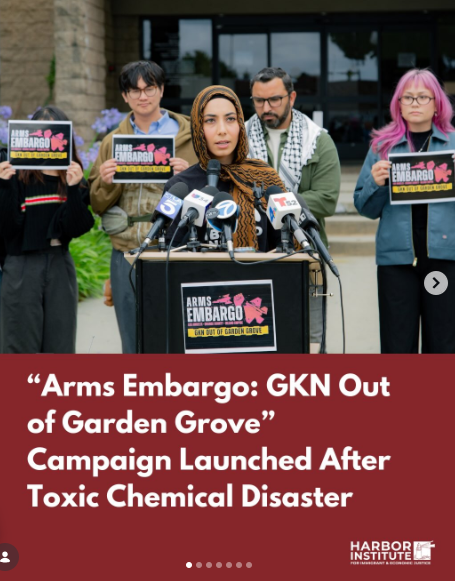
But what too many of us were not told was the sordid background of the event, which makes the current situation far more unbelievable and infuriating. Local news coverage of the issue has been inadequate and superficial, much to the culprits’ benefit. Fortunately, local activists have stepped in to do the work in which the media and government have been derelict. The GKN out of Garden Grove Campaign – which involves a grassroots coalition led by the Palestinian Youth Movement, Harbor Institute, OC Justice for Palestine, and VietRISE – was born shortly after the May incident.
Here are some of the things we know so far:
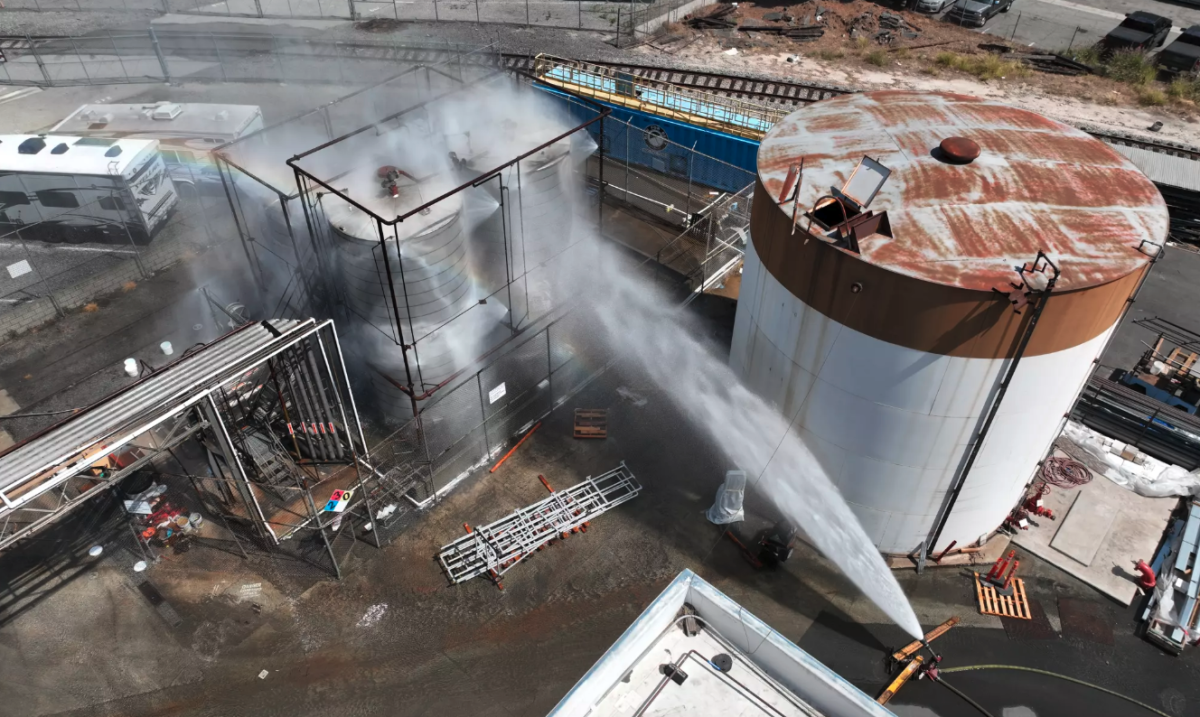
On 21 May 2026, a chemical tank at GKN Aerospace’s manufacturing facility in Garden Grove, California, experienced a valve malfunction that caused it to overheat and reach dangerously high internal pressure. For the next 6 days, over 750 firefighters were deployed to the plant, along with 134 fire engines and 10 helicopters; OC residents were warned that the tank would either explode or leak 7,000 gallons of methyl methacrylate (MMA) into the air (with potential for acute respiratory issues and other health effects); and about 50,000 Garden Grove residents were evacuated, many without access to alternative shelter during this time period.
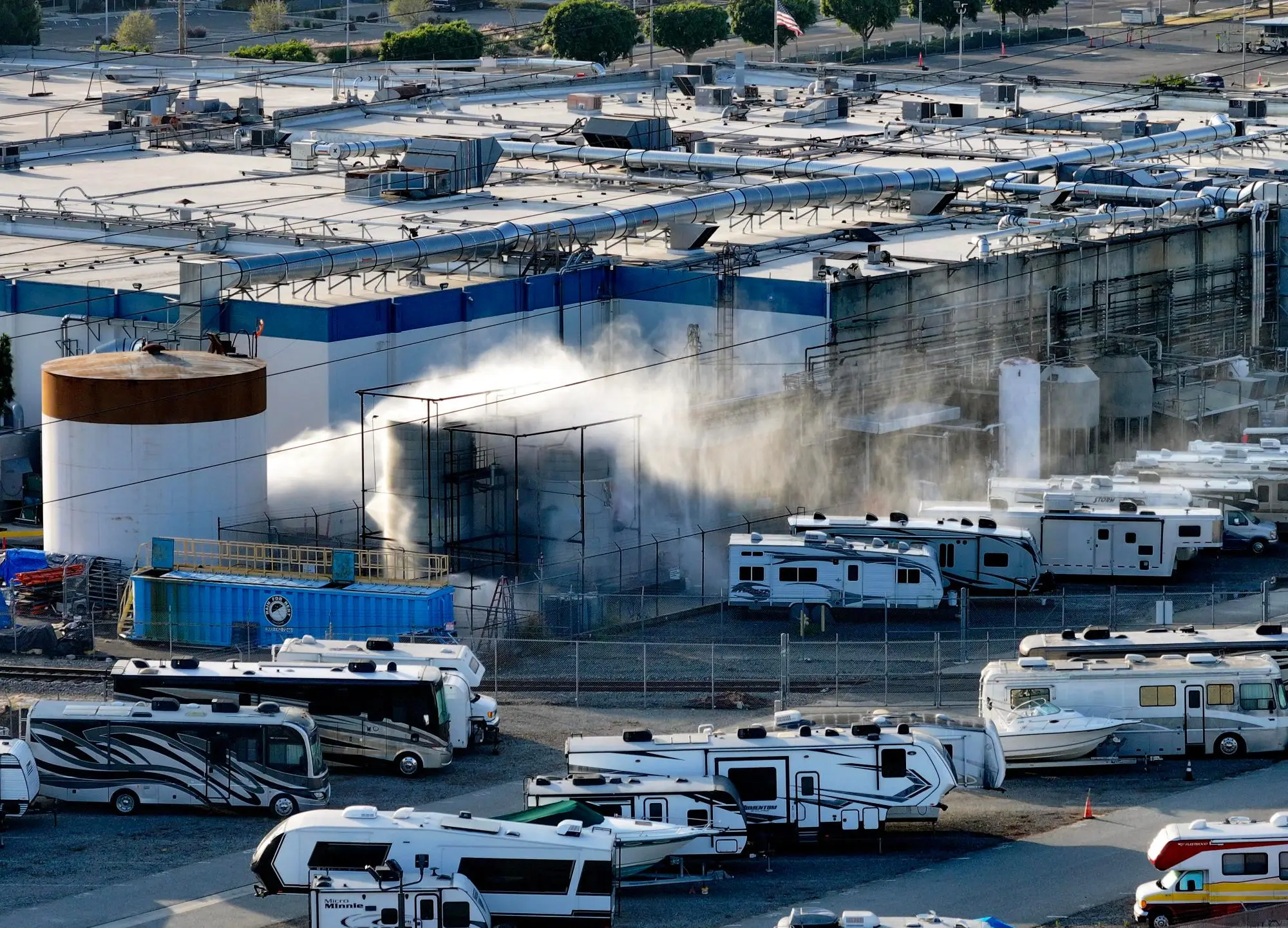
MMA is a hazardous precursor chemical that is used in a variety of industrial applications. Although MMA was previously used in acrylic nails, the FDA banned its use in that context in 1974 due to its adverse health effects. MMA’s potential adverse effects include symptoms that interfere with daily life (irritation of the eyes, nose, lower and upper respiratory tract, headache, nausea, vomiting, dizziness, and fatigue); dermatitis; genetic damage in workers; fetal damage in exposed female healthcare workers. Of note, the historical paucity of studies on occupational MMA exposures may have resulted in an underestimation of its detrimental health effects.
The GKN factory in Garden Grove uses MMA in the production of the transparency canopies that are part of the cockpit of F-35 fighter jets. GKN manufactures the canopies as part of its contract with Lockheed Martin, which assembles the F-35 stealth fighter jets and then sells them to the US government, which in turn sells the warplanes to Israel as part of its Foreign Military Sales program. The transparency canopies are an integral component of the F-35 plane’s function; without its presence, the F-35 is not operational.
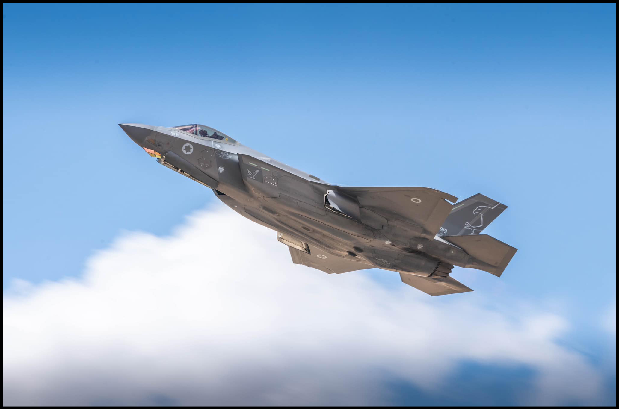
So what does the Israeli Army do with the 48 (and counting) F-35 jets it has received from the US? It carries out bombings in Gaza, the West Bank, Lebanon, and Iran. This has included the commission of war crimes, such as the July 2024 Al-Mawasi massacre (in which Israel dropped three 2,000-pound bombs on a designated humanitarian safe zone, murdering at least 90 people), as well as other instances of collective punishment tactics and heavy bombardments in densely populated civilian areas. Thus, Israel has used the F-35s in furtherance of its genocide in Palestine.

Because F-35 jets require maintenance and parts replacements, Lockheed also relies on GKN Aerospace’s transparency canopies to ensure that already-deployed planes remain functional. As a result, in May 2026, Lockheed awarded GKN an $18.6 million contract modification for “additional special tooling and test equipment” for work with an expected completion date in January 2027. (This coincides with GKN’s target date for the completion of its Garden Grove factory expansion.)
On top of all this, GKN has a long history of safety violations with community health and environmental impacts (more on this later). Despite this, Garden Grove city officials approved multiple permit applications for its facility expansion, including one issued on May 19, 2026 – just 2 days before the very near-disaster that risked the city’s future.
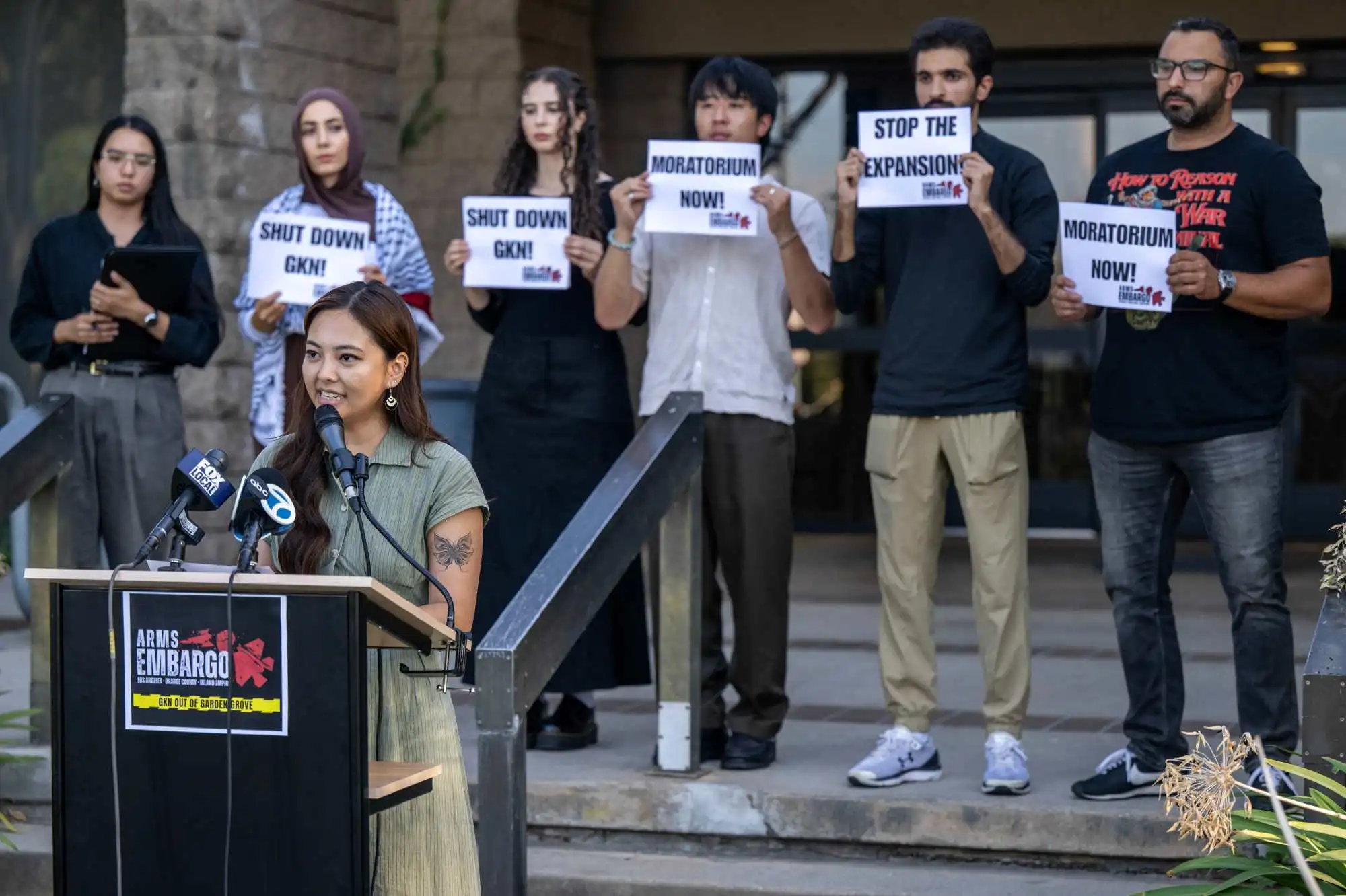
Five months have now passed. During that time, GKN Out of GG Campaign Coalition has been present at every city council meeting – or at least every meeting that the city council has not canceled for unclear reasons. Multiple expert and personal testimonies have emphasized to the city council that:
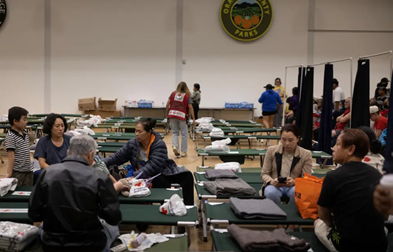
Evacuated residents had to contend with awful conditions, including crowded shelters, a lack of any shelter space (having to sleep on the street), and insufficient food and medical care.
- Residents do not feel safe in Garden Grove.
- Many residents have suffered health problems as sequelae of the tank incident, as well as financial strains and housing insecurity.
- The money that GKN has paid out (or promised to pay out) thus far is a drop in the bucket relative to the total financial injury faced by GG residents, and this does not even account for future health impacts, the cost of environmental degradation, or suffering experienced by an already-overburdened population.
- The $100M that GKN stated it will provide will likely be deduced from its tax liability or future settlements. Meanwhile, that announcement resulted in an immediate influx of investments of over $480M into its coffers.
- As a for-profit corporation with a history of repeated labor, environmental, and safety violations, GKN cannot be trusted to operate its plant safely, particularly in a location so close to homes and schools.
- Although the city cannot cancel federal defense contracts or prosecute environmental crimes, it can act through zoning and permiting.

- The city council has previously acted in what it stated was the public interest by using its zoning and permitting powers to curtail pickle bottling plants and drug rehab centers. In those cases, the imposition of a “buffer zone” relative to homes, schools, and parks was felt by the city council to be necessary. Yet, in the face of near-calamity that could have rendered a large swatch of the city uninhabitable and unsuitable for just about any commercial purpose, the city council has pretended that their hands are tied. They insist that they have fulfilled their roles and redirect all requests for action or accountability to the very corporation they are enabling.
- The city council has stated that more information is needed before they can make any decision. While the first part is certainly true, the second part is not. A moratorium is, by definition, a temporary pause on something until a definitive plan can be made. In this case, given the uncertainty of the impacts on community health, the environment, and the city’s economy, the only rational approach is to halt all production activities at the GKN plant immediately—and then figure out what the definitive plan ought to be.
- Some members of the city council have noted that the GKN plant provides 540 jobs, with GKN stating that about 40% of those belong to Garden Grove residents. The implicit argument is that closure of the plant would harm the Garden Grove economy. But this does not account for the entirety of the economic impact. What about the effects on small businesses, through losses of revenue during this evacuation (and the next?), the health costs resulting in mounting insurance premiums for those businesses’ employees, the reductions in investment for restaurants and hospitality firms, the drop in property values?
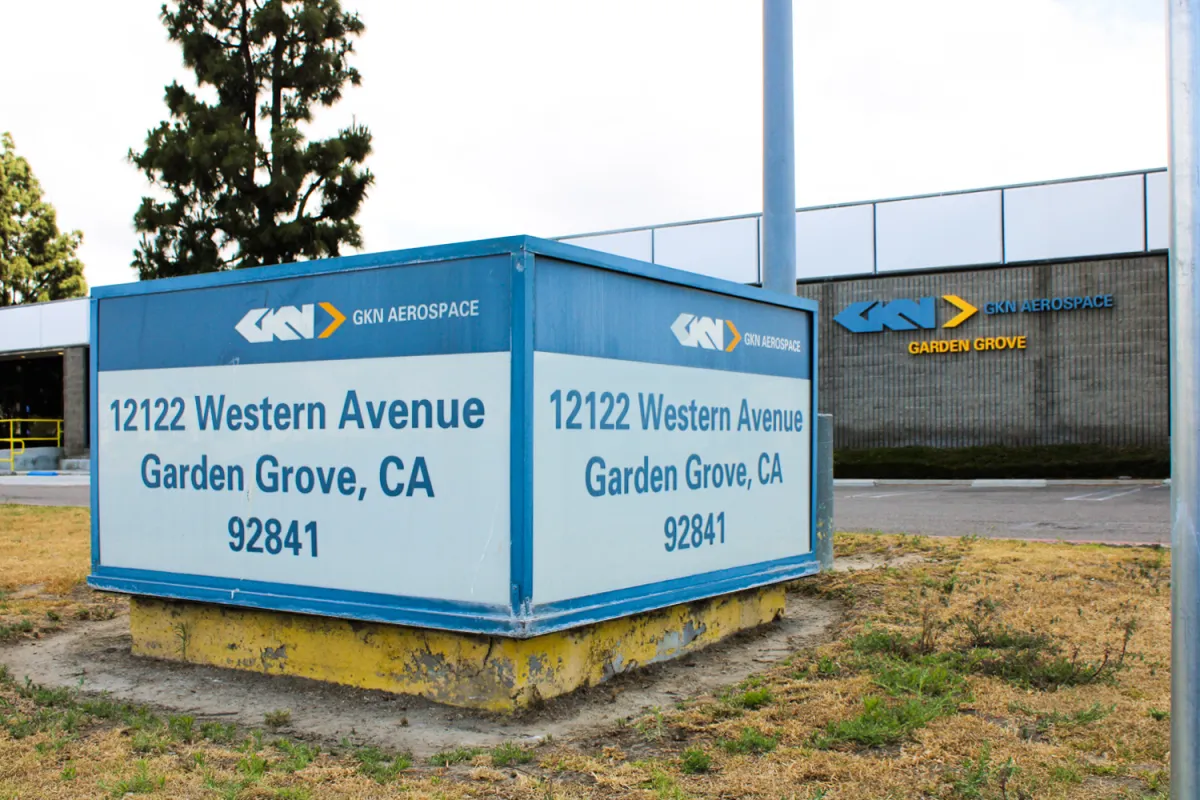
GKN Garden Grove has consistently prioritized profit over the safety of its workers, the health of the surrounding community, and the lives of the people of Palestine. It must be held publicly accountable for all of these moral and legal transgressions. Therefore, the GKN Out of Garden Grove Campaign formally demands:
1. MORATORIUM NOW: The City must immediately adopt a moratorium on permits for new and existing military manufacturing facilities while it reviews each facility’s regulatory compliance and implements permanent zoning regulations governing safety, environmental and labor regulations.
2. STOP GKN’s EXPANSION: The City of Garden Grove must leverage all municipal avenues to block the ongoing expansion of GKN Aerospace’s Garden Grove facility, including pending permits.
3. BAN HAZARDOUS MILITARY MANUFACTURING NEAR RESIDENTIAL AREAS: The chemical tank malfunction is the latest in a decade of failures at GKN Aerospace, including repeated environmental violations and complicity in Israel’s genocide. The City must amend its land-use and zoning regulations to prohibit hazardous military manufacturing near homes and schools, and establish a clear process to phase out existing operations.
For More Information:
GKN Out of Garden Grove on Instagram
Sign the petition: https://actionnetwork.org/letters/arms-embargo-now-gkn-out-of-garden-grove/
If you are a local organization, endorse the campaign: https://forms.gle/3QDVtHem2oYgMGv68
Attend a city council meeting and provide a public comment. Suggestions on how to do so : https://docs.google.com/document/d/1Jvt-TqJMIQe3GrJhHo1ZZ1TKNqhe6zFY-dg11Qt8LSw/edit?usp=sharing
Report on GKN’s role in the Gaza genocide: https://www.embargoforpalestine.com/s/GKN-Garden-Grove-Genocide-Gaza-Negligence-Orange-County.pdf
Report on GKN’s long history of regulatory violations: https://www.embargoforpalestine.com/s/History-of-Negligence-GKN-Aerospace-Garden-Grove.pdf
References
Anderson M, G. R. (2020). Occupational Reproductive Hazards for Female Surgeons in the Operating Room: A Review. JAMA Surg., 155(3), 243-249.
Aydin O, A. G. (2002). The effects of methyl methacrylate on nasal cavity, lung, and antioxidant system (an experimental inhalation study). Toxicol Pathol., 30(3), 350-356.
Borak J, F. C. (2011 Mar). Methyl methacrylate and respiratory sensitization: a critical review. Crit Rev Toxicol., 41(3), 230-68. .
Office of the United Nations High Commissioner for Human Rights. (n.d.). Retrieved Sept 1, 2026, from https://www.ohchr.org/en/press-releases/2024/06/un-report-israeli-use-heavy-bombs-gaza-raises-serious-concerns-under-laws#:~:text=The%20report%20details%20six%20emblematic%20attacks%20involving%20the,buildings%2C%20a%20school%2C%20refugee%20camps%20and%20
Pemberton MA, K. I. (2022). Methyl methacrylate and respiratory sensitisation: a comprehensive review. Crit Rev Toxicol., 52(2), 139-166.
Pemberton MA, L. B. (2014, Aug). Risk Assessment of residual monomer migrating from acrylic polymers and causing Allergic Contact Dermatitis during normal handling and use. Regul Toxicol Pharmacol., 69(3), 467-75.
You X, X. W. (2026). Genotoxicity threshold for methyl methacrylate in Chinese workers: a novel multi-endpoint genotoxicity assessment incorporating biological aging. Arch Toxicol. .


