
Irvine Unified School District (IUSD) arrived at the Orange County Board of Education’s (OCBE) July 8 meeting prepared to defend itself against another attempt to force an unwanted charter school into a locally governed district. IUSD made a strong legal case against the Excel Academy Charter School’s appeal under AB 1505, but the board’s questioning suggested that evidence and statutory limits may matter less to OCBE than its loyalty to charter interests. In light of recent law, scandal, litigation, and a pending state audit, caution should have been the board’s default posture. Instead, OCBE appeared ready to keep overruling local districts and approving almost any charter, anywhere, for almost any reason.
The Context: Proposition 39 and Its Modifications
Proposition 39 reshaped California education, but its charter-school facilities provisions also created wide openings for waste and abuse. When California voters passed Proposition 39 in November 2000, it lowered the voter threshold for local school bonds and amended Education Code section 47614 to require districts to share public school facilities fairly with charter students. In practice, districts had to provide reasonably equivalent space to charter schools operating in the district when those schools project at least 80 in-district students. Separate from Proposition 39, California law also allows county boards of education to authorize countywide charter schools that operate at one or more sites within the county.

Those rules left dangerous openings for nonclassroom-based and virtual charter schools, and the A3 scandal showed how easily those openings could be exploited. In 2019, prosecutors exposed a statewide network of 19 online charter schools that claimed public funding for students, many of whom received little or no instruction. Because online charters could enroll students beyond the boundaries of the county that authorized them, A3 turned weak oversight into a statewide fraud machine. A3’s scheme was not unique in kind—only in scale. It siphoned off staggering amounts of taxpayer money, exposed obvious holes in charter accountability, and sent its operators to prison.
These abuses demanded a remedy. A3 did not single-handedly cause Assembly Bill 1505, but it gave lawmakers a brutal example of why California needed a moratorium on new nonclassroom-based charter schools and stronger charter oversight.
AB 1505 is central to IUSD’s defense against OCBE’s continued encroachment on the authority of locally elected school boards. The law was meant to restore meaningful local review by allowing districts to reject charter petitions that duplicate existing programs, threaten fiscal stability, fail to match existing academic options, or do not show they can serve all student groups in the community. At the July 8 meeting, IUSD relied on those protections and presented detailed evidence that Excel’s petition fell short.
That argument did not arise in isolation. Before facing Excel, IUSD had just defeated another OCBE-backed charter’s attempt to claim Irvine facilities—a case that shows why AB 1505’s safeguards matter and why IUSD is increasingly prepared to use them.
Magnolia Denied

Also on July 8, 2026, a superior court judge delivered decisive victory to the IUSD and a blunt defeat to the Magnolia Research & Educational Foundation, denying its Petition for Writ of Mandate and exposing the weakness of its facilities claim against IUSD. Magnolia, a Los Angeles-based nonprofit that operates a growing Southern California charter network, had already failed to establish a viable school in a 7,400-square-foot facility in the Placentia-Yorba Linda Unified School District. IUSD turned that failure against Magnolia by using the charter’s own inflated PYLUSD enrollment projections to test its Irvine facilities demand. Once those numbers collapsed under scrutiny, Magnolia’s claim looked less like a legitimate Proposition 39 request than another attempt to pry public space from a district that owed it none.
Magnolia claimed IUSD had violated Proposition 39 by refusing to provide facilities after Magnolia submitted a timely November 2025 demand and obtained countywide authorization from OCBE. To support that claim, Magnolia projected 230 in-district students, relying on petitions signed by 150 students and a methodology it said justified the estimate. For a charter school that prides itself on math, the projection proved embarrassingly aspirational.
The IUSD was quickly able to point out the fallacies in its November 25 response. Their projections showed that only 6 in-district students would enroll, far below the 80 required by Prop 39. The IUSD contended that it did not have a ministerial duty to accept Magnolia’s projection and Magnolia responded that Prop 39 did not have a requirement for any level of arithmetical certainty.

IUSD, however, had done what PYLUSD apparently had not had the opportunity to do: it tested Magnolia’s numbers against the record. Through public records requests, IUSD showed that Magnolia’s combined enrollment in Anaheim and Placentia-Yorba Linda was only 83 students—not the “full enrollment” Magnolia had touted in recruitment materials and prior appeals. More damaging, IUSD compared Magnolia’s PYLUSD petition materials with its Irvine facilities demand and exposed the same inflated projections, weak interest forms, and slippery methodology that made Magnolia’s claims collapse in court.
That contrast makes PYLUSD’s May 6, 2025 facilities-use agreement with Magnolia look especially unfortunate. Relying on Magnolia’s deeply flawed, if not outright fraudulent, data, the PYLUSD board approved the agreement on a 5-0 vote. By then, the district had already been weakened by the political crisis left by former Superintendent Alex Cherniss, whose 20-month tenure was marked by waste, corruption, and illegality. Cherniss not only failed to protect the district’s interests by scrutinizing Magnolia’s petition and enrollment claims; he failed to alert the board that the petition had even been submitted. Magnolia’s numbers were bad enough. PYLUSD’s failure to question them made the damage worse.
IUSD then took Magnolia’s own PYLUSD projections apart, then applied the same assumptions and methodology to Magnolia’s Irvine request. In its PYLUSD application, Magnolia projected over 206 ADA students based on 143 “meaningful-interests forms.” When school began at the Magnolia Yorba Linda site in September 2025, however, there were only 6 students enrolled. For a charter network built around a math-and-science brand, Magnolia’s numbers had a remarkable way of not adding up.

The “meaningful interest forms” had many deficiencies. Some had unconfirmed addresses. Others had birthdate issues. At least ten were not valid expressions of interests. Other problems involved confusion in grade level assignments. In-district forms projected only 9 students for first grade, but Magnolia claimed 20. Similar discrepancies occurred in the second-grade projections. The evidence of Magnolia’s flawed projections convinced the court that the IUSD was on solid legal ground in opposing Magnolia’s enrollment numbers and therefore its rightful claim to Proposition 39 facilities in its district.
IUSD’s court victory was meaningful, but it was not cost-free. Proving Magnolia’s projections were unreliable required substantial attorney time, staff work, public-records requests, and analysis—costs that may approach $300,000. That expense makes Magnolia’s demand that IUSD pay its attorney fees especially audacious. The district should not have to fund the litigation Magnolia forced by submitting inflated numbers in the first place. If anyone should be compensated, it is IUSD and PYLUSD for the public resources consumed by Magnolia’s deceptive application. This is how litigation becomes a charter tactic: even when districts win, the process drains money, staff time, and attention from public classrooms.

For PYLUSD, Magnolia’s six students likely came at a significant public cost, though the public still has not been told how much was lost. The district’s only direct revenue was a $6,482 monthly lease for the 7,944-square-foot facility on the west end of the Esperanza campus—a price that significantly undervalued the public property Magnolia received. Against that underpriced lease, PYLUSD absorbed the real costs: displaced facilities, staff time to administer the agreement, review of Magnolia’s “meaningful interest” forms, legal exposure, and the disruption of carving up public school space for a charter whose enrollment could barely fill a minivan. Taxpayers also shouldered ordinary operating costs—custodial work, maintenance, utilities, security, access control, and shared-space coordination—along with likely Special Education Local Plan Area obligations. For six students, this was not school choice. It was a public facilities subsidy disguised as Proposition 39 compliance.
IUSD deserves credit for doing what too many districts have failed to do: treating a charter’s Proposition 39 demand as an evidentiary claim, not an entitlement. By exposing Magnolia’s inflated projections before public space and more public money were lost, IUSD gave other districts a badly needed roadmap for resisting charter encroachments on their facilities, programs, and funding.
In Praise of Irvine USD

Any board acting in good faith would treat IUSD as one of Orange County’s strongest public assets: a high-performing district governed by trustees elected to serve the community that built it. OCBE, however, has not acted as a neutral guardian of public education. Instead, it has used its appellate authority to steer taxpayer dollars toward charter operators that local district boards had ample reason to reject. That makes successful districts like IUSD a problem for the charter and homeschool lobbies—not because IUSD is failing, but because its success proves their intervention is unnecessary. Those private interests spent $1.33 million directly in the last two OCBE election cycles, with still more money flowing through state and federal lobbying efforts. Their purpose was not to strengthen local control, but to override it. IUSD’s success is not the issue; OCBE’s determination to undermine that success is.
IUSD’s strength is clearest in its enrollment numbers. Families that prioritize education continue to choose IUSD, even as enrollment declines across Orange County. Over the last five years, IUSD was the only Orange County district with more than 10,000 students to grow, adding 2,324 students and reaching 38,407 overall—a 6.4% increase—while countywide enrollment fell 5.9%. Comparable districts moved sharply in the opposite direction: Saddleback declined 9.1%, Orange 8%, Capistrano 7.1%, and PYLUSD 5.8%. In a shrinking public-school market, IUSD’s growth is not an accident; it is evidence of sustained family confidence.

That success is not accidental. Unlike demographically similar districts that have been destabilized by ideological campaigns over curriculum, science, history, and public education itself, IUSD has largely preserved a broad civic consensus around academic excellence. Its comprehensive high schools—Irvine, Northwood, Portola, University, and Woodbridge—help explain why teachers want to teach there, administrators want to lead there, and families from many backgrounds want their children educated there. Irvine has not waged a local “War on Woke” against its own schools. If that conflict is to reach IUSD, it will have to be imported from outside the community. OCBE appears willing to do what the citizens of Irvine have not: turn its schools into another front in the culture war.
The contrast with county-authorized charter growth is revealing because the two sectors are growing in fundamentally different ways. IUSD is growing in a shrinking countywide school market because families continue to choose a locally governed district with a strong academic record. County-authorized charters under OCDE oversight, by contrast, have grown from 10,609 to 15,675 students over the same period through a parallel approval system that allows charter operators to expand even when local boards have rejected or never approved them. That distinction matters. IUSD’s growth reflects confidence in an accountable public district; county-charter growth often shifts students, funding, and facilities pressure onto districts that did not consent to the arrangement. Some of that growth also comes from explicitly ideological projects, including the Hillsdale College/Project 2025-aligned California Republic Leadership Academy and its rebranded variant, Orange County Classical Academy. The point is not that every county-authorized charter is the same. It is that OCBE’s approvals create a route around local control while raising serious questions about educational quality and fiscal oversight. Irvine International Academy shows how those problems play out inside IUSD.
The Chinese Immersion Test Case

The story of Irvine’s two Chinese immersion charter academies shows what that contrast meant in practice. When Irvine International Academy (IIA) first sought authorization, IUSD rejected the petition at its October 15, 2019 meeting because the proposal failed to make adequate provision for special education, offered weak supports for students at different achievement levels, and relied on teachers and administrators who occasionally lacked required credentials. IIA then appealed to OCBE, which authorized the school in January 2021. The sequence is the county-charter model in miniature: a local board identified serious educational and operational flaws, and OCBE used its appellate power to impose the school anyway.
IUSD’s response was pragmatic. Because the district lacked the resources and facilities to launch a Chinese immersion program on its own, it worked with the community to support a separate, district-authorized charter designed to correct the weaknesses in IIA’s application. The Irvine Chinese Immersion Academy (ICIA) opened in August 2023, two years after IIA. IUSD still loses average daily attendance funding to ICIA that would otherwise support district programs, but the money now follows students to a school more closely aligned with Irvine’s broader educational mission. In other words, IUSD accepted a financial tradeoff to protect program quality.

That strategy appears to have worked. The district-authorized ICIA now enrolls 652 students, compared with 594 at county-authorized IIA, and its California Assessment of Student Performance and Progress results are stronger. In English language arts, ICIA reports 92% achievement, while IIA reported 77.5% in 2025, down from 89% in 2024. In math, ICIA reports 88%, while IIA reported 75%, down from 82% the year before. ICIA also reports 89% in science; IIA has not posted its 2025 science results, after reporting 87% in 2024. The available data points in one direction: the district-supported model is growing stronger, while the county-authorized alternative is losing ground. The IUSD thus preserved a high-quality community program even after OCBE’s intervention forced less favorable options onto the district. More important, it showed what accountable charter authorization should look like: local oversight, clearer educational standards, and a program built to serve the community rather than bypass it.
There is one more revealing connection in this story. After IIA’s rocky first year, the school brought in Dr. Stefan Bean as executive director. Bean came from Aspire Public Schools, a private charter network in Los Angeles, and led IIA for two years before charter advocates on the OCBE elevated him to replace retiring County Superintendent Dr. Al Mijares in June 2024. That trajectory matters because it links the same county-authorized charter ecosystem that challenged IUSD’s judgment to the leadership now shaping county education policy. The Chinese immersion episode was therefore not an isolated dispute. It was an early warning of the larger conflict now visible in the Excel appeal.

Excel’s Appeal, Irvine USD’s Evidence
IUSD’s challenge to Excel’s appeal now appears likely to test the real force of AB 1505. The district’s argument is straightforward: Excel should not be authorized as a countywide charter to operate in Irvine because it would duplicate an existing IUSD program, impose unnecessary fiscal costs, offer weaker academic quality than the district’s own virtual option, and fail to demonstrate that it can serve all student groups in the community. Those are precisely the concerns AB 1505 was designed to let local districts weigh. If OCBE approves Excel anyway, the dispute will not be about whether IUSD presented sufficient evidence; it will be about whether OCBE is willing to follow the limits the Legislature placed on charter approvals.

OCBE’s history makes approval of Excel look less like a possibility than a foregone conclusion. Clear legal limits have not restrained the board before, and its costly litigation record is one reason the state initiated an audit of its practices. As Senator Umberg wrote in the Orange County Register on April 15, 2026, “For years, the Board has engaged in a pattern of costly, often unsuccessful litigation at taxpayer expense.” That history suggests OCBE may treat AB 1505 and the pending state audit not as reasons for caution, but as barriers to be ignored when it considers Excel’s appeal on August 5.
Excel has never explained why it needs countywide authorization in Irvine. As a nonclassroom-based school already authorized throughout Orange County by its operation in Warner Unified and Helendale, Excel can enroll Irvine students without new OCBE approval. Its Irvine administrative office, open since 2019, does not change that fact: access is not the issue. Countywide authorization specifically in Irvine would give Excel something else—a stronger legal and political foothold inside IUSD, dressed up as local legitimacy. The appeal looks less like a response to unmet student need than an effort to turn an existing Irvine presence into a permanent claim on the community. From all appearances at the July 8 meeting, all five OCBE trustees were impressed. That reaction was predictable.
The July hearing is therefore worth examining closely. It can be followed here, starting at the 3:21:05 mark. Excel’s presentation followed a familiar charter-appeal script: broad promises about personalization and choice, little evidence that Irvine students lack access to comparable or better programs, and an implicit request that OCBE substitute its judgment for that of IUSD’s elected board. Powerfully sincere administrators, teachers, parents, and students marched to the podium to praise the innovations and unique opportunities offered by Excel. It was the standard and frequently rehearsed performance of the various private charters seeking to operate outside the authority of locally elected school boards.

Excel Superintendent Heidi Gasca appeared to have an unusually comfortable relationship with the board. Trustee Lisa Sparks had already run a “community forum” with Gasca in April (above), and after Excel’s presentation, the trustees asked no meaningful critical questions. That silence mattered because Excel’s pitch depended on a familiar argument used against public schools: families are being failed by the district, so they need “choice” outside the control of locally elected boards and pernicious teachers unions. Excel did not put the claim in such blunt ideological terms, but the implication was clear. Its appeal asked the OCBE to treat parental preference as a substitute for the legal findings AB 1505 requires.
“Whole-Child Education” as Woke Education

Excel’s own website illustrates the problem IUSD identified. Instead of presenting a clear instructional model, it offers a loose collection of educational slogans, vendor names, licensed tools, and software references. That is not the same as explaining how teachers will deliver coherent instruction, monitor student progress, or support students who need something more than access to online materials. IUSD Assistant Superintendent of Instructional Services Stan Machesky made that point directly: Excel described tools and platforms, not a stronger educational program. Excel’s use of “whole child” language only makes the problem clearer. That phrase has become a target in right-wing attacks on public education, yet Excel offers little evidence that its virtual model can meet students’ academic, social, and developmental needs.
What Whole-Child Education Means
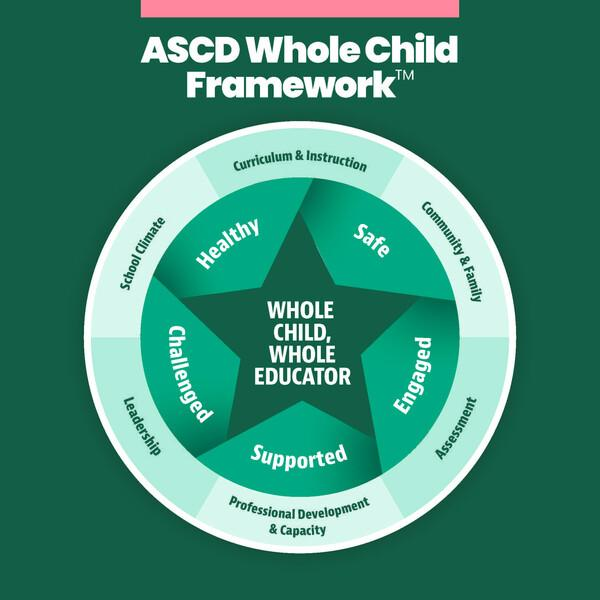
At its core, whole-child education (WCE) reflects what experienced teachers already know: academic success depends on more than test scores. Students learn best when their physical health, emotional well-being, social development, and intellectual growth are supported together.
The approach also recognizes that standardized tests measure only a narrow slice of student ability. Every classroom includes students with different strengths, learning pathways, needs, and obstacles. A serious educational program must therefore do more than deliver content. It must identify student needs, adapt instruction, provide meaningful support, and create conditions in which students can learn in a life-encompassing manner.
This is especially important for students with special needs, whose success often depends on careful integration into general education classrooms, coordinated services, and consistent adult support. Strong districts such as IUSD have been innovative in implementing whole-child practices because they understand that serving the whole student is not a slogan. It is part of the daily work of effective public education.
Why Whole-Child Education Draws Fire
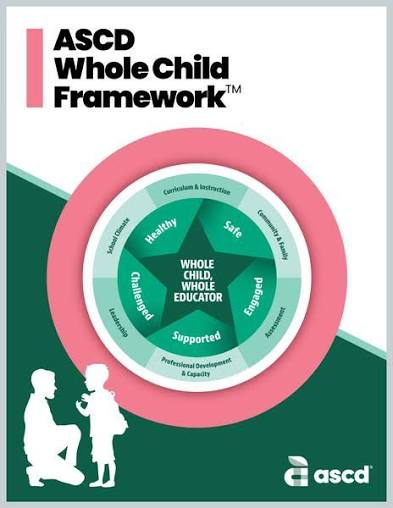
Opponents of public education have turned whole-child education into another slogan of attack, placing it alongside “woke,” “CRT,” “gender ideology,” and “Social-Emotional Learning.” They argue that WCE sacrifices academic rigor for emotional support and character formation, and that schools use it to intrude on values properly left to parents.
Whatever limited merit that critique may have, it is often made by people with little direct experience in public school classrooms. Teachers know that a class of 35 students is not a single uniform group. Each student brings different strengths, needs, habits, and barriers to learning, and each must function within the broader social environment of the classroom. That is why the social dimension of schooling matters. Students who enter public school from homeschooling, for example, are often academically prepared when their families have the time and resources to teach them well. The harder adjustment is usually social: learning to work, listen, disagree, cooperate, and belong in a classroom community.
WCE as a Problem for Excel
This makes Excel’s appeal awkward for OCBE. All five OCBOE trustees have aligned themselves against the core language of whole-child education, yet Excel’s own pitch depends heavily on that same language. The contradiction is not fatal for Excel, because logical consistency has never been OCBE’s governing principle. The board is willing to denounce “whole-child” ideas when public districts use them, then embrace similar rhetoric when it comes from a favored charter operator.
Excel’s branding shows the problem. Its website opens by promising to “meet the education needs of the whole child,” and its July 8 presentation centered on the acronym CHOICE. But the terms attached to that acronym—compassion, collaboration, confidence, community, humility, happiness, optimism, options, independence, and individualization—are not an instructional model. They are the same social-and-emotional catchwords critics attack as “woke” when district public schools and educational professionals use them. Excel never explained how a largely online, homeschool-oriented program would cultivate those qualities, assess them, or provide the adult support they require. In other words, Excel borrowed the language of whole-child education without showing the capacity to deliver it.
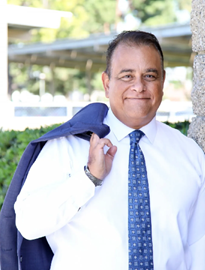
The only part of Excel’s presentation that seemed to trouble OCBE was the letter E. Trustee Jorge Valdes—concerned by Excel’s use of “equity”—pressed Superintendent Gasca for assurance that the term did not mean considering race when addressing learning challenges for low-income students. Gasca gave that assurance, and the board moved on. That exchange was telling. OCBE did not probe the quality of Excel’s virtual instruction, its special education capacity, its duplication of IUSD’s existing program, or its fiscal impact on the district. It objected only when Excel’s vocabulary brushed against one of the board’s ideological triggers.
IUSD received no such deference. District representatives appeared to understand that they were not speaking to a persuadable board so much as building a record for the courts. Their presentation returned repeatedly to the questions AB 1505 requires OCBE to answer when considering charter applications: Does the petition duplicate existing programs? Does it demonstrate measurable academic performance? Would approval cause fiscal harm? Is the governance structure sound? Can the school serve all student groups? Are its teachers and administrators properly credentialed? If OCBE approves Excel despite that record, the issue will not be a close educational judgment. It will be another test of whether county trustees can ignore statutory limits whenever a favored charter asks them to.
The IUSD Case for Denial

IUSD presented its case for denying Excel methodically and forcefully. OCBE gave the district the same fifteen minutes it had given Excel, and IUSD used that limited time efficiently. Superintendent Cassie Parham opened by framing the district’s opposition around those statutory standards, then turned the presentation over to IUSD Trustee Connie Stone. (Parham & Stone, right)
Stone was direct. She argued that Excel’s application reflected the same kind of waste and abuse that has drawn state audit scrutiny to OCBE. She reminded the board that AB 1505 recognizes local school boards as the bodies best positioned to decide which programs should operate within their districts. She also accused OCBE of abusing its appellate authority, noting that in recent years the Los Angeles County Office of Education, serving roughly 1.27 million students, had approved 26 charters, while OCBE, serving about 430,000 students, had approved 32. By that measure, OCBE was approving charters at roughly four times the LACOE rate. Stone then yielded to Stan Machesky, IUSD’s Assistant Superintendent of Instructional Services.
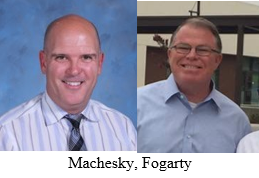
Machesky focused on academic quality. He compared Excel Academy’s highest-performing program, authorized through Warner Unified, with IUSD’s own Irvine Virtual Academy. The comparison clearly favored IUSD. IVA students were 19 percentage points more proficient in English language arts, 9 percentage points more proficient in math, and the IUSD virtual program scored 22 points higher on the College Readiness Index, 73% to 51%. Machesky’s point was straightforward: Excel was not offering Irvine families a stronger academic option than the one IUSD already operates.
John Fogarty, IUSD’s Assistant Superintendent of Business Services, then addressed the potential fiscal impact. He noted that Irvine had experienced its first enrollment decline in years—modest, but significant considering broader demographic trends and the slowdown in new residential development. If Excel enrolled 300 to 350 IUSD students, Fogarty estimated the district would lose between $3.7 million and $4.3 million in revenue. Parum then returned to close the presentation with the broader public-interest argument:
We know that there are exceptional charter schools that serve as hubs of innovation. And just as there are traditional public schools that are underserving students, there are charter schools doing the same. Only unfortunately, as we’ve seen, the profit motive can be particularly corrosive.
And there are schools that have deceived their families by cherry-picking their data, sold their programs by promising kickbacks to parents and providing them and ultimately derailing the learning trajectories of their students.
These students and families, as trustee Stone said, don’t get a “do over.” Trying to overcome the learning loss can take years. When you see attrition and program and scores drop over time, as you do with Excel, it should give you pause.
I would hope that the significant instructional allocations that Excel is promising, families and the vendors who provide services are accompanied by the highest levels of fiscal accountability and transparency.
California’s experience with non-classroom-based charter schools, including the A3 scandal, which fueled the temporary moratorium, demonstrates why the legislature imposed additional safeguards and scrutiny for this sector.
Those reforms reflect a single principle. When public funds are distributed outside the traditional classroom, rigorous oversight is essential. Every decision to authorize a charter school affects more than one petitioner. It affects the students, families, and neighborhood schools that share those same public resources.
Respectfully, I ask that you honor both the intent of AB1505 and the careful findings of our locally elected board by upholding our decision [to not authorize Excel].
Thank you.
IUSD’s presentation was polite, professional, and grounded in the record, but it was also unyielding. That was precisely what seemed to rankle the OCBE trustees—especially Trustee Valdes—because the district had left them little room to attack its position on either the law or the facts.
From Valdes’s Reflexive Defense to Williams’s Absurdity
Valdes first tried to dismiss IUSD’s comparison showing that OCBE had recently authorized charter schools at roughly four times the rate of the Los Angeles County Office of Education. Without evidence, he suggested that Los Angeles simply disliked charter schools. That response avoided the more obvious explanation IUSD had placed before him: OCBE is unusually willing to override the authority of locally elected school boards.
Valdes then shifted to Irvine Virtual Academy’s stronger results. He suggested that IVA outperformed Excel because Irvine served fewer socioeconomically disadvantaged students. Superintendent Parum, offended by the implication, immediately returned to the podium to correct him, emphasizing that IUSD does serve a substantial population of socioeconomically disadvantaged students and has been effective in meeting their needs. Valdez offered no evidence for his assumption. He also seemed not to notice the irony: in trying to explain away IUSD’s superior performance, he was effectively arguing that student outcomes must be evaluated in light of poverty, access, and need—the very logic behind diversity, equity, and inclusion that OCBE trustees routinely disparage.

Trustee Ken Williams supplied the meeting’s most revealing absurdity after the formal proceedings ended. Trustee Stone approached him at the dais to introduce herself, since Williams’ trustee area includes most of IUSD. His immediate question was whether IUSD was the district “sending students for gender transition surgery.” The remark was not a question in any serious sense; it was a culture-war caricature substituted for knowledge of a district he is supposed to represent. There is no serious response to that level of willful ignorance.
On the Way to the Courtroom

The likely next stop is court. In a normally functioning review process, OCDE’s educational professionals would weigh the record IUSD presented, recognize the strength of the district’s legal and instructional case, and recommend denial. The board would have disregarded that recommendation, as it has consistently done in the past, but at least the professional record would be clear. Under Superintendent Bean, however, even that safeguard appears to be weakening. If OCDE recommends approval despite Excel’s duplication of IUSD’s existing program, its weaker academic record, its deleterious fiscal impact, and its unresolved questions about serving all students, the recommendation will look less like an independent educational judgment than a political accommodation to the OCBE’s charter agenda. The predictable result will be OCBE authorization and a well-founded lawsuit by IUSD.
That is why the state audit matters, and why it cannot come soon enough. OCBE’s pattern is no longer just a charter-policy dispute; it is a governance problem, a fiscal problem, and a local-control problem. County supervisors should be pressed to treat it that way. Taxpayers should not be forced to fund unlawful charter approvals, needless litigation, and repeated attacks on successful public school districts while county officials pretend the damage is someone else’s responsibility.


A few issues in this article need to be addressed in response to much-appreciated feedback from people who understand the Irvine situation far better than I do.
To clarify some details of the two Chinese immersion charters. The enrollment of the county-chartered IIA represents a TK-8 school site. ICIA’s enrollment is for a TK-5 site. ICIA, the district authorized charter, is in the process of seeking a material revision to gradually expand to a TK-8 site. This would seem to strengthen the point that ICIA will continue to expand.
My Irvine friends also emphasized that IUSD is not immune from the same enrollment pressures affecting districts across Orange County. That is precisely why Excel’s application matters: even a strong and growing district can be harmed when public resources are diverted through unnecessary charter expansion. They also rightly pushed back against any implication that enrollment declines elsewhere reflect some failure by other districts or the superiority of Irvine’s programs. Public schools across the county are confronting many of the same demographic, fiscal, and political pressures. This is a moment for coordination and mutual support, not comparison or division, especially when attacks on public education are so widespread and relentless.
That point deserves emphasis. Across Orange County, outstanding educators are working under difficult conditions to meet the needs of all students. I apologize for allowing the experience in PYLUSD to become a distorting lens for viewing other districts. Too many families there have regretted moving into a district where an extremist school-board faction, aided by charter-school boosters on OCBE, helped abandon diversity, equity, and inclusion. But that experience should not obscure the dedicated work being done in communities facing different versions of the same pressure, nor should it lead to comparisons that weaken the solidarity public schools need now.
In trying to give Irvine’s educational leaders the credit they deserve, I regret any implication that other districts have fallen short of Irvine’s standards. Public school districts across Orange County are facing shared pressures, and those of us who believe in public education must stand together against attacks on its very existence.
Great information, thank you! Additional comments and observations:
1. At the same July 8 OCBE meeting, the board voted unanimously to revoke the charter of Explore Academy, the floundering charter school founded by GOP Lt Gov candidate Gloria Romero. That is two OCBE-authorized charter failures in the last two years (Unity Middle College High closed Summer 2025).
2. For a fun exercise, look at the necklace Ms Gasca wore during the OCBE board meeting, and compare to her choice of jewelry before IUSD during the March 10 and May 19 board meetings- she knows her audience at the county board. We’ll see what she chooses for her next appearance on Wednesday in Costa Mesa.
3. “Excel has never explained why it needs countywide authorization in Irvine.” I’m not a lawyer, but per AB1507, since their “resource center” is within IUSD (despite their authorizers being at specks on the map in remote rural school districts Warner and Helendale), renewal of their existing charter requires authorization from the district in which the resource center is located. But I don’t know if this means the existing charters with Warner and Helendale will be supplemented or replaced by an OCBE-authorized charter.
4. Notably absent among the speakers during these three Excel hearings have been their board members. Their board members also serve on the boards of similar independent study charters Sage Oak Charter (authorized by Warner, Helendale, and Keppel) and Motivated Youth Academy (authorized by Mountain Empire, whose former superintendent pled guilty in the A3 charter scandal). All three charter schools have IRS Form 990’s on file showing board members are compensated for their service. Their board members are CalSTRS pensioners, some with annual pensions in the high five and six figures; in a nice irony, the Excel board president appears to have worked for Dehesa Elementary School District, which was the nexus of the A3 scandal (to be fair, if this is the right person according to Transparent California he retired long before A3 was caught). As a board member for Excel, Motivated Youth and Sage Oak he pulled in more than $40K in FY25.
5. Although the IUSD-authorized Irvine Chinese Immersion Academy may better align with the district’s values and priorities than IIA, it illustrates that district-authorized charters deserve full scrutiny, even the authorizing board is “non-ideological”. In the 2025-26 school year student demographic information posted by the CDE, ICIA ranks last among all IUSD elementary and TK-8 schools in proportion of both socioeconomically disadvantaged students and students with disabilities. Their test scores should be understood in that context. In addition, until SY 25-26, ICIA had a four-person board that included an employee and a board member of the South Coast Chinese Cultural Association, which receives taxpayer funding from ICIA for facility rental and offers fee-based after-school programming to ICIA students, thus putting SCCCA in a position to gain revenue from a captive public-school population. This is a conflict of interest that IUSD and ICIA seem to have addressed by expanding the size of the board, with only a single member of the SCCCA staff serving on the ICIA board.
Just above the section titled “The Chinese Test Case” I mistakenly identified the Orange County Classical Academy as a rebranding of the California Republic Leadership Academy. It is the other way around. CRLA is the rebrand