Here are some paragraphs to convince you to do so by turning some defaults off:
Apple and Google may have ignited the trend of collecting increasing amounts of their customers’ information, but with Windows 10, Microsoft has officially joined that race. By default, Windows 10 gives itself the right to pass loads of your data to Microsoft’s servers, use your bandwidth for Microsoft’s own purposes, and profile your Windows usage. Despite the accolades Microsoft has earned for finally doing its job, Windows 10 is currently a privacy morass in dire need of reform.
…
Don’t Use Express Settings During Setup
During installation, Microsoft will encourage you to accept its “express install” defaults. Without exceptions, these defaults will result in the maximum sharing of your information with Microsoft. Instead, select the “custom install” option, which will bring up a bunch of toggles. The first set of toggles, concerning personalization and location, looks like this:
[graphic omitted]
The second set of toggles is more cryptic but more important:
[graphic omitted]
Turn Off the Secret Settings
The install settings are only a subset of Windows 10’s privacy settings, which occupy more than a dozen different pages and dialogue boxes across the user interface, none of them in plain sight. Moreover, one of them reveals that Microsoft wasn’t being quite honest during setup. When you turned off “Send error and diagnostic information,” you really only turned it down from “Full” to “Enhanced.” To really reduce the amount of information sent to Microsoft, you need to go to the Start menu, select Settings, choose Privacy from the list of settings, and then go to the Feedback and Diagnostics section:
[graphic omitted]
If you’ve already installed Windows 10, then what the hell are you waiting for? Plug the leaks!
About Greg Diamond
Somewhat verbose attorney, semi-disabled and semi-retired, residing in northwest Brea. Occasionally ran for office against jerks who otherwise would have gonr unopposed. Got 45% of the vote against Bob Huff for State Senate in 2012; Josh Newman then won the seat in 2016. In 2014 became the first attorney to challenge OCDA Tony Rackauckas since 2002; Todd Spitzer then won that seat in 2018. Every time he's run against some rotten incumbent, the *next* person to challenge them wins! He's OK with that.
Corrupt party hacks hate him. He's OK with that too.
He does advise some local campaigns informally and (so far) without compensation. (If that last bit changes, he will declare the interest.)
His daughter is a professional campaign treasurer. He doesn't usually know whom she and her firm represent. Whether they do so never influences his endorsements or coverage. (He does have his own strong opinions.) But when he does check campaign finance forms, he is often happily surprised to learn that good candidates he respects often DO hire her firm. (Maybe bad ones are scared off by his relationship with her, but they needn't be.)
I’m what’s called a “solo practitioner” in my own law office. (I know that for some reason a few people find this very difficult to understand.) But thank you for your interest in my welfare.
Granted, things like automatically connecting to some public WiFi hot spots sounds pretty ill advised, but if you don’t want to sync across your devices, don’t want Cortana and any localized content, and don’t want cloud storage and the many other cloud-y things that make Windows 10 what it is, why update in the first place?
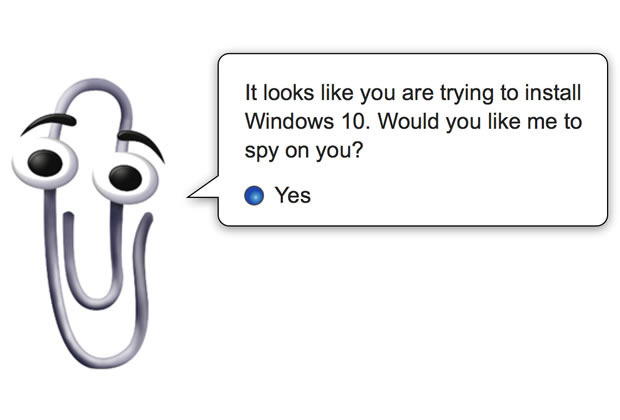


I know that Microsoft see’s NO benefit in tracking Greg Diamonds blathering blog posts. But it’s scientists are wondering:
“This guy has a Ph.d AND a LAW DEGREE…why doesn’t he get a fucking job?
I’m what’s called a “solo practitioner” in my own law office. (I know that for some reason a few people find this very difficult to understand.) But thank you for your interest in my welfare.
Granted, things like automatically connecting to some public WiFi hot spots sounds pretty ill advised, but if you don’t want to sync across your devices, don’t want Cortana and any localized content, and don’t want cloud storage and the many other cloud-y things that make Windows 10 what it is, why update in the first place?
Not to mention that Windows 10 will eventually convert to a subscription based model.
Your link to the Slate article doesn’t seem to work. Maybe this one will do for your purpose:
http://lifehacker.com/what-windows-10s-privacy-nightmare-settings-actually-1722267229