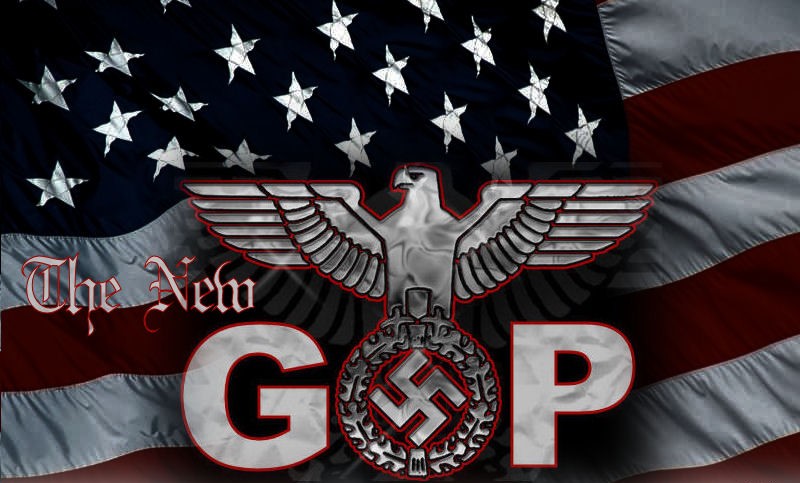
Anyone familiar with William L. Shirer’s The Rise and Fall of the Third Reich or who has explored the history of Nazi Germany will by now have found the similarities with our current situation appalling. A brief examination of this history will frame our present moment and shed some light on what’s to come. Although history does not repeat, familiar patterns tend to arise since human nature and the dynamics of mass society remain stable over time. This is particularly true because some important figures in the current regime are obviously inspired by Hitler’s legacy. The Trump regime follows the key philosophy of Nazi ideology as well as Nazi propaganda practices, political schemes, economic programs, and foreign policy.
Carl Schmitt and Project 2025
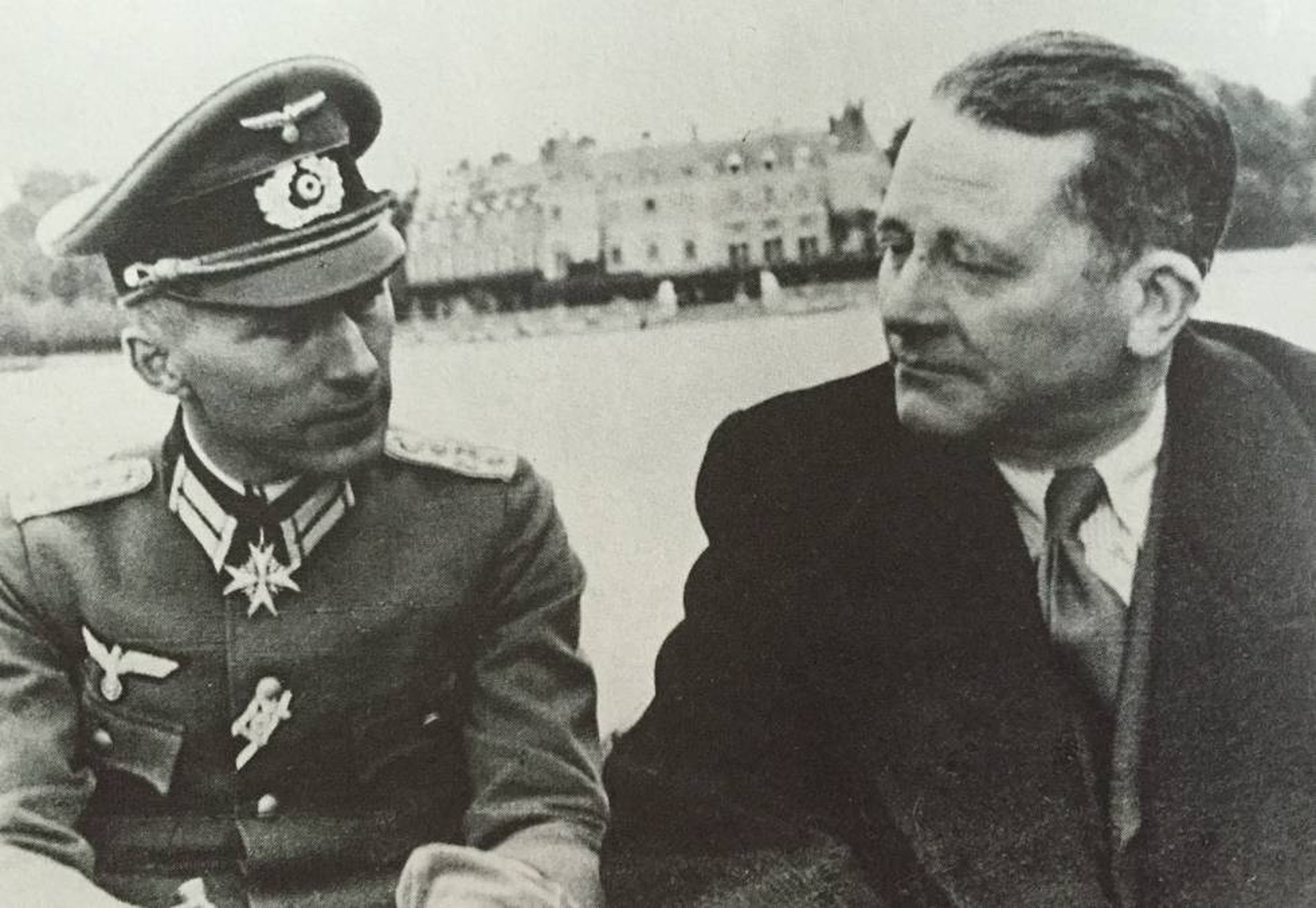
If Russell Vought had submitted Project 2025 as part of a master’s or doctoral thesis, it likely would not have been accepted due to concerns about the originality of the work based on similarities with the writings of Nazi-era philosopher Carl Schmitt (1888-1985).
Schmitt was a principal advisor to Adolf Hitler who guided the Führer through the process of eliminating representative government and concentrating power in the executive branch. Schmitt claimed that pluralist democracies are incapable of addressing the existential crises a nation might encounter. The sole answer to these possible crises is a leader with complete control over all government agencies, requiring the abolition of representative government, separation of powers, and independent state and local governance.
In 1933, Schmitt took on the role of a key adviser to Hitler. Those close to Hitler called him the “crown jurist of the Third Reich.” He helped guide the Nazi regime to its full consolidation of power inside of Germany. At the end of the war, Allied forces detained Schmitt and interrogated him at the Nuremberg trials. One would think that his horrible ideas would have died in 1945 and would have provided a case study in the type of government no society would ever want to emulate.
On the contrary, his concepts have been positively noted by several antidemocratic scholars at places like Ivy League universities, the University of Chicago, and particularly the Claremont Institute. The Claremont Institute is undoubtedly the most important agency promoting Schmitt’s ideology in the United States. Harry V. Jaffa founded the Institute in 1979. Jaffa studied under Leo Strauss, who championed Schmitt’s theories at the University of Chicago. Prominent individuals associated with the Claremont Institute include John C. Eastman, Russ Vought, Larry P. Arnn, Laura Ingraham, Ben Shapiro, Mark Levin, and Jack Posobiec. Notable alumni include James Braid, White House legislative director; Michael Needham, principal advisor to Marco Rubio; and Michael Ellis, CIA Deputy Director. Its core funders are the old money billionaires who also underwrite the Heritage Foundation: DeVos, Scaife, Bradley, Koch, and Thomas W. Smith.
Hillsdale College and Public Education

Betsy DeVos and Larry P. Arnn highlight the key affiliation between the Claremont Institute and Hillsdale College in Michigan. DeVos is a major donor to both institutions and Arnn has been serving as the President of Hillsdale College after having served in the same capacity at the Claremont Institute. Hillsdale is the main institution promoting the defunding of public education and advocating for the transfer of taxpayer money into private and parochial schools. While Hillsdale claims to promote “classical education” its proposed public school curriculum is rather the false history and science of western cultural imperialism. Hillsdale benefits from a $1 billion endowment for its nearly 1,800 students. For comparison’s sake, Chapman University has an $805 million endowment for 9,760 students.
Considering Hillsdale’s advocacy for virtue in education and its close alignment with the Trump regime, it is worth noting how Larry Arnn became its president in 2000. Arnn succeeded George Roche III as president after Roche’s tenure ended abruptly when it became evident that he had had a long-term extramarital affair with his daughter-in-law, who committed suicide in 1999. During his time as President of Hillsdale, Roche had served on President Reagan’s National Council on Educational Research. Today, Arnn represents the bridge between the Claremont Institute and Hillsdale College.
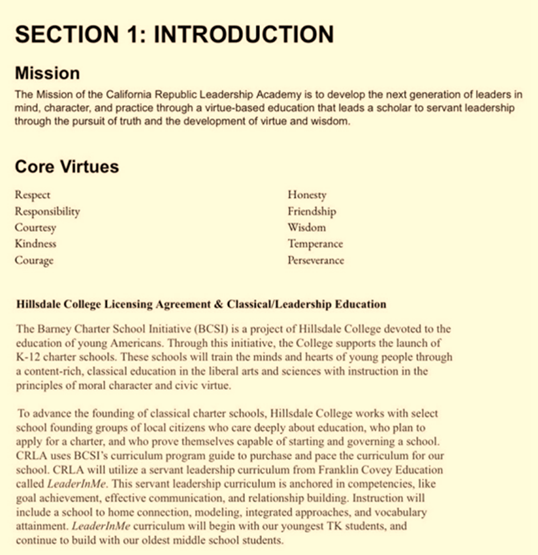
Hillsdale’s public school curriculum is expanding in Orange County. The Orange County Classical Academy in Orange and the California Republic Leadership Academy* network in Capistrano—and soon at Esperanza High School in Yorba Linda—are growing because loopholes in state charter school laws let the Orange County Board of Education establish charter schools despite opposition from local school boards. This is part of the Project 2025 diversion of taxpayer money into unaccountable institutions that serve its political agenda.
The Unitary Executive
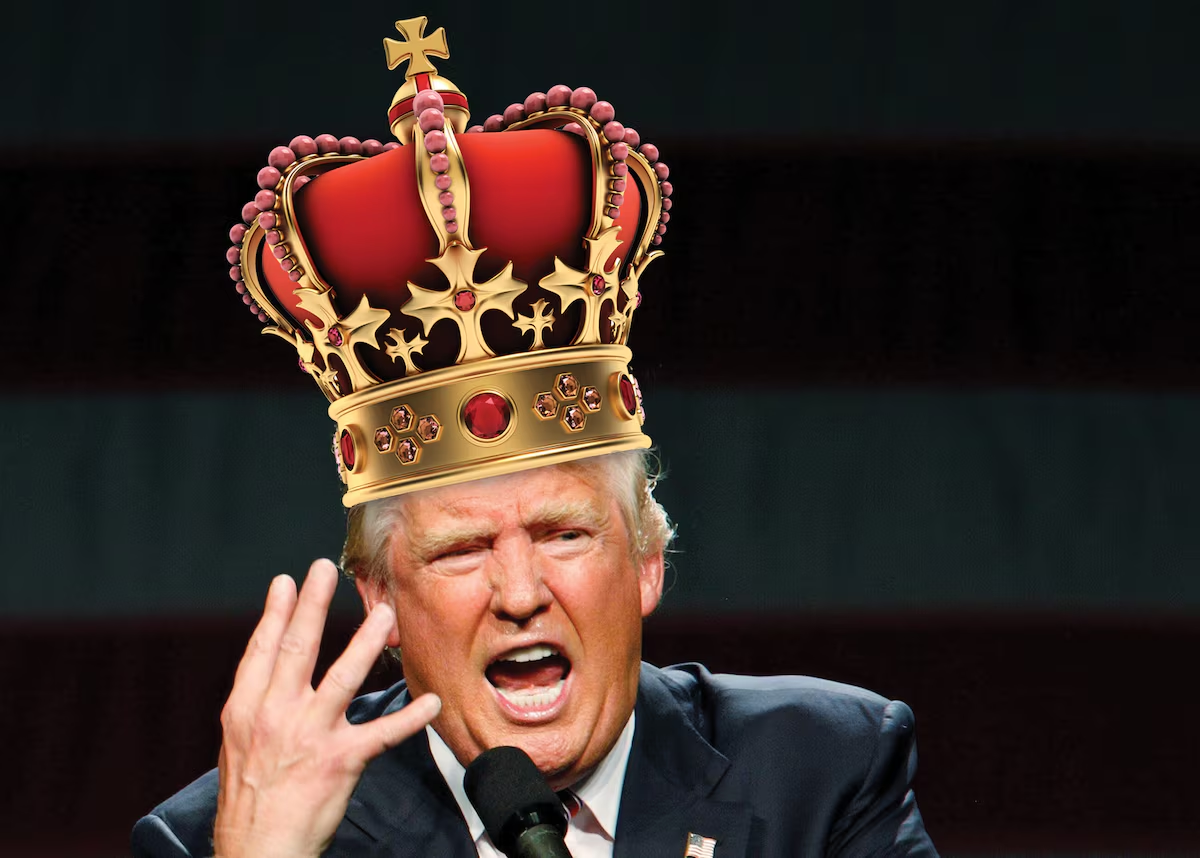
Schmitt’s influence on key institutions of the far right shaped the jurisprudence of the Federalist Society, specifically its notion of the unitary executive. This unitary theory of executive power resulted in the appalling 6-3 Supreme Court decision of July 1, 2024 in Trump v. United States. It is this decision that made sure a jury would never hear the overwhelming evidence showing Trump’s role in the attempted violent overthrow of our government on January 6, 2021. It is this decision that allowed Trump to expand ICE into the lawless force partly made up of people he pardoned for their seditious acts on January 6. And it is this decision that will make it exceedingly difficult to bring to justice those responsible for the murders of Renee Nicole Good, Alex Pretti, and the many others abused by the President’s personal armed guard.
We have seen a version of this story before.
Mein Kampf: The Power of Hate and Ignorance.

Mein Kampf is a strategic playbook for how to manipulate the masses, and its core principles have been employed effectively by the Trump regime. A brief paraphrase of the core ideas of the book is: People are really stupid, they forget easily, and they operate based on emotion rather than reason. A successful propaganda approach thus relies on exploiting the interconnected emotions of fear and hatred. The leader promulgates fear by stressing the imminence of catastrophe and promotes hatred by blaming the catastrophe on the pernicious enemy from within or organized forces from outside.
Hitler advised leaders to keep things simple and not get tied up on explanations of complex problems. Such explanations will muddle the core message, confuse the audience, and result in public indifference. Never admit a mistake or a failure. The public needs reassurance of the infallibility and transcendence of its leader. The leader must embody the will of the people and always exhort the providential nature of his chosen rule.
Despite their disturbing nature, these propaganda tactics attract enough public support to maintain the demagogue’s base. In Nazi Germany, a compliant media ensured that the key messages got communicated and repeated incessantly. Moreover, there would be plenty of distractions. Forget the importance of facts, they are malleable. Forget the importance of principles, they are negotiable. Don Henley had it right: “You don’t really want to know just how far it’s gone.”
Big Money Helps Hitler Buy a Dictatorship
Following a successful election campaign and his appointment as Chancellor on January 30, 1933, Hitler convened a meeting with prominent German bankers, industrialists, landowners, and media executives to reassure them that his administration would not jeopardize their interests. Included at the meeting were executives from IG Farben, Krupp, Allianz, Siemens, and the Reichsbank. At this February 20 secret meeting, the oligarchs committed to using their wealth to compel the middle class and confessional parties to support suspending the constitution.

It was not a particularly difficult sell. One week to the day after the meeting with the tycoons, the Reichstag fire generated the exploitable hysteria necessary to compel broad support for dictatorship. It is still not known how the fire started, and some speculate that it was a false flag operation. Regardless, the threat was exaggerated but effective. The petite bourgeois parties sold out for cheap, as did those with strong ties to German Protestantism.
The main Catholic Center Party was a somewhat harder sell, as its institutional memory of Bismarck’s Kulturkampf persisted. Sell out, however, they did. In exchange for guarantees that their parochial schools would be protected, they joined other parties in passing the Enabling Act with well over the 2/3 vote needed to amend the Weimar Constitution. During this process, the Catholic Center Party broke faith with the Social Democratic Party, which had previously supported them when Catholics faced persecution in Germany. On July 20, 1933, the Vatican formally established diplomatic relations with Nazi Germany by signing one of the earliest agreements with Adolf Hitler by any foreign government.

A mix of corruption, opportunism, racism, religious intolerance, and violent intimidation by the Brown Shirts (Sturmabteilung-SA) led to the fall of the Weimar Republic with the adoption of the Enabling Act on March 23, 1933. Around 20% of deputies, all from the Social Democratic or Communist Parties, missed the vote due to physical coercion, detention, or hiding for safety. With 20% of delegates missing and the acquiescence of the Catholic Center Party, Hitler could claim victory. Once suspects that Steven Miller and Steve Bannon both celebrate March 23 as a day of inspiration.
The Brown Shirts thus cooperated with German elites to establish the single party dictatorship. Once the Nazis banned all rival political parties in July 1933, the Reichstag became a purely ceremonial body providing a stage for some of Hitler’s speeches and a formal assembly that gave the illusion of public assent to Hitler’s agenda. Illusions mattered, and the schnitzels were excellent.
Carl Schmitt’s vision was brought to life: a powerful executive, unrestricted in authority, supported by a rogue militia, all beneath the empty facade of a representative government. This is the basis for the dystopian dreams of Russ Vought, Stephen Miller, Elon Musk, Peter Thiel, Brandon Carr, and other charlatans in the Republican Party.
Gleichschaltung (Synchronization)
Once Hitler and the German elites established the single-party state in 1933, it rapidly purged the institutions of civil society of all elements unwilling to adhere to or comply with the Nazi agenda. The Nazis purged the judiciary, civil bureaucracy, military, media, professional organizations, and trade unions of all forms of ideological, racial, gender and sexual heterogeneity. All textbooks were rewritten to extol the virtues of the German nation and all teachers had to join the National Socialist Teachers League. Young people were expected to join the Hitler Youth and League of German Girls. Individuals with psychological and physical disorders were considered genetically unfit and an economic drain on society. Transgender individuals were among the earliest victims of the regime. There was no room for diversity, equity, or inclusion in Hitler’s Germany.
A major obstacle Hitler encountered while consolidating power was Germany’s federal system. A federal system is one that divides power between the central government and the powers of component states. In modern constitutional theory dating back to Montesquieu, as much power should be vested in local communities and states as possible. This is encoded in the US Constitution throughout Article I and in both the 9th and 10th Amendments. The Weimar Constitution had similar provisions. This check on the concentration and centralization of power is a key to averting dictatorship. The state and local checks on dictatorial power coincide with the separation of powers between the three branches of government. Once Hitler took control of the other two branches, it took him another year to gain control of the state governments.
The playbook Hitler used on the states was the same he and the German plutocrats used to control the Reichstag. The Hitler regime passed laws that dissolved state parliaments and imposed Nazi majorities in them. The states resisted these, citing both the federal constitution and individual state constitutions to delay the imposition of Nazi authority in state governments.
This legal and political battle played out with special ferocity in Prussia. Prussia represented nearly 2/3 of the population and industrial output of Germany in 1933. It also had the heaviest concentration of urban settlements. Both the Communist and Social Democratic Parties had strong and militant organizations in Prussia. Hitler first took control of the Prussian police force by appointing Hermann Göring as interior minister. He purged the state police of all but Nazis. The Brown Shirts assisted in the intimidation of noncompliant police and politicians. In early 1934, they overwhelmed Prussia with violence, intimidation, and disorder. The state’s agencies were unable to resist the regime’s relentless force.
The Night of the Long Knives
Once the Brown Shirts had imposed dictatorial rule on the states, their usefulness to the regime diminished. The alliance between the Brown Shirts and the German aristocracy represented a short-term, awkward arrangement that ultimately created a moment of decision for the Nazi regime. Many Brown Shirts favored National Socialism’s socialist elements and were not strongly aligned with the wealthy elites whose interests they had been serving. Ernst Röhm was the beloved leader of the Brown Shirts and his goal was to build the SA into a military force large enough to rival the German army. His radical ideology threatened the bankers, industrialists, the Lutheran and Catholic clergy, and the officer corps of the Reichswehr. On July 1, 1934 Hitler authorized Röhm’s execution as part of the Night of the Long Knives’ massacre of around 80 people deemed as potential threats to the sole authority of Hitler. Many of those killed were close associates of Röhm.
Having performed their duty on behalf of the regime, the now leaderless Brown Shirts folded back into society at large. Many of them went into the German army. Few of them qualified to serve in the elite Gestapo and SS units. The days of street fights against democratic resistors and communists were over. Now it was time for the Brown Shirts to turn to real war against real external enemies. This would not be nearly so much fun.
An Economy Built for War
Hitler’s economic policies unquestionably created benefits for the native German population hurt by the Great Depression. At the time of Hitler’s ascension to Chancellor of Germany, about 6 million Germans representing nearly 1/3 of the workforce were unemployed. Affordable housing, stadiums, and highways contributed not just to giving people jobs but improving the quality of the lives of all those deemed proper members of the Homeland. A significant portion of the decline in unemployment obviously resulted from substantial increases in military production and the enlargement of the armed forces. Bearing in mind that the statistics kept by the Nazi regime did not include unemployment among those not deemed part of the German nation, the unemployment rate at the time of the outbreak of World War II had been reduced to less than one percent.
There is good reason why so many Germans stood behind Hitler for so long. In many ways, what Hitler was doing in Germany in the 1930s paralleled the New Deal Programs of FDR.
However, the comparison with FDR fails when it comes to funding and the amount of money spent on the military. Both countries engaged deficit spending and therefore borrowed lots of money. Whereas FDR offset budget deficits by raising taxes on the rich, Hitler largely avoided imposing any burdens on the financial supporters who helped him ascend to power. The New Deal’s strong financial foundation made global financial firms much more willing to finance its deficits. In contrast, Germany continued to secure loans from less transparent institutions while employing questionable accounting methods. Historical consensus holds that Hitler’s economic policies relied so heavily on unstable funding for infrastructure and remilitarization that war became necessary to secure the resources needed to remain economically viable. The translation for the German Lebensraum is Donroe Doctrine.
Hitler’s economic policy influenced his foreign relations, resulting in few dependable allies for Germany. Hitler embraced the economic theory of autarky, which argues that a country should, as much as possible, rely on its own people and resources to sustain itself. Tariffs provided financial support for domestic manufacturing and were intended to address budgetary shortfalls. Hitler’s tariffs, like Trump’s, were not particularly successful with either. During its existence, the Third Reich relied more heavily on bilateral agreements, especially with other fascist states. Switzerland played a notably nefarious role by exporting essential military supplies and facilitating the laundering of Nazi assets.
Bilateral trade agreements failed to establish a framework of trust for an effective alliance among the participating nations. The trade relations were more interactively parasitic than collaborative. Alliances shifted according to national interests, not shared ideals. In 1935, during Italy’s invasion of Ethiopia, Adolf Hitler gave serious consideration to supporting Haile Selassie following an appeal for assistance by the emperor. Ultimately, Hitler determined that maintaining positive relations with Mussolini aligned more closely with Germany’s strategic interests.
The story of the Third Reich shows what can occur when a country puts its own position above others and disregards fundamental principles of international conduct. The Third Reich’s impressive military capabilities and spectacular displays of national wealth covered over a cesspool of corruption and a soulless dehumanization that will tarnish the history of Germany forever. In the end, Germany first became Germany alone. Germany first became Germany defeated.
The Germany that exists today is largely the product of the visionary leadership of the United States at the end of World War II. That America no longer exists. Rather, the America that has emerged looks a lot like the German dictatorship we defeated 81 years ago.
We Must Act Now to Avert This Evil.

Drawing from the Third Reich historical analogy, we have moved beyond central authority consolidation and are now seeing the erosion of state control. Every day we see new evidence that the Trump regime has no intention to allow free and fair elections. The Supreme Court has permitted partisan gerrymandering, and this is now being supported by voter suppression and attempts to use ICE as a tool for voter intimidation. In the convoluted articulation of the DHS Secretary on Wednesday, February 18:
“I would say that many people believe that it may be one of the most important things that we need to make sure we trust is reliable and that when it gets to election day that we’ve been proactive to make sure that we have the right people voting, electing the right leaders to lead this country through the days that we have knowing that people can trust it.”
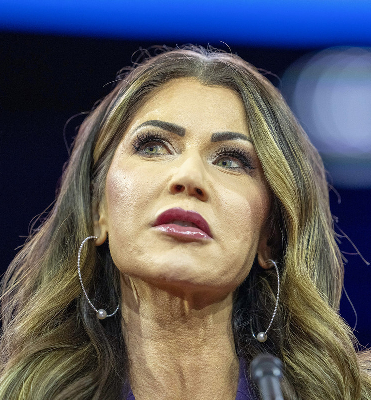
Orwell could not invent a character as bizarre and sinister as Kristi Noem.

The first step in addressing the challenge that lay before us is to acknowledge that the old order is broken and is not likely to be fixed in the next election. Articulating a clear and compelling vision for a new order is crucial in fostering broad support among both leaders and communities who represent its principles. There are inspiring leaders like Zohran Mamdani. There are inspiring communities like those who have protected their neighbors in Minnesota. There are inspiring young people willing to walk out of their classes to demand basic rights for everyone.
Secondly, it is essential to adopt a more systematic approach and firmly address corporations, businesses, and institutions that have either openly supported the regime or acquiesced to its requirements. We need to start organizing boycotts at the local, state, national, and international levels against those businesses that support the regime.
Third, we should strengthen partnerships with countries that continue to support democratic principles once central to the US’s global identity. Europe and Canada have now become the model democracies in the world, and we should look to them for guidance and leadership for the world we want to create when this criminal regime comes to an end. The fact is that if we lived in a parliamentary democracy, Trump would already be long gone. Let’s envision a world in which we can rid ourselves of such a menace peacefully.
We can build a better world. No Schmitt!
*


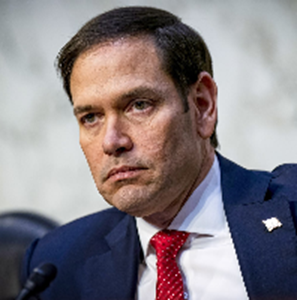
Marco Rubio as von Ribbentrop.
Excellent!